
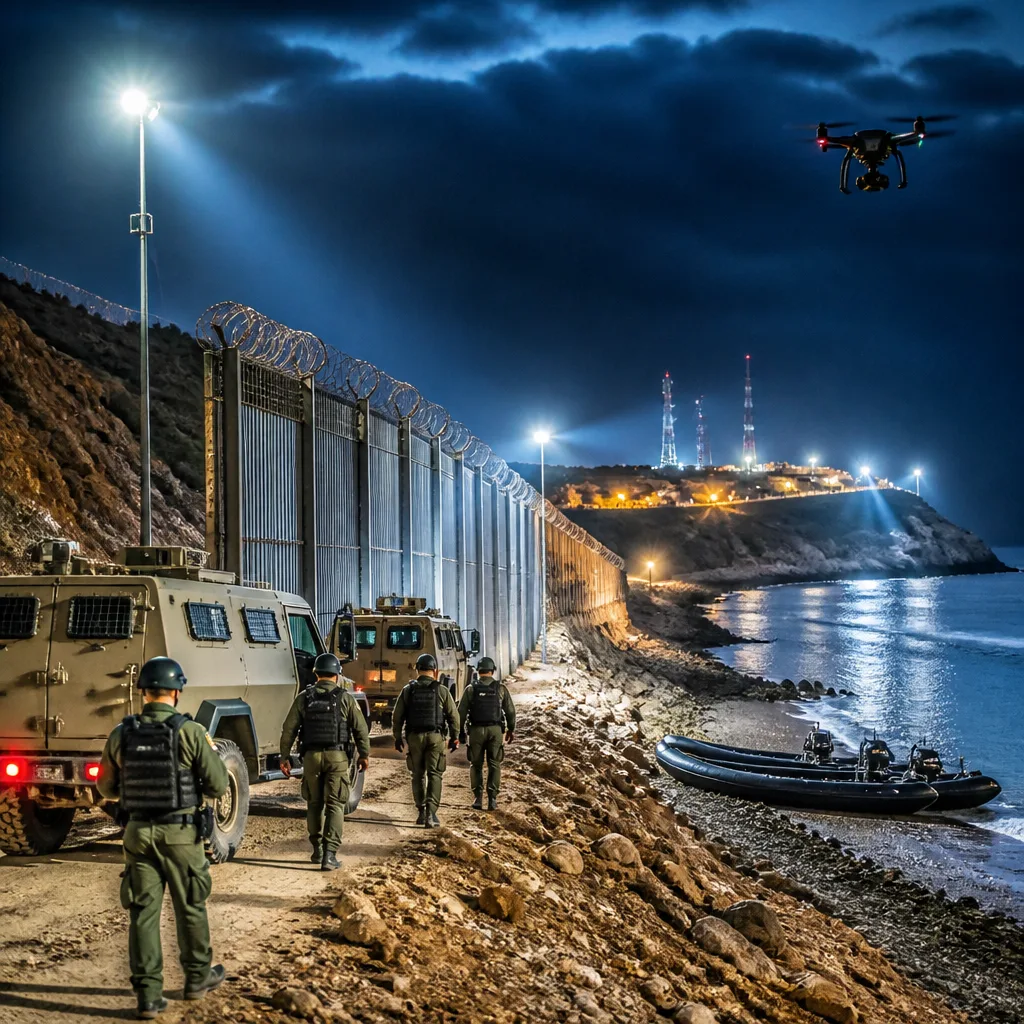
Morocco has stepped up security measures around its frontiers with Spain’s North African enclaves of Ceuta and Melilla amid fresh social media calls urging migrants to attempt another mass crossing, the Moroccan Interior Ministry said on Thursday.
Authorities on alert after late‑July surge
The ministry said security monitoring had been reinforced in areas close to both crossings and that authorities were maintaining "continuous vigilance" around the two cities. Spanish authorities separately warned that the border remained closed and urged people not to act on misleading information circulating online.
"All necessary measures have been taken to counter" any further attempt at an illegal crossing, the Moroccan Interior Ministry said.
The heightened measures follow the dramatic events of late July, when about 72,000 migrants either swam around border barriers or climbed the breakwater separating Ceuta from Morocco after online rumours suggested the frontier had opened. Almost all those who entered Ceuta have since returned to Morocco, the reports said.
Official tallies put the death toll from the attempted crossings at a minimum of 80, although some human rights organisations have reported higher figures.
Visible security response
Videos circulating on social media show hundreds of Moroccan police officers in riot gear near the border, with water cannons and ambulances visible. Moroccan media outlet Hespress reported that equipment for deploying tear gas and stun grenades had also been brought to the area, though the Interior Ministry did not provide details on the numbers of personnel or the specific equipment deployed.
- What happened in late July: Around 72,000 people entered Ceuta amid false rumours that the border had been opened.
- Human cost: At least 80 people died during the crossings, according to official figures.
- Current posture: Moroccan authorities say they have reinforced monitoring and taken necessary measures to prevent further illegal crossings.
Melilla and the broader context
Fresh social media messages have also reportedly encouraged would‑be migrants to attempt to reach Melilla. Together, Ceuta and Melilla form the European Union’s only land borders with Africa, making them focal points for migration flows towards Europe and flashpoints for diplomatic tension between Morocco and Spain.
The events in late July produced strong political reactions in Spain and across Europe, highlighting the speed with which misinformation on social platforms can trigger mass movement and humanitarian risk at borders. Spanish authorities have publicly cautioned against following unverified messages and stressed that border controls remain in force.
Implications and regional resonance
While the immediate situation concerns Morocco and Spain, the episode carries broader lessons about migration governance, the role of digital platforms in shaping movement, and the operational pressures on border services. For countries in southern Africa, including South Africa, the incident underscores how rapidly misinformation can affect migratory behaviour and humanitarian need — and how cross‑border cooperation and communication are critical in response.
Humanitarian organisations that monitor Mediterranean and north African migration flows have highlighted the acute risks people face when attempting sea or coastal crossings, especially during mass movements. The official death count remains provisional, and the disparity between government figures and rights groups’ reports points to the difficulties of casualty verification in chaotic border situations.
As Moroccan and Spanish authorities fortify their positions, the coming days will show whether the reinforced measures succeed in deterring further attempts and whether diplomatic channels can manage the fallout from the July wave. For policymakers watching migration patterns between Africa and Europe, the Ceuta and Melilla episode provides a stark reminder of the human consequences when control, communication and protection fail to keep pace.









