
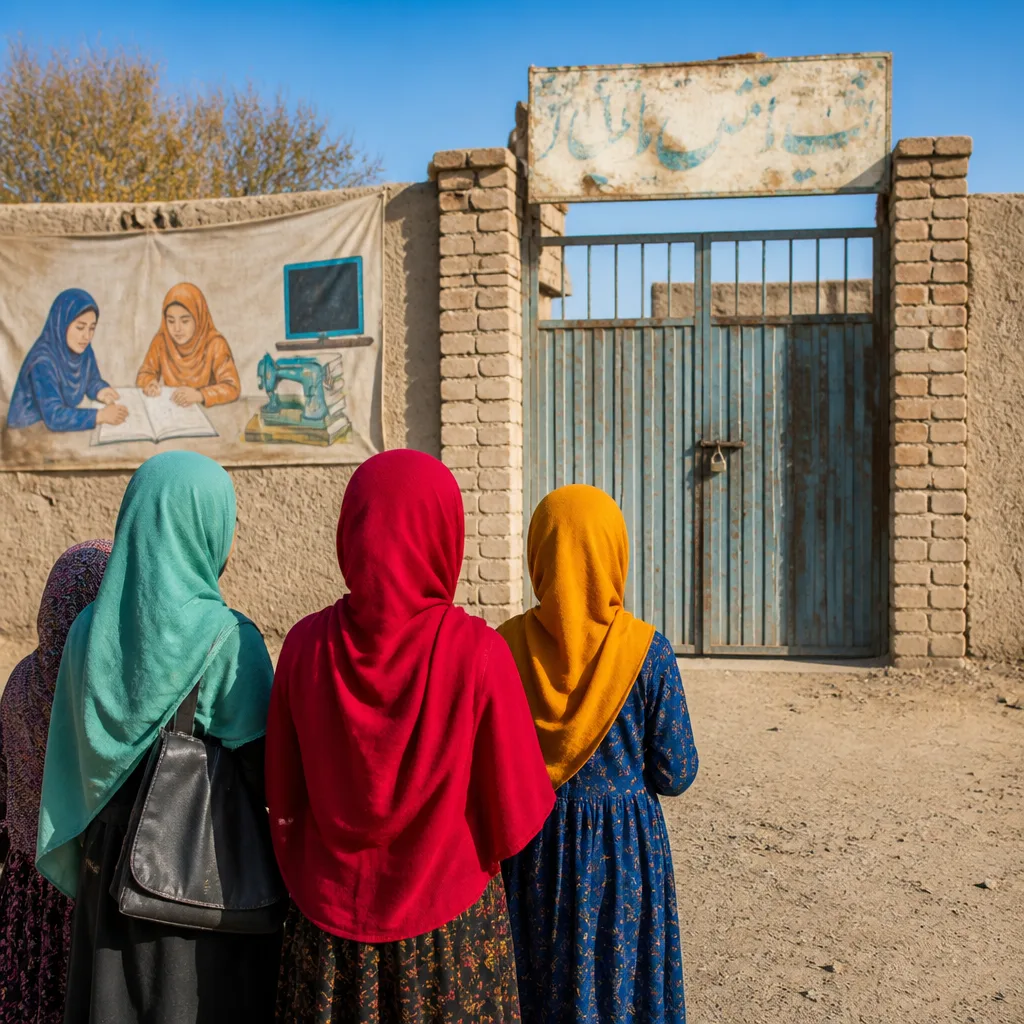
More than 2 million girls in Afghanistan remain denied access to secondary schooling, the United Nations Educational, Scientific and Cultural Organization (UNESCO) said on 2 September 2026. The agency said its programmes continue to support learning where formal secondary education is not available, but the scale of exclusion is vast.
Limited alternatives in Bamyan and Nuristan
UNESCO highlighted an initiative in Bamyan and Nuristan provinces under the Education in Emergencies and Resilience Activities (EERA) project that offers literacy and skills training to people who cannot attend regular schools. According to the organisation, the programme has enrolled just over 2,100 participants across 10 districts, with nearly 70% of applicants identified as women and girls.
“Every opportunity to learn matters,” UNESCO said on its X page on 2 September 2026.
While these classes provide valuable short-term learning and livelihood skills, UNESCO’s figures make clear that such initiatives reach only a tiny fraction of the millions of girls excluded from secondary education by the nationwide restrictions imposed since the Taliban seized power in 2021.
Implications for learners and communities
Denied access to secondary schooling has immediate and long-term consequences for girls and their communities. Secondary education raises literacy and numeracy levels, improves employment prospects, and delays early marriage. The persistent denial of these opportunities therefore undermines individual development and broader social and economic recovery.
Programmes such as the EERA classes can mitigate some short-term harms by offering basic literacy and vocational skills. However, UNESCO’s own numbers show the mismatch between local interventions and the national scale of exclusion: while community classes enrol thousands, the aggregate figure of more than two million excluded girls remains unchanged.
- Scale of exclusion: UNESCO reports over 2 million girls barred from secondary school across Afghanistan.
- Local response: The EERA project has enrolled about 2,100 people in Bamyan and Nuristan, with nearly 70% being women and girls.
- Coverage gap: Short-term literacy and skills training cannot substitute for universal access to secondary education.
| Indicator | Figure |
|---|---|
| Girls barred from secondary school | More than 2,000,000 |
| Participants in EERA classes (Bamyan & Nuristan) | 2,100+ |
| Districts covered by the EERA activity | 10 |
| Percentage of participants who are women and girls | ~70% |
What this means for policy and assistance
For international donors, NGOs and regional education authorities, UNESCO’s update underlines two linked priorities: expand alternative learning opportunities where secondary school access is blocked, and sustain pressure and diplomatic engagement aimed at restoring girls’ full access to formal education. The EERA project’s reach in Bamyan and Nuristan demonstrates how targeted literacy and vocational training can support learners on the ground, but those measures are complementary rather than substitutive for inclusive secondary schooling.
South African education stakeholders and civil society observers who monitor global education rights may view the Afghan situation as a reminder of how rapidly gains in girls’ education can be reversed and how costly it is to rebuild systems after long interruptions. The human and economic cost of keeping over two million girls out of secondary school will echo for years unless durable pathways back to formal education are secured.
UNESCO’s statement did not provide a provincial breakdown beyond Bamyan and Nuristan or details on the curricula used in the EERA classes. It did, however, reiterate the agency’s commitment to supporting learners “in need” where barriers remain.
The facts reported by UNESCO offer a stark snapshot: community-level programmes are making a difference for hundreds or thousands of learners, but the national crisis of exclusion persists for millions of Afghan girls.











