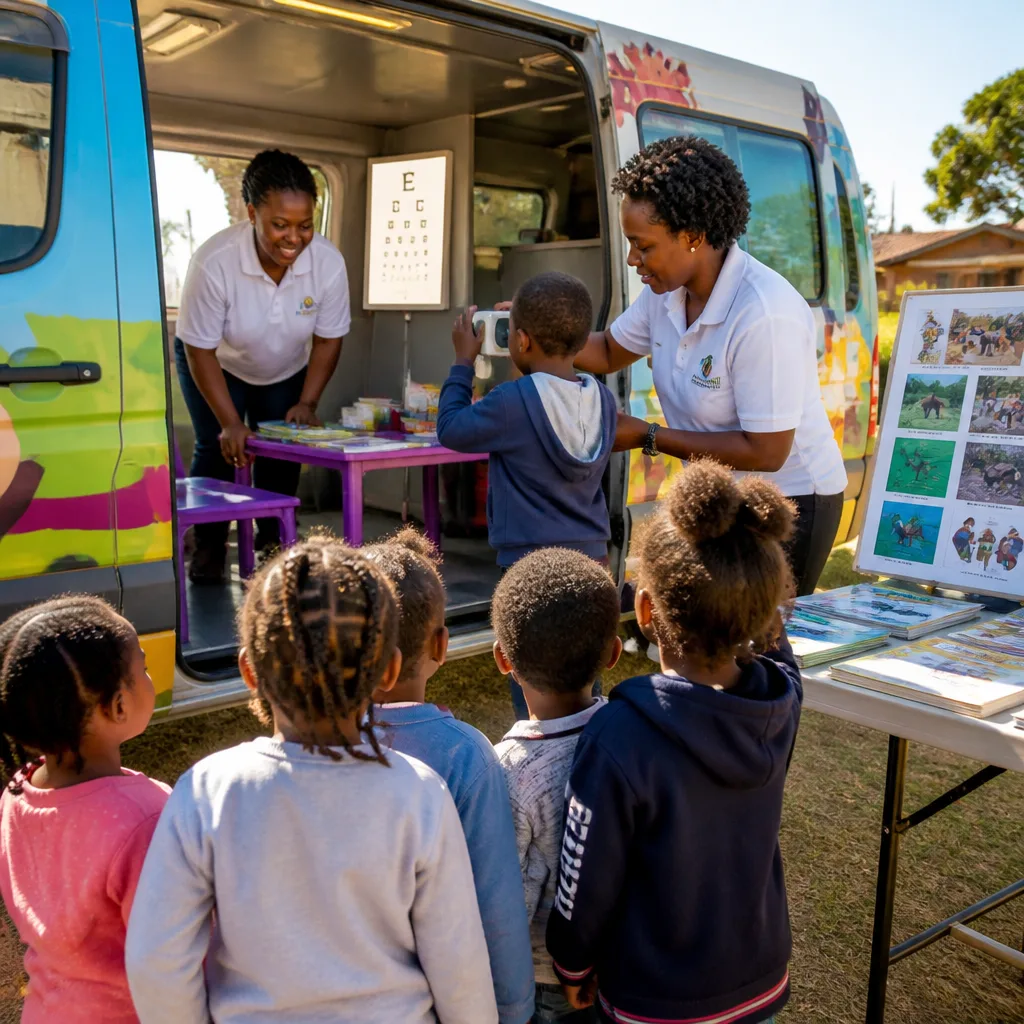
The UCLA Head Start programme has launched “Head Start on Wheels”, a mobile classroom that brings early learning and basic healthcare services directly to families in the San Fernando Valley. The initiative is aimed at children from low-income households, including those experiencing homelessness and those in foster care.
Bringing services to families
Management conceived the unit to overcome access barriers. Magdalena Pereyra, family community engagement and disabilities manager for UCLA Head Start, said the idea grew from a simple question: what if staff went to families instead of expecting families to come to centre-based services?
“What if instead of families coming to us, we come to them?” said Pereyra.
The mobile classroom operates one day each week at a local park for three hours. It is equipped for structured early-childhood routines and can enrol up to 16 children per session, with space for reading, puzzles and play. The unit also contains a bathroom, sinks and a refrigerator, enabling staff to deliver hygienic, developmentally appropriate activities.
Health screenings and family support
All Head Start children associated with the programme receive routine health screenings, with emphasised checks for vision and hearing to identify conditions that might hinder development. Pereyra said many families prioritise health and well‑being when setting goals, with nutrition featuring prominently in recent years.
The mobile unit links education with family health support: staff set up outdoor tables and chairs during park visits to run the day’s routine, and family engagement remains central to the model. Norma Julio, the mobile unit’s coordinator and an early-childhood educator, developed the session plans for participating children.
Partnerships and learning innovations
UCLA Head Start has pursued partnerships to enrich the mobile offering. In a unique collaboration, National Geographic developed a child-friendly camera for the initiative so young children can take nature photographs. Organised activities include taking and displaying photos, which supports language development and observational skills.
Assistant director Erika Abiles and executive director Delia Vicente worked with staff to design the unit, incorporating input from families and educators to ensure the space is practical for both learning and health-related activities.
- Operation: one park visit per week for three hours
- Capacity: serves up to 16 enrolled children per session
- Facilities: reading/play space, bathroom, sinks, refrigerator
- Health services: routine vision and hearing screening for all Head Start children
- Educational innovation: photography activities supported by National Geographic
| Feature | Purpose |
|---|---|
| Mobile classroom unit | Deliver Head Start curriculum and routine health checks in community settings |
| Health screenings | Identify vision and hearing issues that could impede learning |
| Photography activities | Encourage observation, language and family engagement in learning |
The model responds to longstanding access issues for early-childhood education and basic health services. By meeting families where they are — in neighbourhood parks — the programme reduces transport and scheduling barriers that can prevent enrolment in centre-based Head Start.
Programme leaders said the approach helps prepare children for pre‑school through consistent routines and targeted supports, while also addressing parental priorities such as nutrition and general health. The combination of early learning and primary screening aligns with evidence that early detection of sensory problems can improve educational trajectories.
While the initiative is currently focused on the San Fernando Valley, the design — a compact, fully equipped mobile classroom offering both developmental activities and health screening — may offer a replicable template for other jurisdictions seeking to expand access to integrated early-childhood services. Families and caregivers with concerns about a child’s development or health should consult their local clinic or paediatrician rather than relying solely on outreach programmes for diagnosis and treatment.
Programme staff involved in the design and operation include Magdalena Pereyra, Delia Vicente, Erika Abiles and Norma Julio.