
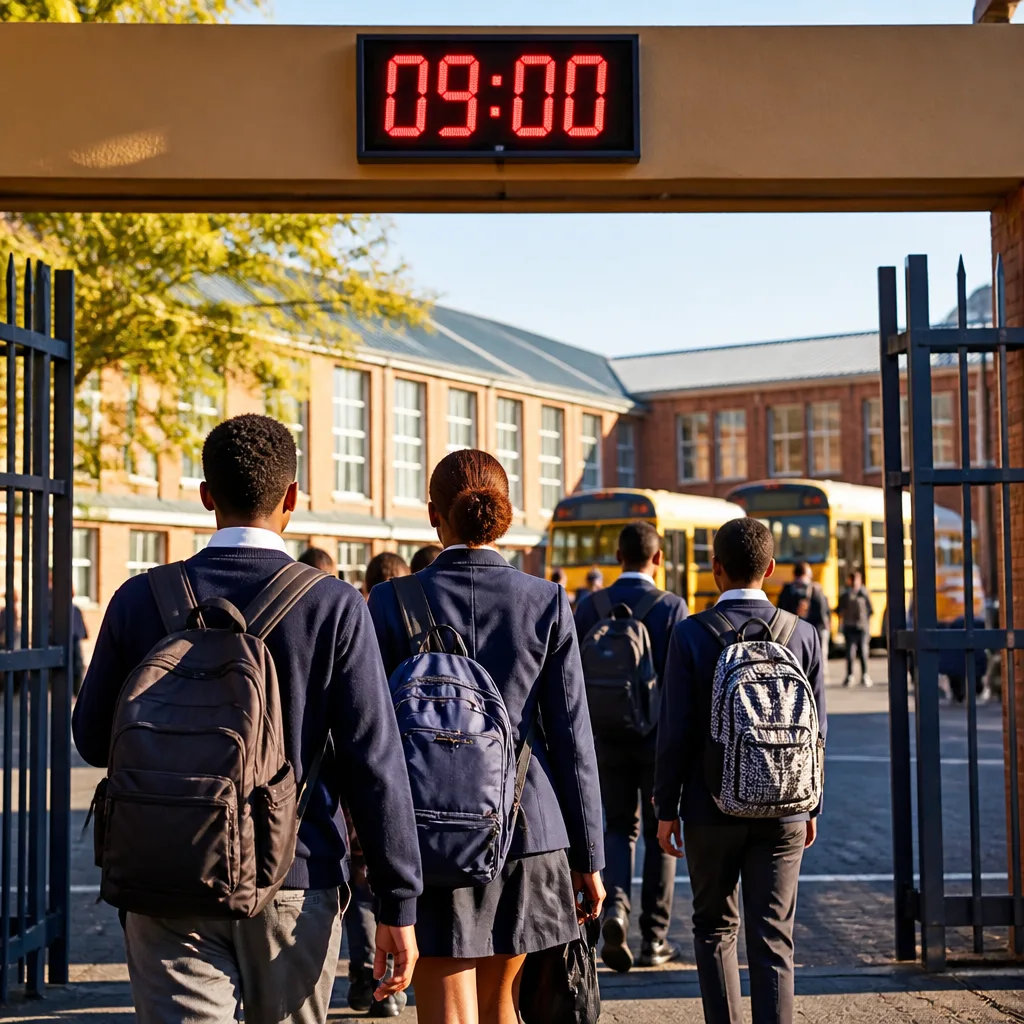
Recent commentary from sleep medicine specialists highlights a growing consensus: secondary schools that start later in the morning better match adolescent sleep biology and can produce measurable benefits for pupils’ learning, health and safety.
Why teens struggle with early starts
During puberty many adolescents experience a shift in their circadian rhythm — the internal clock that governs sleepiness and wakefulness. This biological change tends to make teenagers feel sleepy later at night and prefer waking later in the morning. As a result, early bell times can force many teenagers to begin the day while still sleep-deprived.
Indira Gurubhagavatula, a professor of Sleep Medicine at the Perelman School of Medicine, framed the problem as a misalignment between school timetables and “known features of teen sleep biology.” She emphasised that the issue is not only poor bedtime habits: the internal timing mechanisms that drive sleepiness change with adolescence and are not fully corrected by simply encouraging earlier bedtimes.
“This is not simply a matter of teenagers making better choices at bedtime,” the professor said. “It is an issue of misalignment between school schedules and known features of teen sleep biology.”
Evidence for later starts
Major medical organisations recommend that teenagers aged 13–18 obtain about 8–10 hours of sleep per night. When school start times force early wake-ups, many adolescents are unable to reach this target. A central claim in recent reviews and studies is straightforward: when schools delay the first bell for middle and high school pupils, students on average sleep longer.
The reported benefits extend beyond simply feeling less tired. Research linking later starts with outcomes includes:
- increased total sleep duration;
- reduced daytime sleepiness;
- fewer absences and tardies;
- improvements in academic performance;
- better overall wellbeing and, in some studies, improved mental-health indicators.
These effects have been observed consistently enough that sleep experts recommend secondary schools consider starting no earlier than 08:30, a benchmark supported by several professional bodies in medicine and paediatrics.
Practical implications for South African schools
Although the commentary that prompted this review was framed in the context of recent changes to Pennsylvania's School Code, the underlying science applies broadly. If South African districts consider later starts, they must weigh logistical factors such as transport timetables, after-school activities, and family work schedules. Evidence suggests, however, that biological benefits for adolescents are robust and could reduce morning safety risks linked to drowsy commuting.
Policymakers and school authorities often raise valid operational concerns. But the science offers both a rationale and an evidence base for making timetable changes where feasible. Any decision should be guided by local consultation and pilot studies that measure attendance, academic outcomes and wellbeing before and after a change.
What parents and educators should know
For parents and teachers, the core message is practical and evidence-based: aligning school schedules with adolescent sleep biology is not merely a comfort issue — it is linked to learning, attendance and safety. Where schedule changes are possible, the likely payoffs include more rested students who are better able to concentrate and participate during the school day.
| Recommended sleep | Observed benefits with later starts |
|---|---|
| 8–10 hours per night (ages 13–18) | Longer sleep duration, less daytime sleepiness, fewer absences, improved academic performance |
It is important to be cautious about expectations. While many studies report positive outcomes, the magnitude of effects varies by context and study design. Timetable changes are one policy tool among many (including mental-health support and sleep education) that can help adolescents thrive.
For decision-makers, the next sensible step is local evaluation: trial later start times in a sample of schools, monitor outcomes that matter to parents and teachers, and adjust plans accordingly. The science indicates that when bell times match adolescent biology, benefits are likely to be real and measurable.









