
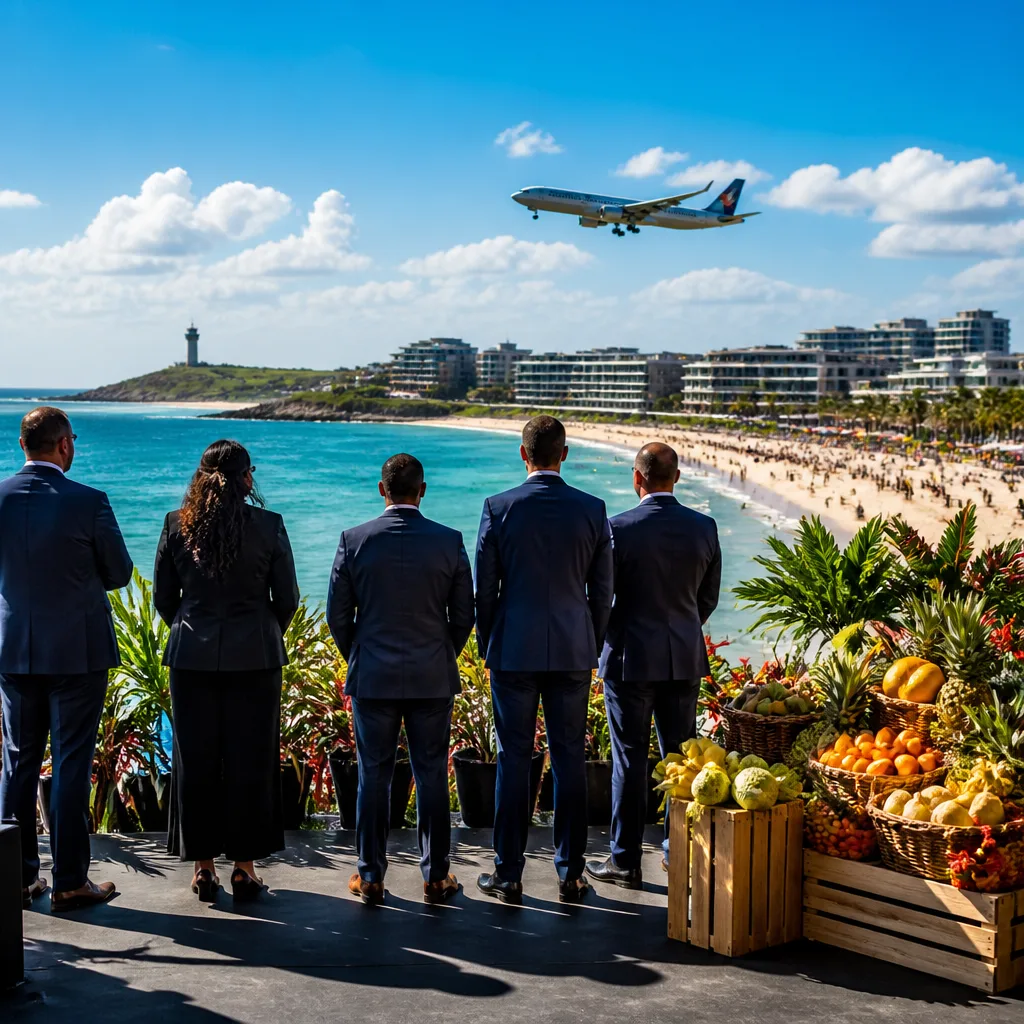
KwaZulu‑Natal Premier Thamsanqa Ntuli has urged national authorities to facilitate more direct international flights into the province after the official opening of Club Med South Africa Beach & Safari Resort, a R2bn development on the North Coast that provincial leaders say will bolster tourism and local economic activity.
Premier links air access to tourism growth
Speaking at the resort opening on Thursday, Ntuli told delegates that improved air connectivity was essential to realising the province’s tourism potential and maximising the investment’s benefits for communities and businesses.
“This event also marks a massive vote of confidence in the KwaZulu‑Natal North Coast, our province, and the entire country,” said Ntuli.
He specifically appealed to Tourism Minister Patricia de Lille to help advance international air links to KwaZulu‑Natal. Ntuli also expressed concern about a planned direct flight between King Shaka International Airport and Mauritius, which had been expected to start in June but did not materialise.
Club Med investment and local opportunity
The Club Med resort, described by provincial leaders as the company’s first in South Africa, is being positioned as a catalyst for both domestic and international arrivals to the region. The provincial government and investors have framed the project as more than a high‑end destination: they say it will create opportunities for local suppliers, small businesses and people seeking hospitality experience.
- Investment: R2bn resort development on KwaZulu‑Natal North Coast
- Expected impact: boost to domestic and international tourism demand
- Local benefits: opportunities for tour operators, artisans, farmers, plumbers and hospitality trainees
Ntuli described the development as part of a broader transformation of the North Coast from sugarcane fields into a growing hospitality and lifestyle destination, citing the growth of Ballito and the emergence of lifestyle estates as indicators of the trend.
Policy and infrastructure implications
The premier’s call places air‑route development at the centre of the debate over how to convert large resort investments into sustained regional growth. Direct international services reduce travel time and inconvenience for overseas visitors and can improve the competitiveness of a destination relative to other coastal provinces and regional hubs.
While the resort’s opening is a visible private‑sector vote of confidence, translating that into wider economic benefit depends on tourism policy, airport capacity and route incentives that typically require co‑ordination between national departments, the provincial government, airports and airlines.
| Item | Detail |
|---|---|
| Resort investment | R2bn |
| Noted transport issue | Planned King Shaka–Mauritius flight expected June but did not launch |
Provincial officials have highlighted the potential for multiplier effects: hotels and resorts tend to source goods and services locally, and increased visitor arrivals can support the informal and small‑business economy in adjacent towns. However, officials must manage expectations about timelines: route development and market response can take months or years, and airlines balance demand against operational costs and bilateral agreements.
The opening adds to a wave of resort and lifestyle developments on the North Coast that politicians and investors say will change the economic geography of the area. For the provincial government, leveraging such investments requires aligning skills training, enterprise development and transport planning so that local residents and small suppliers capture a share of the growth.
Ntuli’s public appeal to the Tourism Minister places the matter on the national agenda and sets up a test of how quickly national and provincial governments can work with industry and airports to secure the international air links the premier says are vital to converting a R2bn capital injection into broader, sustainable economic gains for KwaZulu‑Natal.









