
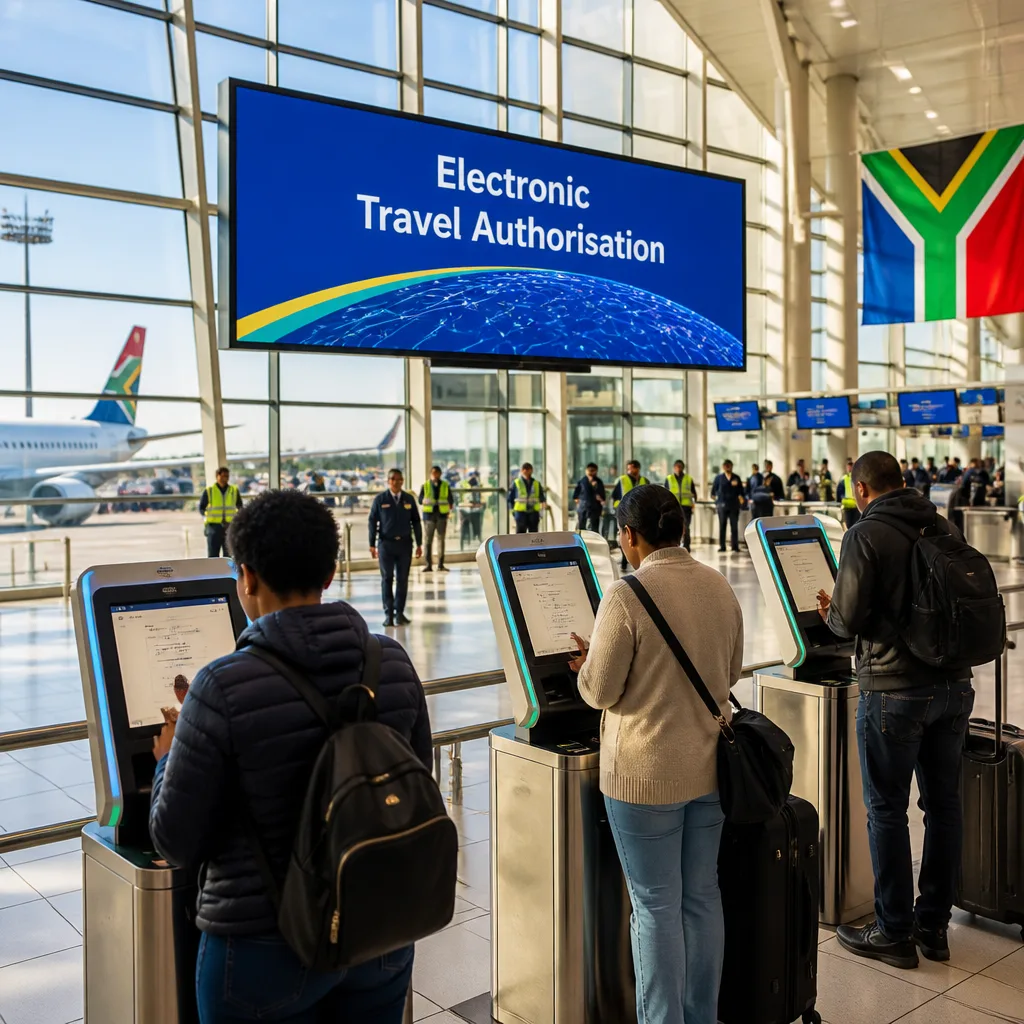
President Cyril Ramaphosa officially launched South Africa’s Electronic Travel Authorisation (ETA) system at OR Tambo International Airport on 12 August 2026, announcing a move designed to make travel to the country "easier, faster and more predictable", while bolstering border management.
What the ETA will do
The digital system allows eligible travellers to apply online without first visiting a South African embassy or visa processing centre. The Department of Home Affairs expects applications to be processed within 24 hours, a turnaround that, if achieved, will significantly reduce time and cost for many visitors and potential investors.
"It will encourage tourism. It will support trade. It will attract investment. It will facilitate skills and knowledge exchange," President Ramaphosa said during the launch, adding that the system would also strengthen border management and migration control.
The launch took place at the country’s busiest international gateway, where the Presidency framed the ETA as both a convenience for travellers and a tool to make South Africa more competitive in the global economy. The system was first piloted during South Africa’s G20 presidency and is now being rolled out more broadly.
Pilot phase and fees
During the pilot phase, South Africa ran the ETA for travellers from China, India, Indonesia and Mexico and processed more than 200,000 applications, according to government reporting. The pilot was operated free of charge. The Department of Home Affairs has introduced a mandatory processing fee of R500, which is set to take effect from 17 August 2026.
| Item | Detail |
|---|---|
| Pilot countries | China, India, Indonesia, Mexico |
| Pilot applications processed | 200,000+ |
| Expected processing time | Within 24 hours |
| Processing fee | R500 (from 17 August 2026) |
Why it matters for travellers and the tourism sector
For travellers, the ETA promises a simpler application path: an online form and a digital decision instead of physical visits to consulates. For the tourism sector and hospitality businesses that rely on predictable visitor flows, quicker visa decisions could help with last-minute bookings and event planning.
Government statements link the ETA to broader economic aims: encouraging tourism, supporting trade, attracting foreign direct investment and enabling skills and knowledge exchange. Stronger pre-entry checks are also touted as contributing to national security and improved migration control.
- Eligibility: initially piloted for specific countries; broader eligibility rules were not detailed in the launch report.
- Cost: R500 processing fee to be introduced after the pilot period.
- Speed: Home Affairs expects decisions within 24 hours once all documents are submitted.
The rollout will be watched closely by travel agencies, airlines and tourism operators, who will want clarity on which nationalities qualify, what supporting documents are required and whether the electronic decisions will be as reliable as a consular visa for entry.
Operational questions remain
While the Presidency emphasised the benefits, the available brief did not set out all operational details that travellers and industry stakeholders typically need: the full list of eligible countries as the programme expands beyond the pilot, appeal or review mechanisms for refused applications, how refunds (if any) will be handled, or how the system will integrate with immigration officers’ checks at ports of entry.
Home Affairs has said the fee becomes mandatory from 17 August 2026 and that the ETA was first trialled during the G20 presidency. Further technical and administrative guidance is expected from the department as the electronic process is implemented.
For travellers planning to visit South Africa, the new ETA could make short-notice travel easier, but applicants should allow for the R500 processing charge and ensure they meet documentation requirements when the system is fully operational.











