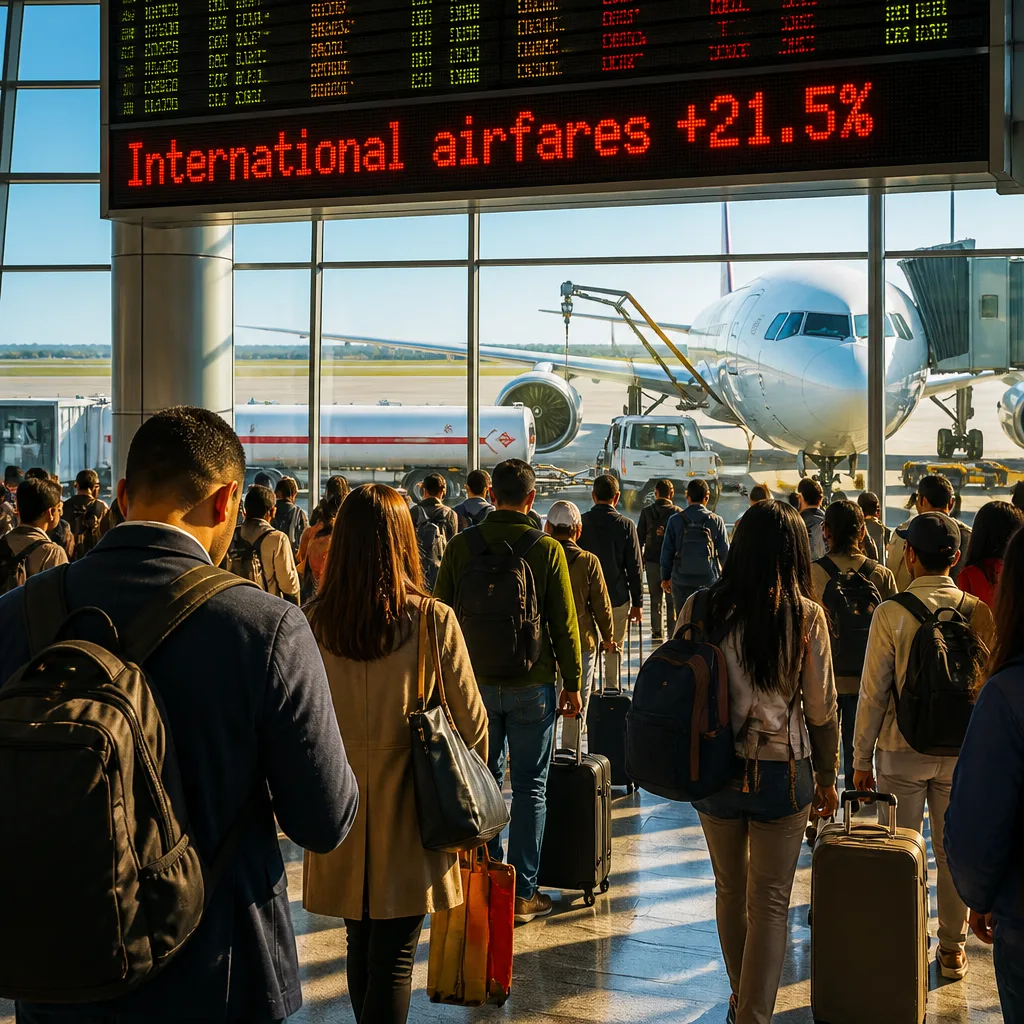
International airfares rose by 21.5% in the year to August, according to the latest figures from Stats NZ, with higher jet fuel prices and rising aviation system costs cited as the key drivers. Despite the increase, demand for overseas travel has remained steady.
Fuel and industry charges push ticket prices higher
Simon Wallace, chief executive of the Aviation Industry Association, told media that the price of jet fuel — linked to conflict in the Middle East — has been the major factor behind the surge in fares. He said recent jet fuel prices were nearly back to levels seen in March and April of this year and were "double what it was in 2025."
"So it's nearly up where it was in March April this year. But that's double what it was in 2025," Wallace said.
Wallace also pointed to rising aviation-system costs as a contributor. These include Civil Aviation Authority levies, air traffic control or airways levies, and airport landing charges, which he said had increased substantially and faster than inflation.
Where travellers are feeling the pinch
Flights to Europe and Asia recorded the largest price rises. Wallace noted that capacity on Middle Eastern carriers such as Etihad, Emirates and Qatar had been affected by events in the Middle East since February–March, influencing routing and pricing for passengers travelling to Europe.
Still, the higher fares have not deterred travel outright. Stats NZ data showed that New Zealand-resident traveller arrivals reached 3.09 million in the year ending July, an increase of 32,000 from the previous year. For July specifically, arrivals were 317,000, which was 5,000 fewer than July the year before.
Travel industry response and consumer behaviour
Julie White, chief executive of the Travel Agents Association, said Kiwis' appetite for overseas travel remains healthy. She reported that sales values were about 1.5% higher and that transaction volumes had softened, suggesting travellers were hunting for better deals and adjusting their booking behaviour.
"We're actually seeing our numbers back where they were in 2019. Our number in sales are actually up around 1.5% but we do see some softening in the number of transactions," White said.
The picture painted by industry voices is one of resilience: while prices climb, travellers appear willing to adapt — by seeking discounts, changing destinations or altering travel timing — rather than cancelling plans outright.
What this means for South African travellers
Although the Stats NZ figures relate to New Zealand passengers, the drivers identified — higher jet fuel costs and increased aviation-system charges — are global in nature and likely to affect outbound travellers from South Africa as well. Airlines worldwide are sensitive to fuel price movements and to the cost of airport and air navigation services, so similar fare pressures may be seen on routes used by South African passengers, especially long-haul flights to Europe and Asia.
- Key drivers: higher jet fuel prices; increased aviation levies and airport charges.
- Impact: larger fare increases on Europe and Asia routes; travellers hunting deals.
- Demand: overall travel volumes remain close to pre-pandemic levels in the markets reported.
| Measure | Figure |
|---|---|
| Annual increase in international airfares (to August) | 21.5% |
| New Zealand-resident arrivals (year ending July) | 3.09 million |
| Change in arrivals (year on year) | +32,000 |
| Arrivals in July | 317,000 (-5,000 vs July previous year) |
For budget-conscious travellers planning overseas trips, the immediate takeaway is to be flexible with travel dates, compare carriers and consider alternative routings. Travel agents' observations suggest there are still deals available, but travellers may need to shift habits to find them.
The developments underline how geopolitical events and industry cost structures can quickly reshape the economics of flight travel. South African travellers should watch fuel price trends and airline schedules closely when planning international trips in the coming months.