
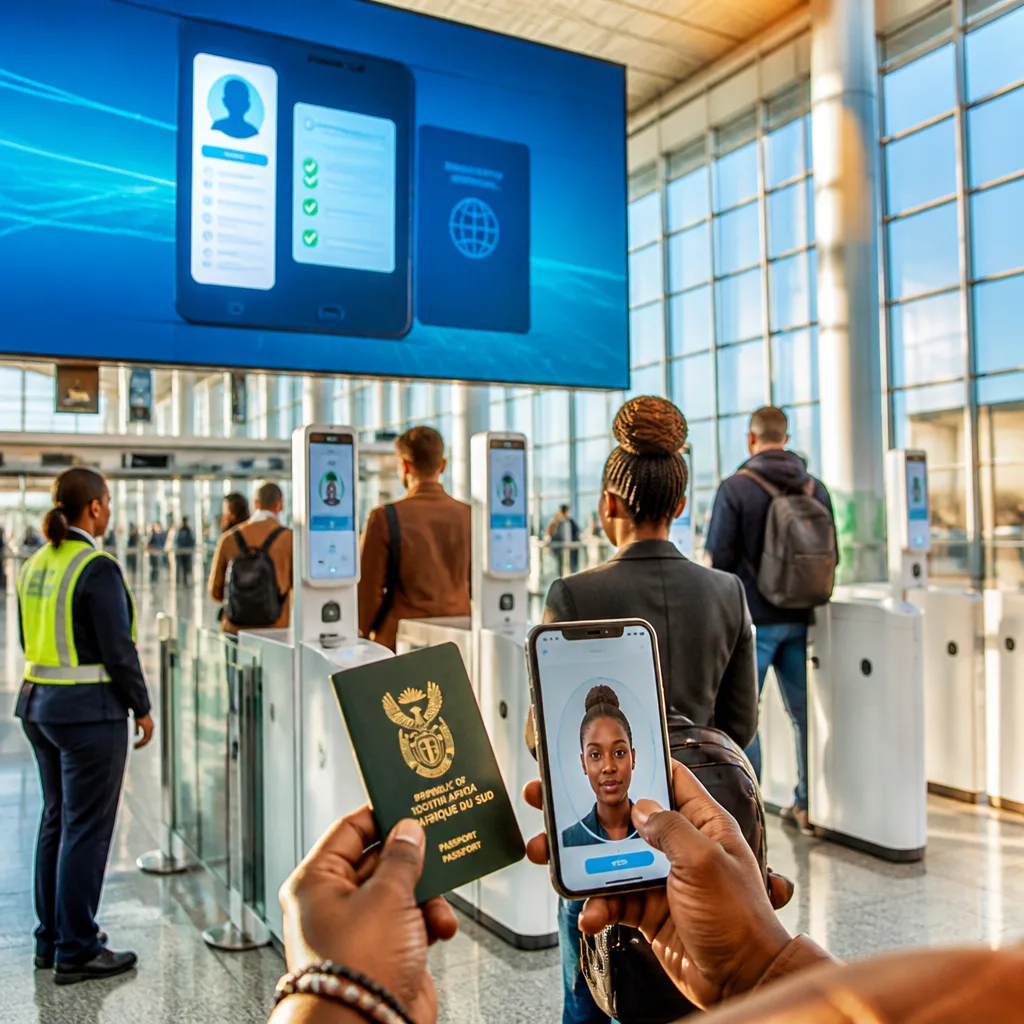
President Cyril Ramaphosa on Wednesday launched a digital Electronic Travel Authorisation (ETA) system at OR Tambo International Airport designed to speed up entry into South Africa, cut paper-based visa processes and bolster border security through biometric verification and automated risk assessment.
The system replaces cumbersome embassy visits for eligible travellers and is intended to make South Africa a more attractive destination for tourists, investors, business travellers and skilled professionals ahead of the country’s G20 presidency.
How the ETA works
The Home Affairs Department said the online platform allows applicants to:
- register a profile and verify a cellphone number and email address;
- scan their passport and upload a selfie for biometric comparison;
- pay the application fee and receive an automated risk assessment;
- receive an authorised ETA, stored digitally on a smartphone, typically within 24 hours.
The platform automatically checks passports against more than 40 parameters to establish authenticity. At arrival points, facial recognition is used to confirm that the person entering the country is the same person who received the authorisation.
“The ETA has already processed 216,204 applications, with 6,126 fraudulent applications identified and rejected,” the Home Affairs minister said.
Upgraded border systems and enforcement
Alongside the ETA, authorities have rolled out an upgraded Electronic Movement Control System, EMCS 2.0, at international airports. The Border Management Authority will work with the South African Revenue Service to use facial verification both on arrival and departure.
Officials said the combination of the ETA and EMCS 2.0 is intended to:
- reduce processing times at ports of entry;
- improve detection of fraudulent travel documents;
- identify overstayers in real time;
- support broader border-management and revenue-protection goals.
Pilot phase and rollout
The ETA was piloted for travellers from China, India, Indonesia and Mexico ahead of its formal launch. The pilot was presented as part of preparatory work for South Africa’s G20 engagement.
| Feature | Detail |
|---|---|
| Applications processed | 216,204 |
| Fraudulent applications rejected | 6,126 |
| ETA turnaround | Up to 24 hours |
Home Affairs said the ETA removes the need for many travellers to visit a South African embassy or visa processing centre, shifting pre-entry checks to an online environment that combines document verification with biometrics.
Implications and next steps
The launch marks a significant operational shift for South Africa’s immigration system. If the system performs as intended, it could ease queues at major airports, improve the integrity of traveller records and help authorities target illegal stays more quickly.
However, implementing biometric and automated-screening technology at scale raises questions about data protection, technical reliability and the capacity of border agencies to manage new digital workflows. Officials have not yet released the data-protection impact assessment or detailed the safeguards for travellers’ personal data.
Authorities also need to ensure interoperability between the ETA, EMCS 2.0 and existing immigration databases, and to provide contingency plans for system outages to avoid disruption at ports of entry.
Further operational details, including rollout timelines for other ports of entry and how the system will integrate with visa categories and exemptions, remain under development. Officials said the ETA is already live following the launch.
This is a developing story and more details are expected as the system is used more broadly and officials publish further implementation guidance.














