
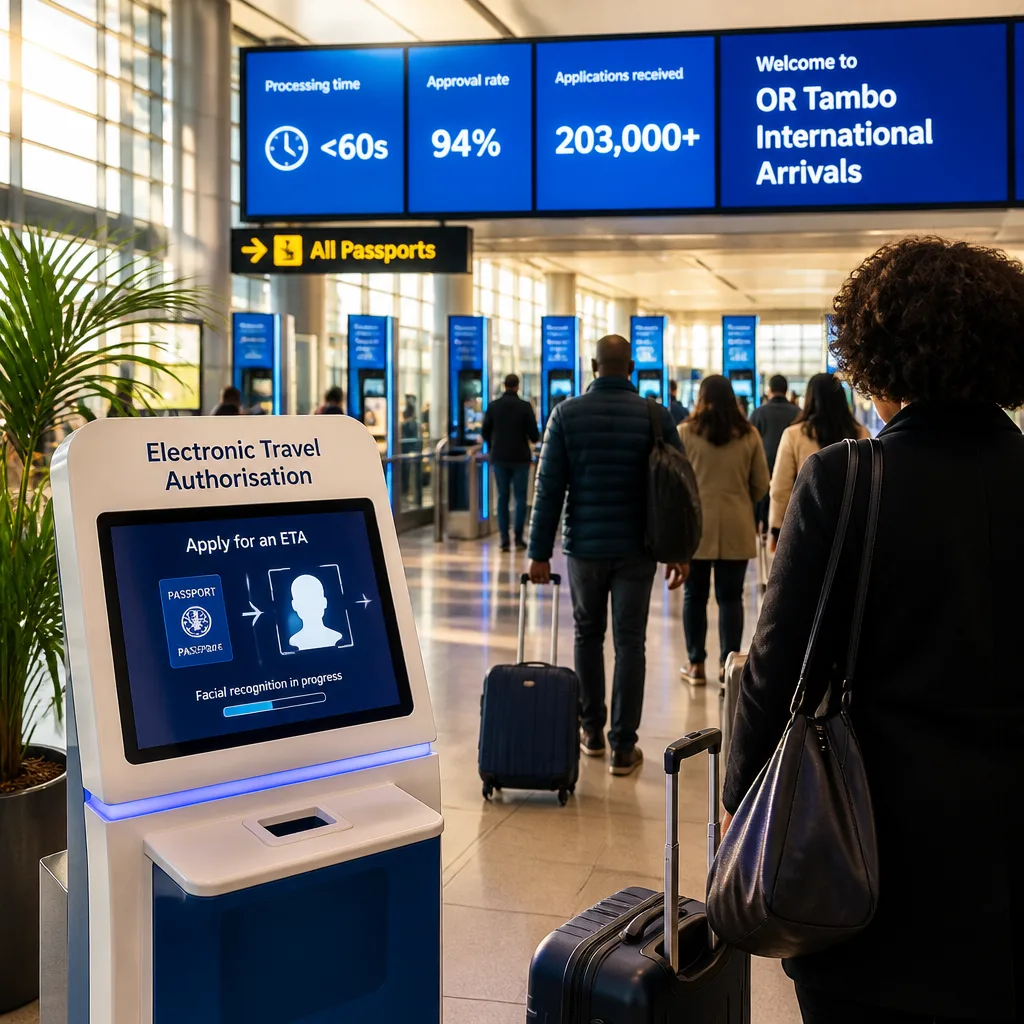
South Africa will formally introduce the Electronic Travel Authorisation (ETA) at OR Tambo International Airport on Wednesday, 12 August, with President Cyril Ramaphosa and Home Affairs Minister Leon Schreiber attending the launch. The Border Management Authority will demonstrate how the new system works for arriving travellers.
What the ETA changes at the border
The ETA transfers significant parts of the immigration process from the arrivals hall to a traveller’s smartphone or computer. Applicants enter passport details and upload a live facial image as part of an online application. The system then applies biometric verification, machine‑learning algorithms and automated risk analysis to vet travellers before they reach passport control.
The pilot phase took place during South Africa’s G20 Presidency and included visitors from China, India, Indonesia and Mexico. According to reporting of the rollout, the ETA can be used in two main ways:
- Visa‑required travellers from eligible countries can apply for an ETA for tourism or visitor purposes instead of going through the traditional visa process.
- Visa‑exempt travellers can use the ETA to speed up border processing and support more efficient arrivals.
Importantly, the ETA does not replace entry requirements. Travellers must still meet South Africa’s immigration rules on arrival.
Early performance and fraud detection
Early figures from the pilot suggest the ETA can substantially reduce queue times and identify fraudulent attempts before a traveller reaches the border. Tourism Minister Patricia de Lille reported that passengers using dedicated ETA lanes were being processed in under 60 seconds. The system has recorded a 94% approval rate for completed applications and has processed more than 203 000 applications during the trial phase.
Detection of fraudulent applications is a notable feature: more than 5 700 submissions were identified and rejected, including cases involving fraudulent passports and manipulated documents. That outcome aims to reassure critics who worry that faster processing may weaken border controls; the ETA’s automated checks are intended to both accelerate legitimate travel and block suspicious cases early.
| Metric | Reported result |
|---|---|
| Applications processed | 203 000+ |
| Fraudulent applications rejected | 5 700+ |
| Approval rate (completed applications) | 94% |
| Processing time in ETA lanes | Under 60 seconds |
What travellers should know
For ordinary South African residents planning travel, the ETA matters because it can cut time spent in crowded arrivals halls and reduce the uncertainty of long queues. But practical details will matter for uptake and public confidence:
- Travellers must complete the ETA application online and supply a live facial image and passport data.
- Using the ETA does not remove the need to meet immigration requirements on landing.
- Visa‑required nationals should check whether their country is eligible to use an ETA for tourism or visitor stays.
At scale, the system will also create new operating demands for airports and border authorities: dedicated ETA lanes, integration with existing passport checks, and reliable internet access for verification. The Border Management Authority’s demonstration at OR Tambo will show how those pieces fit together in practice.
The ETA rollout represents a broader trend: border authorities worldwide are using biometric and data‑driven tools to speed legitimate travel while trying to keep fraud and risk detection robust. How well that balance holds up in South Africa will depend on implementation details, privacy safeguards and how quickly the service is extended beyond OR Tambo.