
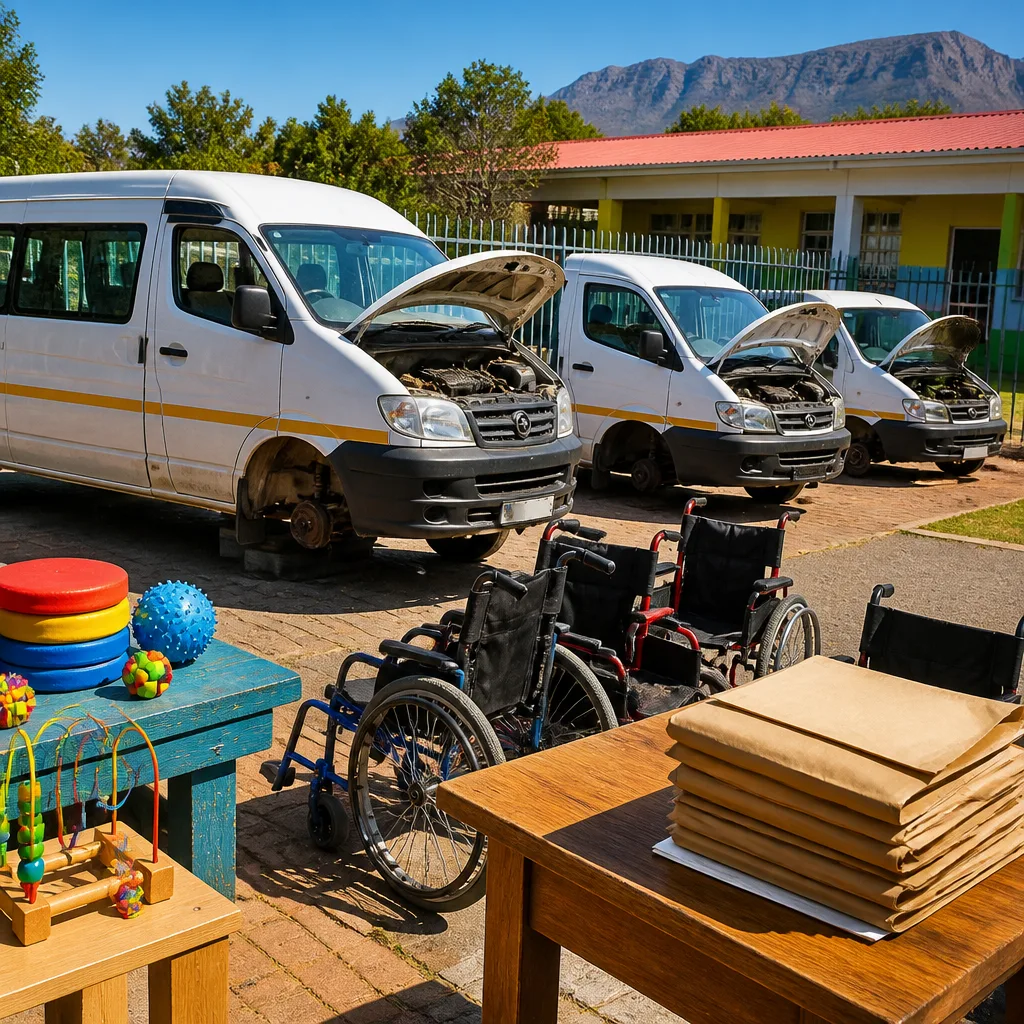
The KwaZulu‑Natal (KZN) education department did not spend R31 million of its allocation for learners with special educational needs, even as 790 pupils from three special schools missed months of lessons after government‑owned buses broke down, News24 reported on 13 September.
Operational failure amid unspent budget
The report highlights a sharp contrast between unutilised funds intended to support inclusive education and a transport breakdown that left many learners unable to attend school for extended periods. The affected pupils are from three special schools in the province, where scheduled transport services failed when department buses became non‑operational.
Impact in the classroom
Loss of access to school for learners with special needs has direct consequences: missed instruction time, interruption of specialised programmes and therapies, reduced contact with trained educators and support staff, and increased pressure on families and caregivers. The numbers reported underline a systemic delivery shortfall that affects learners who routinely require stable, reliable services to participate fully in education.
- Unspent budget: R31 million allocated for pupils with special educational needs remained unspent.
- Learners affected: 790 pupils from three special schools missed months of classes due to bus breakdowns.
- Cause: Breakdown of government‑owned buses that provide scheduled transport to special schools.
Questions for provincial oversight
The situation raises immediate governance questions about how the provincial education department manages capital and operational budgets for special education, and how transport maintenance and contingency planning are overseen. Effective inclusion for learners with disabilities depends not only on policy and budgets, but on operational systems that ensure daily attendance and continuity of specialised support.
| Item | Figure |
|---|---|
| Unspent budget for special needs learners | R31 million |
| Number of pupils affected | 790 |
| Number of schools affected | 3 |
What this means for families and teachers
For parents and caregivers, transport failures can mean lost earnings, extra caregiving demands and the logistical burden of trying to get learners to school without departmental support. For teachers and specialised staff, extended pupil absence interrupts planned programmes and reduces the time available to deliver therapies, curriculum adaptations and classroom interventions tailored to individual needs.
Provincial education departments must ensure that resources allocated for inclusion reach learners effectively. That includes maintaining fleets, having contingency transport options, and ensuring that procurement or administrative delays do not leave funds unspent while essential services fail.
Next steps and oversight
News24's reporting prompts the need for public answers from the KZN education department about why the R31 million was not spent, what plans there are to remedy the transport breakdowns and how affected learners will be supported to recover lost learning time. Oversight by provincial treasury and legislative committees may be required to assess whether budgets for vulnerable learners are being managed to deliver services on the ground.
The consequences of inaction are concrete: disrupted schooling for hundreds of learners who are already vulnerable to exclusion. Restoring reliable transport and ensuring budgeted support reaches classrooms should be immediate priorities to protect the right to education for learners with special needs.
Reporting referenced: News24, 13 September 2026.











