Iran has revealed another sizable gas discovery, underscoring that the country’s challenge is no longer locating hydrocarbons but mobilising the finance, technology and external partnerships required to turn reserves into exportable product.
Reserves vs. realisation
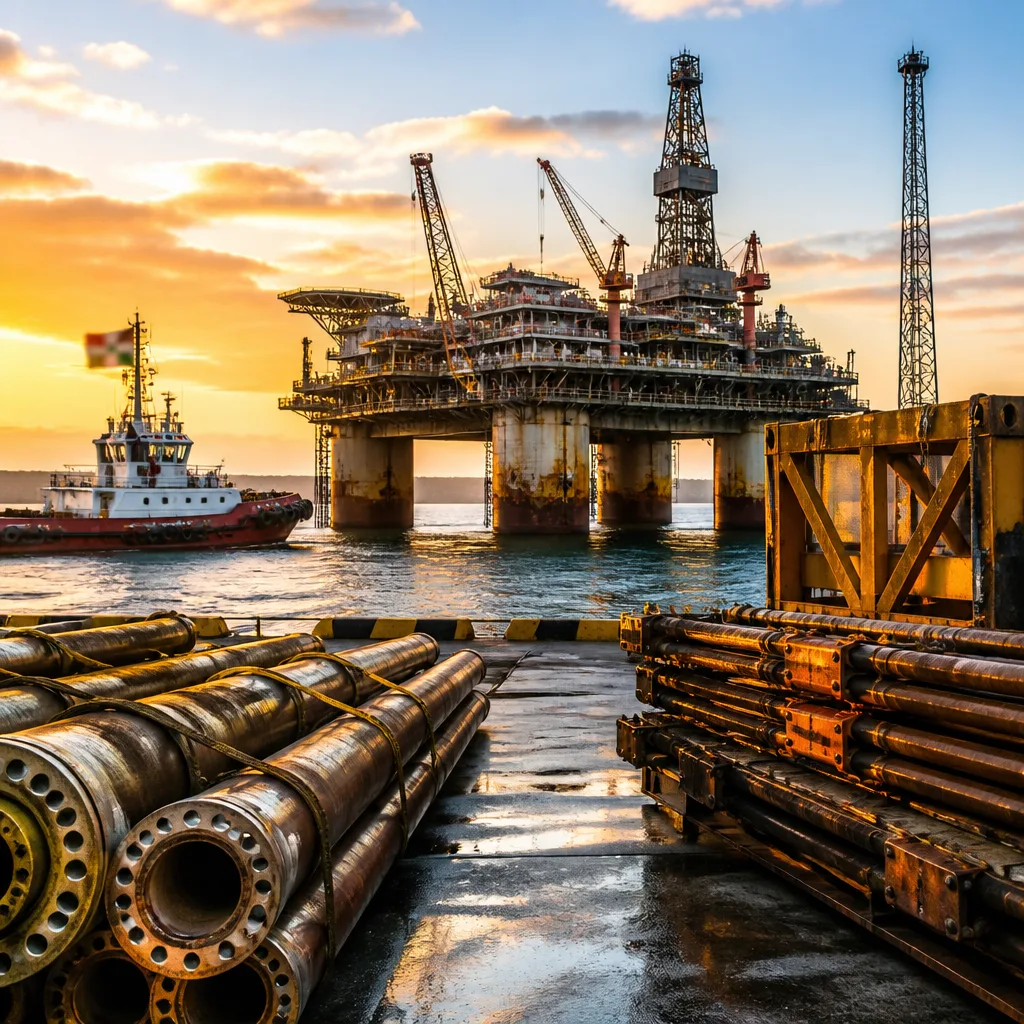
Tehran already holds the world’s second-largest gas reserves. Yet officials and analysts say that the central constraint is the ability to extract and monetise those resources. International sanctions, limits on foreign investment, and shortfalls in specialised equipment and financing complicate development of new fields, particularly offshore projects that are capital- and technology-intensive.
The tensions around Iran’s hydrocarbons have intensified as Washington steps up measures targeting Tehran’s economy. US Treasury Secretary Scott Bessent described the latest campaign as the “endgame”, signalling a push to curtail Iran’s remaining avenues for revenue and trade. Iranian authorities have dismissed those claims; Iran’s Central Bank Governor Abdolnasser Hemmati said the measures would have “no impact” on the country.
“No impact on Iran,”
That juxtaposition — confident official rhetoric and cautious commentary from analysts inside the country — frames debate about Iran’s near-term ability to ramp up gas production.
Analysts warn of structural limits
Commentators writing in Iranian media caution against assuming Tehran can simply sidestep new restrictions. One analyst, Abdolrahman Fathollahi, argued that Iran’s economy has become more fragile following recent conflicts described domestically as the “12-day” and “40-day” wars, and that experience in evading sanctions does not guarantee resilience to a tougher, more targeted campaign.
Observers point to a central dilemma: even where large discoveries are made, developing greenfield projects typically requires transferring specialised offshore drilling, processing and pipeline technologies, as well as arranging large-scale capital. Those flows have been intermittent for Iran since the re-imposition of international sanctions in previous years.
Beijing’s balancing act
China’s role is pivotal. Hamed Vafaei, an associate professor of Chinese studies at the University of Tehran, noted Beijing is likely to continue enough energy purchases and trade to prevent Iran’s complete economic isolation. However, he stressed that China will prioritise its wider strategic and economic ties — with the United States, Western markets and Persian Gulf states — over any unconditional backing of Tehran.
That assessment suggests Beijing may offer a partial lifeline but is unlikely to accept major economic or diplomatic costs on Iran’s behalf. In practice, this could translate into continued purchases of Iranian oil or preferential payment arrangements on a limited scale, rather than a wholesale opening of capital and technology transfer needed for large offshore gas projects.
- Key constraint: finance and specialised extraction technology.
- Political pressure: intensified US measures aim to close remaining economic lifelines.
- China’s stance: likely pragmatic support but insufficient to fully offset sanctions risk.
| Actor | Position/Capacity |
|---|---|
| Iranian government | Announces discoveries; asserts resilience |
| US Treasury | Pursuing measures to tighten economic pressure |
| Analysts inside Iran | Warn of fragility and limits to sanctions evasion |
| China | Pragmatic partner; unlikely to jeopardise broader interests |
For South African readers, the unfolding dynamics in Tehran matter indirectly. Shifts in Iranian production and export capacity can influence global energy markets and the strategy of major powers in the Middle East, with potential knock-on effects for commodity prices and diplomatic alignments. They also illustrate how abundant natural resources do not automatically translate into economic benefit when external finance, technology and geopolitics intersect.
Ultimately, analysts say Tehran's new finds reaffirm geological potential but do not alter the central problem: converting reserves into functioning, revenue-generating projects under the constraints Iran now faces.