
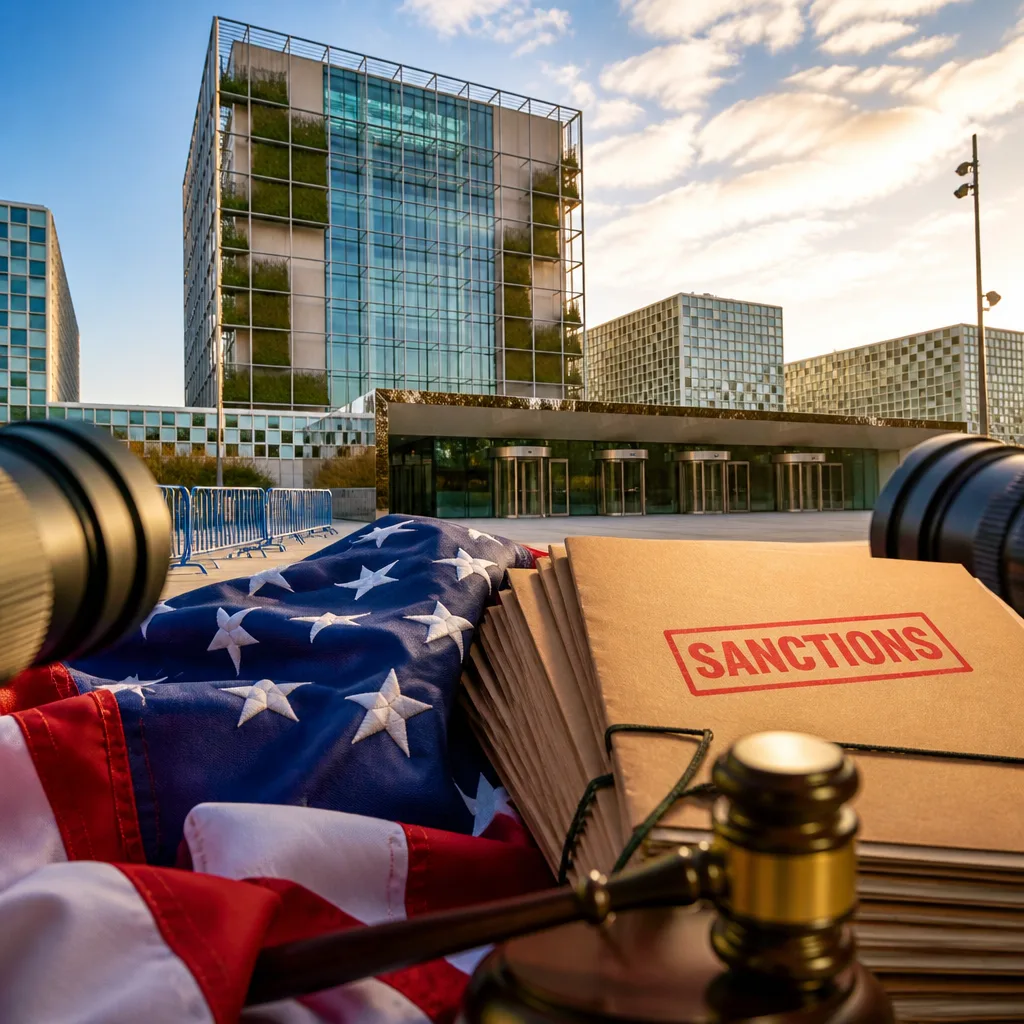
The United States has imposed sanctions on two senior officials of the International Criminal Court (ICC), marking a sharp escalation in Washington’s confrontation with the Hague-based tribunal. The measures target ICC President Tomoko Akane of Japan and senior trial lawyer Abdoulaye Seye of Senegal, according to reporting on the announcement.
Washington says court is politicised
The sanctions were issued under an executive order signed by President Donald Trump in February 2025, which declared a "national emergency" in response to what the administration described as the ICC’s "illegitimate and baseless actions" against the United States and its close ally Israel. The US government has argued the court is biased and has accused it of exceeding its mandate.
"We will not tolerate its assault on state sovereignty," Secretary of State Marco Rubio said in a statement reported alongside the action, describing the ICC as "a corrupt and fatally politicised supranational court that has maliciously abused its authority and exceeded its mandate."
The announcement follows earlier US measures against ICC officials. The administration previously sanctioned former ICC chief prosecutor Karim Khan, who was removed from his post last month amid allegations of sexual misconduct. It also sanctioned Francesca Albanese, the UN special rapporteur for the occupied Palestinian territories, whom the United States accused of antisemitism and support for terrorism. Separately, the US indicated last year it would withdraw from UNESCO after the agency recognised Palestine as a member state.
Context: arrest warrants that provoked US ire
The immediate context for the sanctions includes ICC action in relation to the conflict in Gaza. A three-judge ICC panel in November 2024 issued arrest warrants for Israeli Prime Minister Benjamin Netanyahu and his former defence minister, Yoav Gallant, finding they bore responsibility for the alleged war crime of "starvation as a method of warfare" and other "inhumane acts" in the Gaza Strip. The United States and Israel are not parties to the Rome Statute, the treaty that established the ICC in 2002, and do not accept the court’s jurisdiction.
US officials have framed the sanctions as part of a broader campaign to impede the ICC’s ability to pursue cases they regard as illegitimate. Last month, Secretary Rubio announced a plan to "systematically disable" the court, saying Washington would take steps "brick by brick, if necessary."
Legal and diplomatic implications
The sanctions add to a growing list of measures that pit the United States against international justice mechanisms. Human Rights Watch and three other advocacy groups have responded by suing the Trump administration, arguing that the sanctions obstruct efforts to hold perpetrators of atrocity crimes accountable. The lawsuit asserts that punitive measures against ICC staff interfere with investigations and protections necessary for international justice.
The use of sanctions against senior court officials is likely to deepen tensions between the US and states, organisations and civil society actors that support the ICC’s prosecutorial mandate. The measures may also complicate diplomatic relations where third-party states seek to navigate between Washington’s policies and obligations under international law.
- Sanctioned individuals: Tomoko Akane (ICC President) and Abdoulaye Seye (senior trial lawyer)
- Legal basis: US executive order declaring a national emergency in February 2025
- Precedent measures: Sanctions against Karim Khan and UN rapporteur Francesca Albanese; US announced withdrawal from UNESCO after Palestine’s membership
| Individual | Role | Nationality |
|---|---|---|
| Tomoko Akane | ICC President | Japan |
| Abdoulaye Seye | Senior trial lawyer | Senegal |
For South Africa and other states that engage with or support the ICC, the development raises practical and reputational questions. Although the United States is not a party to the Rome Statute, its global influence means US measures can have ripple effects on funding, cooperation and the security of court personnel.
Observers will watch how the ICC and affected states respond. The court’s ability to conduct investigations, protect witnesses and secure cooperation from states may be tested if Washington pursues further steps to limit its operations.
The sanctions underscore a deeper contest over the role and reach of international institutions. They crystallise a policy choice in Washington to confront an international tribunal it deems threatening to sovereign prerogatives — a stance that will reverberate through diplomatic and legal debates on accountability for mass atrocity crimes.









