
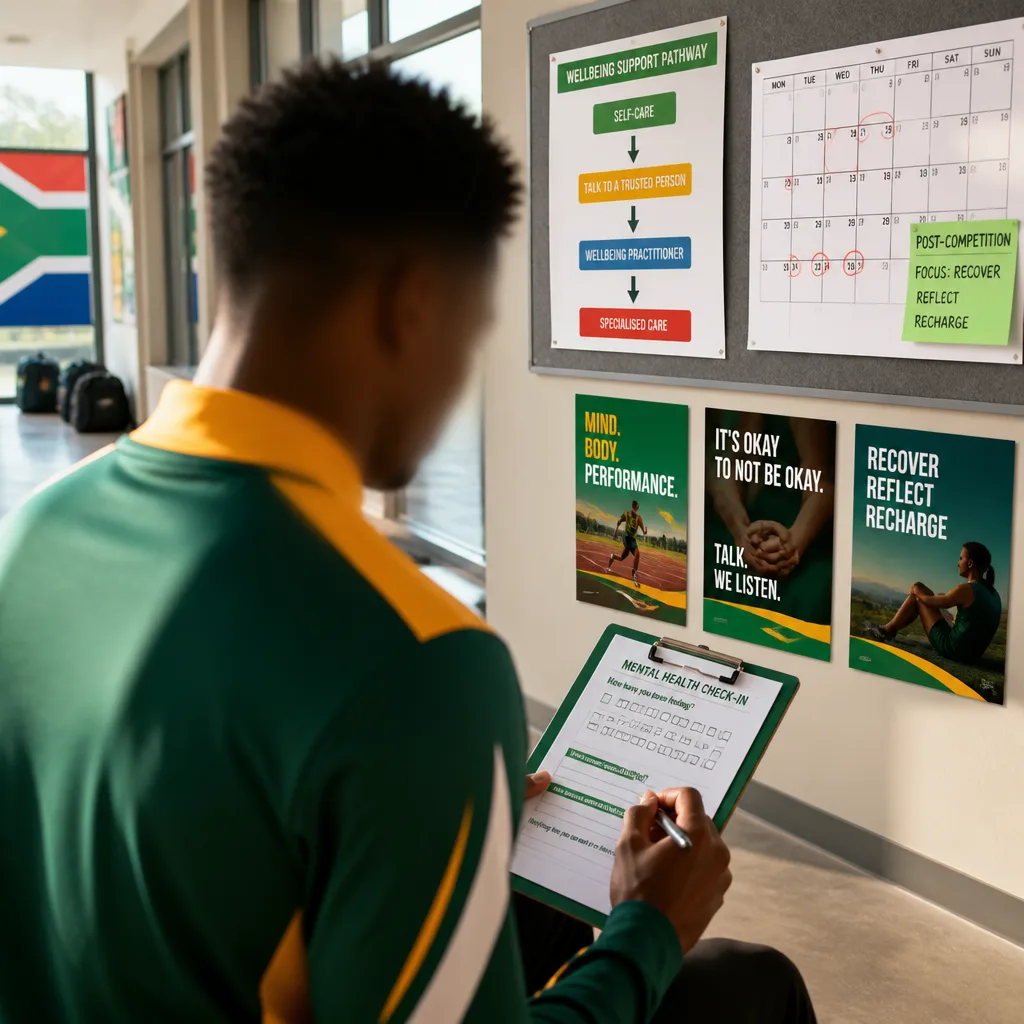
The International Olympic Committee (IOC) is urging sports bodies to implement routine mental‑health screening and ongoing monitoring for elite athletes, according to a consensus statement published in the British Journal of Sports Medicine. The panel behind the Statement recommends screening at predefined time points and following significant events, and says these processes should form part of an organisational culture that fosters mental wellbeing across sporting systems.
Evidence and approach
The updated Statement draws on a synthesis of current scientific evidence reviewed by an international panel of 31 people with lived, clinical and scientific expertise. It aims to create a more standardised, evidence‑based framework for detecting and managing mental ill health among elite athletes.
The authors note that mental ill health in elite athletes is common, can be triggered by sport or manifest during participation, and may affect performance. Importantly, the Statement situates wellbeing on a continuum rather than as a binary presence or absence of disorder, stressing that psychological functioning is dynamic and changeable.
"While recognition of overt mental health disorders in elite athletes remains essential, situating athlete wellbeing within a dynamic continuum offers an additional framework for understanding the spectrum of psychological functioning in this population," the Statement says.
The Statement highlights that athletes may experience transient stress reactions related to competition, setbacks or intense training, which are important mental‑health considerations even when a diagnosable disorder is not present.
Recommendations for sporting organisations
Key elements set out in the Statement include:
- Routine screening and regular monitoring of mental health at predefined time points and after significant events.
- Detection and general management strategies spanning the full range of mental‑health issues that may affect athletes.
- Consideration of influential stressors and environmental factors, cultural contexts and barriers to help‑seeking.
- Measures to foster mental wellbeing and resilience, including attention to social media impacts and the intersection of injury, performance and mental health.
These activities should not be isolated clinical responses but integrated into organisational policies and culture so that support is accessible, normalised and proactive.
| Area | Suggested focus |
|---|---|
| Screening | Predefined timepoints; post‑event assessments |
| Management | Evidence‑based treatments and referral pathways |
| Prevention | Cultural change, resilience building, reduce barriers to seeking help |
Implications for South African sport and health services
Although the Statement is international, its recommendations are relevant to national sporting federations, high‑performance units and medical teams in South Africa. Embedding routine screening and structured follow‑up may require resources, training and clear referral pathways between sporting medical staff and mental‑health professionals.
Adopting a continuum approach to athlete wellbeing encourages earlier identification of stress reactions and other subthreshold problems that can escalate if unrecognised. For athletes, coaches and administrators this means shifting from reactive crisis management to proactive care that supports performance and long‑term health.
Sports bodies will need to weigh practical considerations: which screening tools to use, who administers and interprets assessments, how confidentiality is protected, and how to ensure equitable access to care across disciplines and provinces. The Statement underlines cultural and contextual factors, suggesting one‑size‑fits‑all approaches are insufficient.
Practical next steps
- Establish agreed times for routine screening (for example: pre‑season, post‑major competition, after injury) and protocols for event‑triggered assessment.
- Create clear referral pathways linking coaches and team doctors to psychologists, psychiatrists and community mental‑health services.
- Invest in education to reduce stigma and improve recognition of early signs of psychological distress among athletes and support staff.
The IOC Statement provides a blueprint but does not replace clinical judgement. Athletes experiencing symptoms should consult a doctor or a mental‑health professional rather than self‑diagnose. Sporting organisations and health services must collaborate to translate these recommendations into policies and practice that protect both performance and the wellbeing of athletes.











