
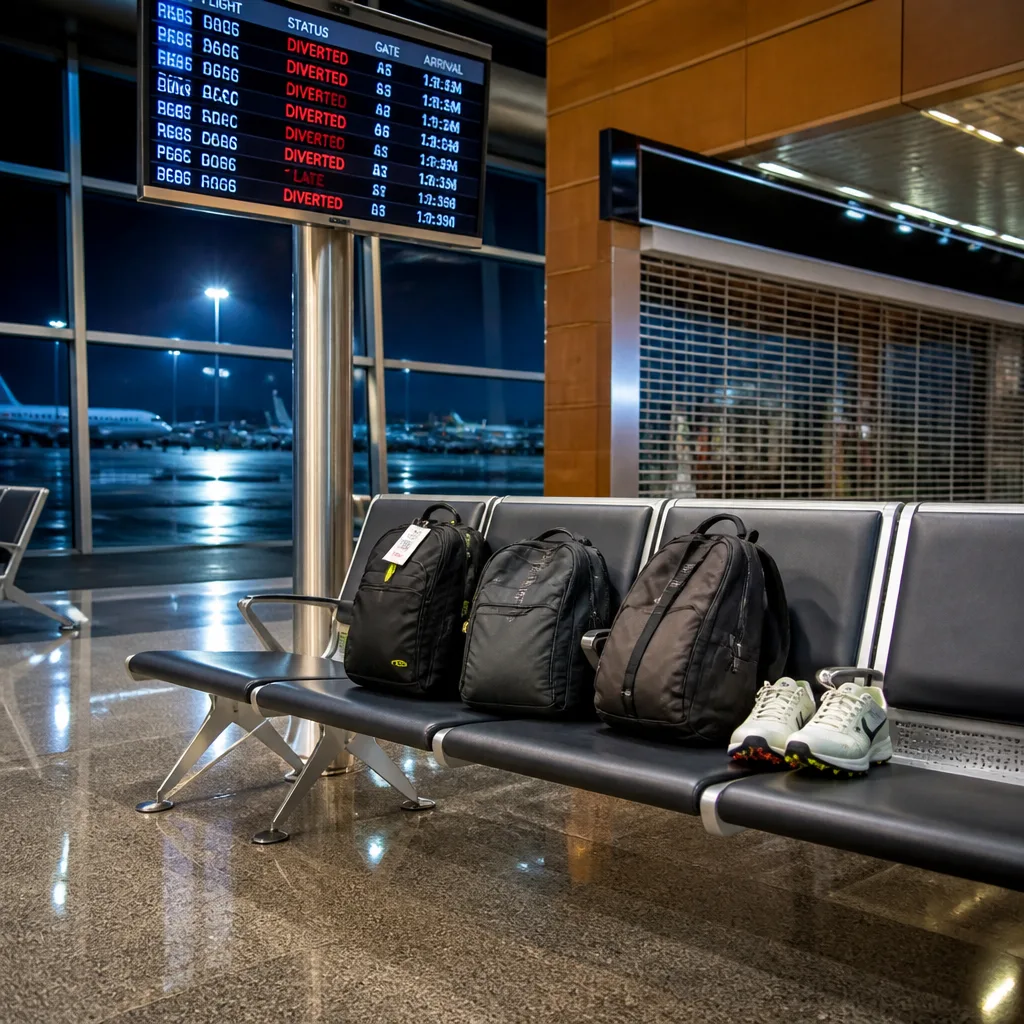
The Antigua and Barbuda Under-20 athletics team arrived in Eugene, Oregon, just hours before competition after an overnight travel disruption that coach Teddy Daley described as a "travel nightmare." The three-member squad faced a chain of delays and re-routing following a thunderstorm that forced their flight to divert and left the athletes exhausted and out of sync with their competition schedule.
Flight diversion, airport overnight and missed rest
Daley said the trouble began when the flight bound for Miami was diverted to Fort Myers because of storm activity. Fort Myers is not set up to handle a large number of international diversions, and passengers remained onboard for hours. The aircraft eventually returned to Miami, but by then it was about 01:30 and no hotel rooms were available; the airline arranged accommodation but passengers had to remain in the airport overnight.
"By the time we got to Miami it was 1:30 or somewhere thereabout. American Airlines decided that they were going to put us up but no hotel was available so we had to stay at the airport. No place to sleep, no place to lay down so we had to sit all night."
The prolonged delay and lack of rest had immediate consequences. Sprinter Kasiya Daley withdrew from the 100-metres heats, a decision the coach linked to the disruption. With limited seat availability on subsequent flights, the management arranged for the athletes to travel separately ahead of the coaching staff in the hope they would reach Eugene in time.
Split routing and team management under pressure
Daley explained that when seats became available they sent the athletes alone and asked organisers in Eugene to assist them with accreditation and accommodation on arrival. The coach and support staff then attempted to re-route themselves, taking different flights via Phoenix to reach the championships. A number of possible flights passed before they could secure onward travel, adding to the uncertainty.
Daley said the disruption was not caused by the Antigua and Barbuda Athletic Association, which had arranged travel well in advance, but by circumstances beyond their control — the weather and the resulting diversion and airport capacity issues.
- Event: World Athletics Under-20 Championships, Eugene, Oregon
- Team size: Three athletes from Antigua and Barbuda
- Disruption: Thunderstorm diversion to Fort Myers, overnight wait in Miami airport
- Impact: One athlete withdrew from 100m heats; team and staff split routes into Eugene
Wider implications for travelling athletes
The episode underlines how fragile pre-competition routines can be when travel plans are interrupted. For young athletes, especially those competing at international championships, last-minute sleep loss, unfamiliar time zones and the stress of re-routing can all undermine performance. Coaches and managers often rely on tight schedules to allow for warm-ups, accreditation and settling into accommodation—none of which were guaranteed for the Antigua and Barbuda team in this instance.
Sporting federations and travel planners increasingly contend with the ripple effects of weather-related diversions, limited airport infrastructure for unexpected arrivals and airline capacity constraints. While federations can plan early and purchase contingency options where budgets allow, unforeseen events such as storms still pose a major logistical risk.
For parents, athletes and team managers preparing for overseas competitions, the story provides practical reminders: confirm contingency plans, keep close communication with event organisers at the destination, and consider insurance or flexible ticketing where possible. In this case, the Antigua and Barbuda team relied on local organisers in Eugene to provide on-the-ground support when the athletes finally arrived.
Daley commended his athletes for their resilience despite the circumstances and the strain of travelling separately from the management. The coaches' account illustrates the human side of international sport travel — where a single diverted flight can cascade into exhaustion, disrupted routines and, ultimately, a withdrawal from competition.











