
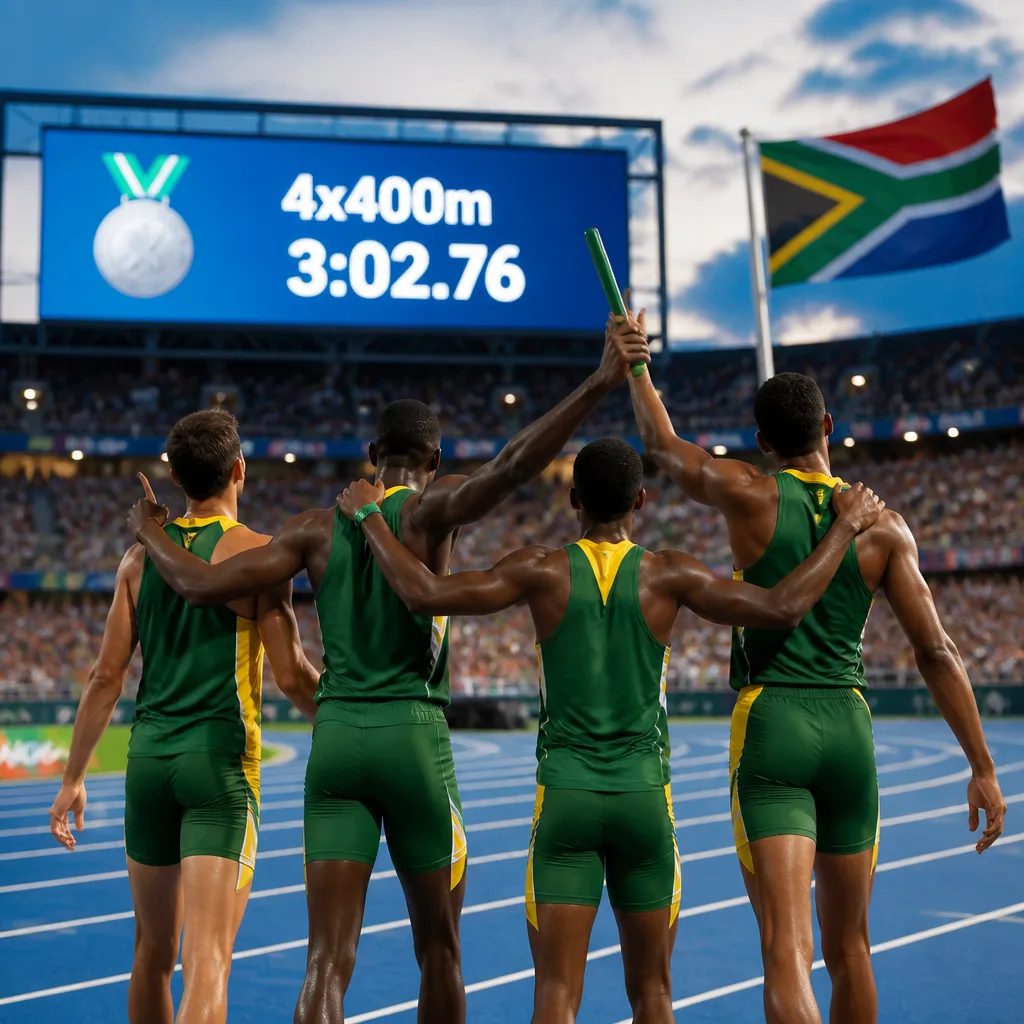
South Africa’s young 4x400m team produced a performance that reinforced the country’s reputation in the one-lap events, taking silver at the World Athletics Under-20 Championships in Eugene, Oregon, and setting a new African U20 record of 3:02.76.
Young quartet rise in a fast final
The team — Ryno Riekert, Kryn Romijn, Abelines Schoeman and Leendert Koekemoer — combined to finish behind the United States, who won gold in a blistering U20 world record of 3:01.39. France completed the podium in a French record of 3:04.80.
This silver adds to an impressive overall return for South Africa at the championships, taking the country’s medal tally to eight and signalling continuity in the 400m and relay programmes at junior level.
From junior flame to senior torch
June and July’s results at elite junior level mirror success seen in senior relay events earlier in the season. South Africa’s senior 4x400m quartet ran to silver at the World Athletics Relays in Gaborone, posting a national record of 2:55.07. That senior team included Mthi Mthimkulu, Lythe Pillay, Leendert Koekemoer and Zakithi Nene, with Pillay producing an outstanding split of 42.66 seconds.
Koekemoer’s presence on both junior and senior rosters this year underlines the porous boundary between rising talent and established performers; it also points to a pipeline able to feed senior squads with athletes experienced in pressure races.
- South Africa’s U20 quartet: Ryno Riekert, Kryn Romijn, Abelines Schoeman, Leendert Koekemoer.
- Result: Silver, African U20 record — 3:02.76.
- Gold: USA with a U20 world record — 3:01.39. Bronze: France 3:04.80 (French record).
What the result means for South African athletics
At a basic level, the performance in Eugene is a reminder that South Africa continues to produce 400m talent capable of challenging the world. For coaches and administrators, a medal and a continental record at U20 level provide tangible evidence that development pathways are functioning.
Beyond medals, the experience of running a world championship final is invaluable. Athletes who have raced under that kind of pressure gain a composure that is difficult to manufacture at domestic meets. For the quartet in Eugene, the race is a reference point they can draw on as they transition to senior competition.
| Position | Nation | Time | Note |
|---|---|---|---|
| 1 | USA | 3:01.39 | U20 world record |
| 2 | South Africa | 3:02.76 | African U20 record |
| 3 | France | 3:04.80 | French record |
For selectors and high-performance staff, the job now is to nurture these athletes through the delicate period between junior and senior ranks. That involves careful periodisation, international exposure and managing academic or work commitments that many young athletes balance alongside training.
South Africa’s relay strength offers another practical advantage: relays create more medal opportunities than individual events and can accelerate the development of race skills such as running bends, negotiating batons under pressure, and tactical awareness.
There is also a psychological dividend. Success at world level breeds belief. Young athletes who stand on podiums are likelier to set longer-term targets and to attract support from sponsors, universities and provincial programmes — all important for longevity in the sport.
In short, the silver in Oregon is not merely a line on a results sheet. It is a marker of pipeline health, a rehearsal for senior duty and a moment that could shape careers. For South African quarter-milers and their coaches, the challenge now is to convert this junior promise into senior medals when the stakes — and the times — are even higher.














