Hyundai Motor Group said it has accelerated an enterprise-wide artificial intelligence push, expanding access to its proprietary generative-AI tool and reporting large productivity and safety gains across research, manufacturing and aftersales operations.
Scale of adoption
The company announced that its H Chat Pro platform — a generative-AI service that supports multi-vendor models — now counts more than 30,000 active users as of July 2026, equating to roughly 80% of the general employee population across Hyundai Motor and Kia, according to the group. The move forms part of a broader artificial intelligence transformation built on a digital-transformation foundation the group established from 2019.
Measured operational gains
Hyundai reported marked improvements in operational metrics after embedding AI into core workflows. The group gave the following headline figures:
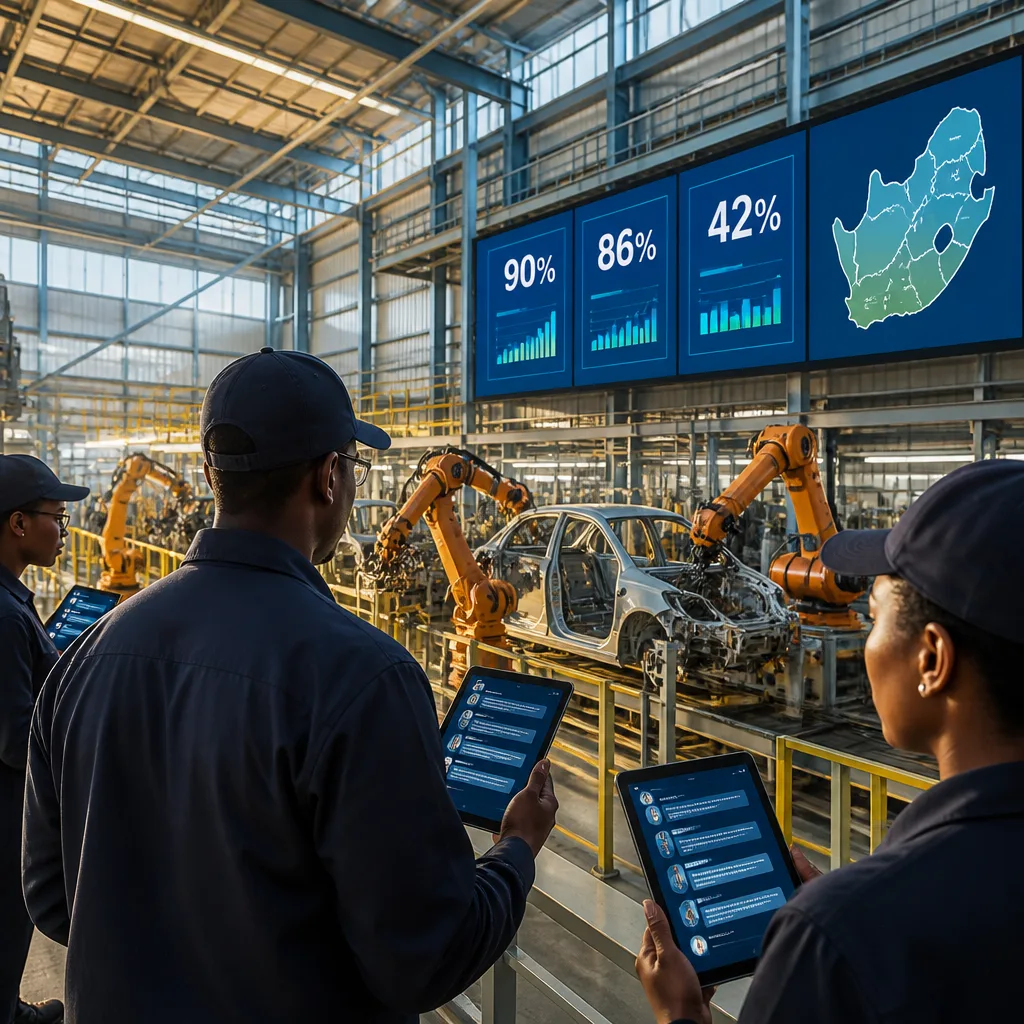
- Crash safety case review time reduced by about 90%.
- Unnecessary production downtime cut by roughly 86%.
- Vehicle maintenance response time shortened by about 42%.
These are substantial percentage shifts. For automotive factories and dealers, such gains translate into fewer lost production hours, faster repair turnarounds and potentially lower warranty and recall handling costs — all of which affect margins and consumer costs down the line.
| Area | Reported improvement |
|---|---|
| Crash safety case review | ~90% reduction |
| Unnecessary production downtime | ~86% reduction |
| Vehicle maintenance response time | ~42% faster |
From back office to the 'Physical AI' era
Looking ahead, the group said it will move beyond digital workplace assistance to extend AI into physical systems — covering vehicles, robots, factories and service operations. Part of that plan is to fully automate customer review responses from September 2026, an example of scale automation that, if applied broadly, could change customer-service staffing needs in dealer networks.
Hyundai framed its work as a journey from digital transformation to an AI transformation, aimed at changing how people work and how data drives decisions. The company has been gradually opening tools and use cases across departments, from R&D to manufacturing and aftersales.
What this means for South Africa
South Africa hosts several international automotive manufacturers and a broad supplier base; gains in productivity and service automation at a group the size of Hyundai can ripple through local operations. Key implications include:
- Potential pressure on labour models in dealerships and service centres as routine customer interactions and triage are automated.
- Opportunities for local suppliers to provide AI-enabled components, software and systems integration as vehicle and factory automation expands.
- Downstream effects on vehicle build schedules and parts logistics if production downtime is materially reduced globally.
Automotive labour organisations, dealer groups and parts suppliers will be monitoring how quickly these systems are rolled out beyond Hyundai’s own plants and offices, because the timing determines whether companies must retrain staff, reconfigure production lines or renegotiate service contracts.
Hyundai presented the progress and its future direction at an internal showcase in Seoul in August 2026, emphasising that its AI push builds on a multi-year digital foundation rather than being an ad hoc experiment.
Note: The figures cited are those released by Hyundai Motor Group; they have not been independently verified by this newsroom. The article does not constitute financial advice.