
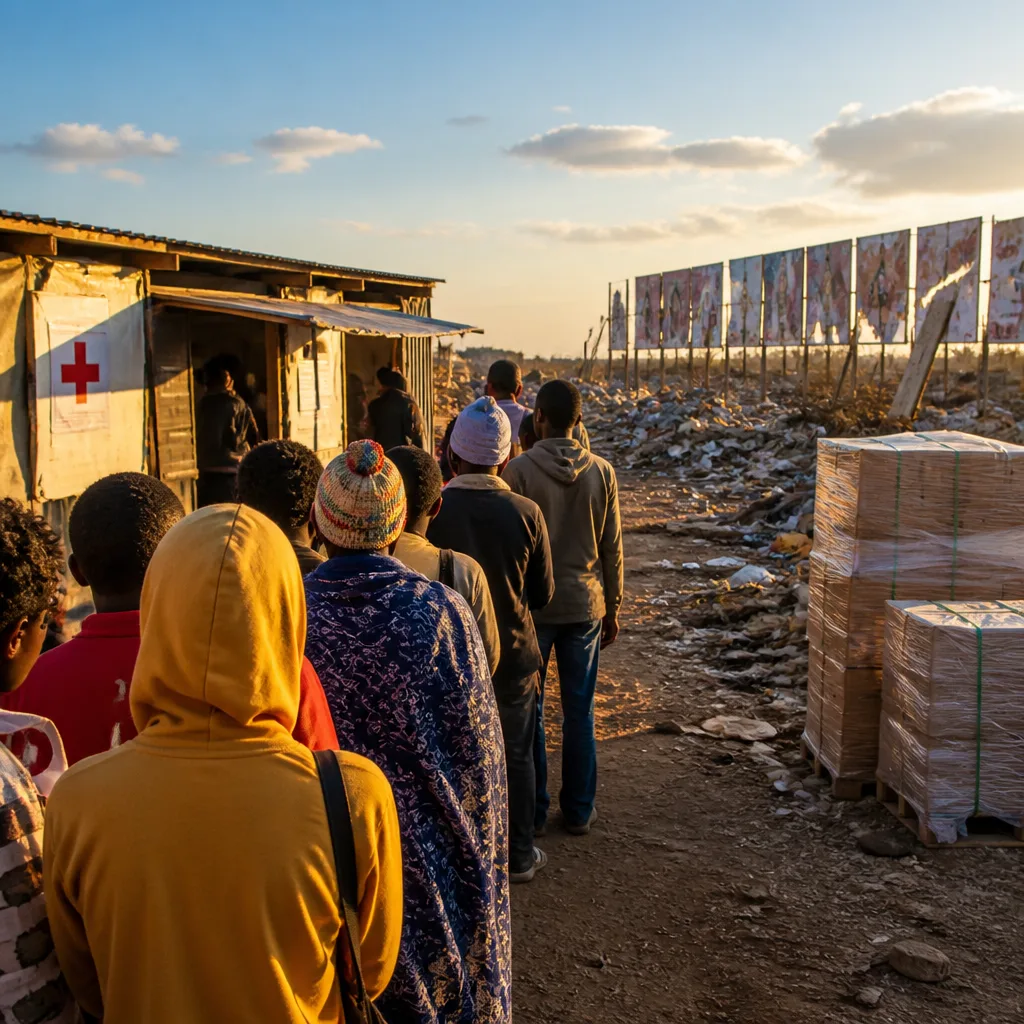
Gaza and the West Bank are enduring a humanitarian emergency marked by widespread food insecurity, collapsing health services and worsening living conditions, according to reporting that draws on an Integrated Food Security Phase Classification (IPC) assessment published on 13 August.
Scale of food insecurity and nutrition needs
The IPC report, cited in the source account, finds that almost 1.2 million people in Gaza are in a food “crisis” (phase 3 out of 5) and more than 200,000 people are in an “emergency” (phase 4). In aggregate, nearly two million Gazans may soon face high levels of food insecurity.
The assessment also projects significant child and maternal malnutrition needs by April 2027:
- 74,200 children under five estimated to need treatment for acute malnutrition;
- of those, more than 11,400 children may require treatment for severe malnutrition;
- and 24,600 pregnant or breastfeeding women are expected to need nutritional support.
| Indicator | Estimate |
|---|---|
| People in IPC phase 3 (crisis) | ~1.2 million |
| People in IPC phase 4 (emergency) | >200,000 |
| Children under five needing treatment | 74,200 |
| Children with severe malnutrition | 11,400+ |
| Pregnant/breastfeeding women needing support | 24,600 |
Worsening services and daily life
Reports describe health services in Gaza as unable to provide adequate care amid sustained bombardment and a blockade that has left hospitals without reliable power, water supplies and essential medical resources. The account says tents used as shelter become unbearably hot in summer, compounding the risks to the displaced and sick.
Water distribution and treatment are described as severely constrained because pumping and filtration systems lack power and maintenance. These breakdowns increase the risk of waterborne disease and further complicate treatment of malnutrition and other health conditions.
Security dynamics and the West Bank
The source content notes that bombing in Gaza continued during the reporting period and that Israeli authorities labelled simple devices such as balloons and kites — sometimes used by children — as threats that justified intensified strikes and evacuations of areas alleged to be launch sites.
In the West Bank, the picture is reported as increasingly dire, with a rise in settler attacks — including cattle theft, property damage and physical assaults — described as occurring several times daily. The account asserts that Israeli military responses have at times accompanied settler violence, and that Palestinian attempts at self-defence are frequently criminalised as “terrorist” acts and met with force.
Political backdrop and outlook
The humanitarian trajectory is set against a political calendar: the reporting notes that Israeli and Palestinian elections are under way, with the first Israeli election in four years scheduled for the end of October. The piece suggests that little immediate improvement for Palestinians is expected from the election cycle.
“After months of genocide and blockade, the health consequences will be felt for years to come,” the source material says.
The scale of unmet humanitarian needs and the deteriorating security environment present urgent challenges for humanitarian agencies and international actors. For South African policy-makers and civil society, the developments bear on diplomatic engagement, humanitarian assistance priorities and legal and human-rights advocacy in the months ahead.
As the situation evolves, the data-driven projections on food insecurity and malnutrition underline the need for continued monitoring, scaled humanitarian response and unfettered access for aid delivery to avert longer-term public-health catastrophes.









