
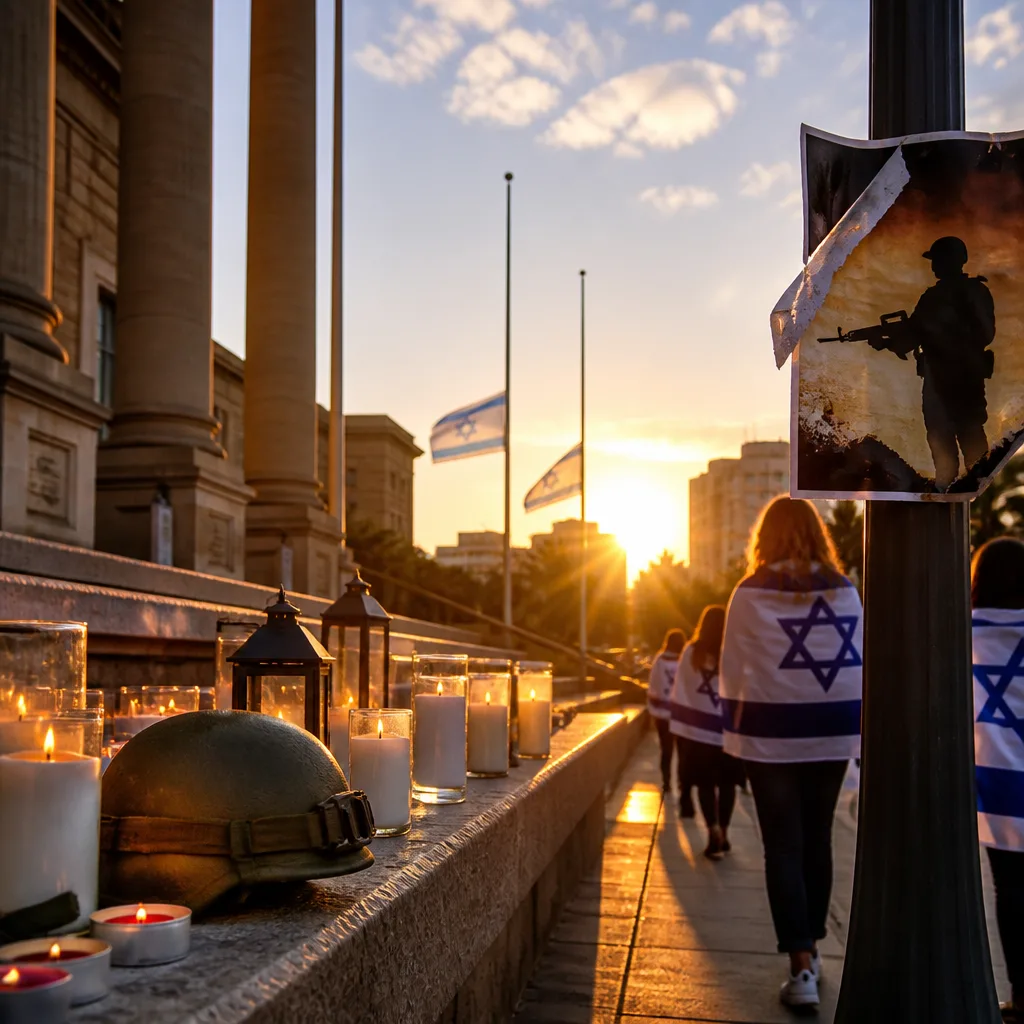
Three years after the Hamas-led assault that shocked Israel, the attack continues to dominate political debate and could determine the outcome of elections due in late October. The anniversary has sharpened scrutiny of government performance on security and become a rallying point for opposition campaigns demanding accountability.
Legacy of the attack and the electoral battlefield
The assault on 7 October 2023 left a deep mark on Israeli society and politics: official counts put the dead at 1,139 and those taken captive at about 250. The events and their aftermath — including subsequent fighting in Gaza, exchanges with Lebanon and tensions with Iran — remain central to voters’ assessment of leadership.
Former critics and rivals of Prime Minister Benjamin Netanyahu have seized on perceived failings in the run-up to the attack. They accuse the government of relying on a security posture that underestimated Hamas’s capabilities and of failing to ensure the country was properly prepared.
Calls for inquiry and the political stakes
Opposition figures have made a public demand for independent scrutiny of the chain of command and political decision-making before the attack. Notably, former chief of staff Gadi Eisenkot has placed an inquiry into the government’s failings at the centre of his party’s electoral platform.
Netanyahu’s response has been consistent with his broader political approach: he has rejected calls that focus solely on his government’s conduct and has shifted criticism toward other officials. That tactic carries high stakes. In addition to reputational damage, Netanyahu faces an ongoing criminal trial for corruption; defeat at the ballot box would complicate his legal and political position.
"Netanyahu has begun to push the claim that senior defence officials deliberately chose not to wake him," reported Al Jazeera.
Who benefits, who pays
The election context has sharpened three competing calculations among voters and political actors:
- Security-first voters, who favour experienced hands and leaders with robust defence credentials.
- Those demanding institutional accountability and independent investigations into systemic failures.
- Political operators for whom the anniversary is an opportunity to realign coalitions and exploit perceived weaknesses in opponents.
Political manoeuvring over the anniversary will affect coalition arithmetic in a proportional system where no single party reliably secures a majority. Parties promising a tough security stance may gain from voters anxious about threats, while those campaigning on reform and accountability may draw support from citizens seeking institutional change.
| Statistic | Figure |
|---|---|
| Israeli dead, October 7 attack | 1,139 |
| Israelis taken captive | about 250 |
Implications for governance and accountability
Calls for an independent inquiry create a dilemma for the governing coalition. An examination focused on security agencies and political leadership could clarify responsibilities, but it also risks deepening political polarisation ahead of the vote. For Netanyahu, who has long used a tough-security narrative to underpin his leadership credentials, the anniversary forces a choice between deflection and direct engagement with public demands for answers.
For voters, the anniversary is more than a moment of remembrance: it is a test of whether institutions and political leadership can be held to account in a way that changes future security policy. The outcome of October’s election will indicate whether Israelis prioritise continuity and experienced hands or shift toward those promising institutional reform and new oversight.
The memory of 7 October remains a political fulcrum — one that will be decisive for parties trying to convert grief and anger into electoral support, and for leaders whose political survival depends on how they manage both the past and the prospect of future threats.












