
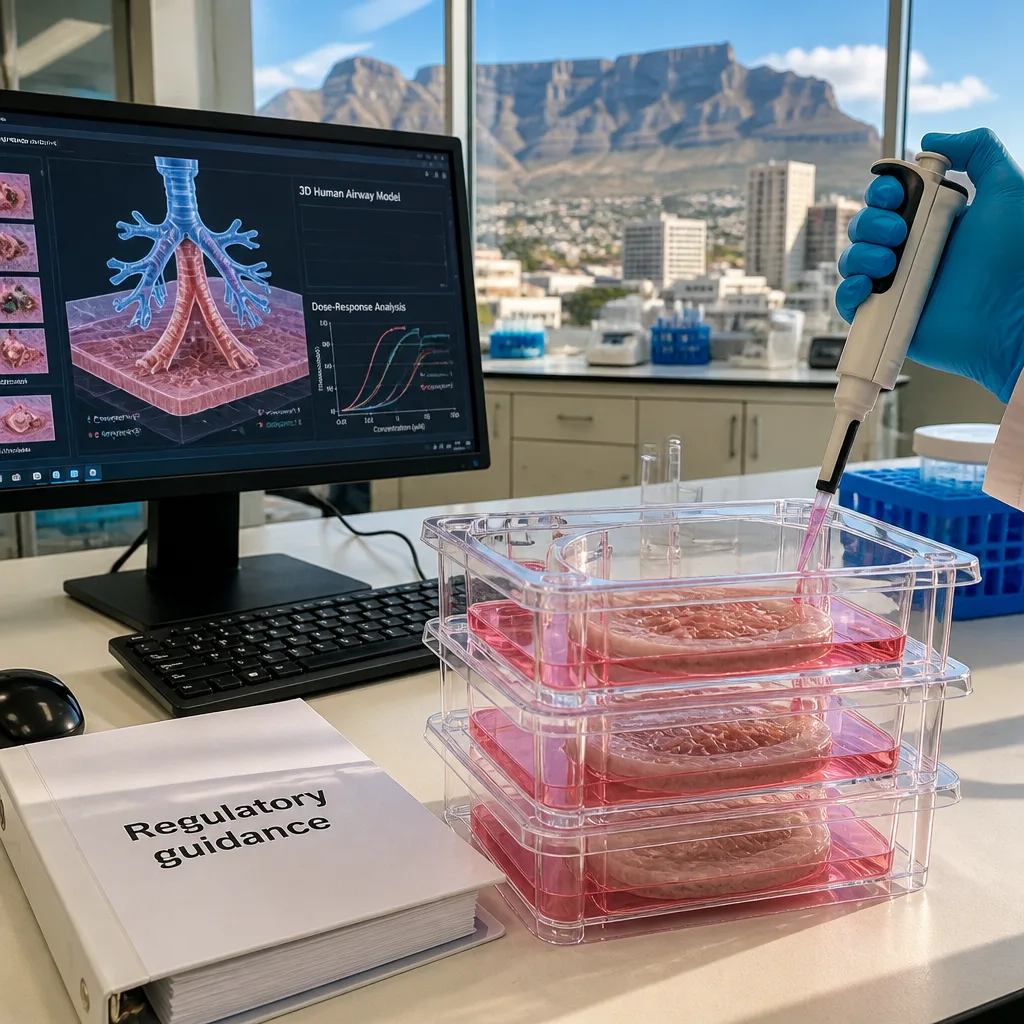
Laboratory-grown human airway models and computer modelling have been shown to assess the respiratory effects of surfactants, researchers reported on 14 September 2026, and the findings have been used to inform guidance issued by the U.S. Environmental Protection Agency (EPA) prioritising human cell–based data for regulatory decisions.
What was done
The paper, published in Toxicological Sciences, is a collaboration between the PETA Science Consortium International e.V., the EPA and the Flemish Institute for Technological Research (VITO). It describes using human cell‑derived airway models — laboratory cultures that mimic the structure and function of the human respiratory epithelium — together with computational approaches to evaluate irritation and toxicity after a single exposure to surfactants. Surfactants are chemicals widely present in soaps, household cleaners and some agricultural formulations.
Why this matters
Traditional inhalation safety testing frequently relies on animals such as rats. The authors emphasise that anatomical and physiological differences between rats and humans limit how well animal results predict human responses in the respiratory tract. By contrast, human cell‑based methods are designed to reproduce human tissue responses more directly. The study also aims to translate in vitro results into human equivalent concentrations, a step needed if laboratory data are to inform exposure limits or regulatory assessments.
“This collaborative work shows the power of combining human biology with cutting‑edge cellular and computational tools,” said Science Consortium President Dr Amy Clippinger.
Regulatory uptake and further work
The research team reports that the method and data from the publication were used to inform EPA guidance that gives priority to data from human cell–based methods and to their use in regulatory decisions about surfactants. The Science Consortium said it will continue working with the EPA to evaluate additional surfactants using the same approach to build a broader dataset. The paper also contributed data to a multi‑laboratory international effort coordinated by the Science Consortium.
- Approach: human airway in vitro models + computational translation to human equivalent concentrations
- Target chemicals: surfactants used in consumer and agricultural products
- Regulatory impact: informed EPA guidance prioritising human cell–based evidence
Context and caveats
Cell‑based airway models are part of a growing class of human‑relevant, non‑animal methods often called New Approach Methodologies (NAMs). These approaches include organoids, engineered tissues and in silico models that together can offer mechanistic information about toxicity pathways. Translating an in vitro concentration to a real‑world human exposure requires careful computational modelling and assumptions about dose, deposition and clearance in the lung. The study presents a path for that translation but does not replace a full regulatory exposure assessment on its own.
Nor does this work imply that a single in vitro test will suffice for all regulatory questions. The Science Consortium and collaborators are explicitly expanding the dataset by testing additional surfactants and participating in multi‑laboratory validation efforts to demonstrate reproducibility across sites.
Implications for South Africa and beyond
For regulators and industries in South Africa, the work is relevant because it documents a pragmatic route from human‑relevant laboratory data to regulatory decision‑making. If adopted more widely, such approaches could reduce reliance on animal testing, speed hazard characterisation and provide information that may be more directly applicable to human health risk assessments.
| Partner | Role |
|---|---|
| PETA Science Consortium International e.V. | Co‑author, coordinator of multi‑lab effort |
| U.S. Environmental Protection Agency (EPA) | Co‑author; used the data in guidance |
| VITO (Flemish Institute for Technological Research) | Co‑author, research collaborator |
The study demonstrates a direction rather than a finished regulatory instrument: further chemicals must be evaluated, inter‑laboratory reproducibility confirmed and exposure modelling refined before these methods can fully replace conventional tests. Still, the paper and the EPA’s response mark an important step towards integrating human cell–based science into chemical safety assessment.









