
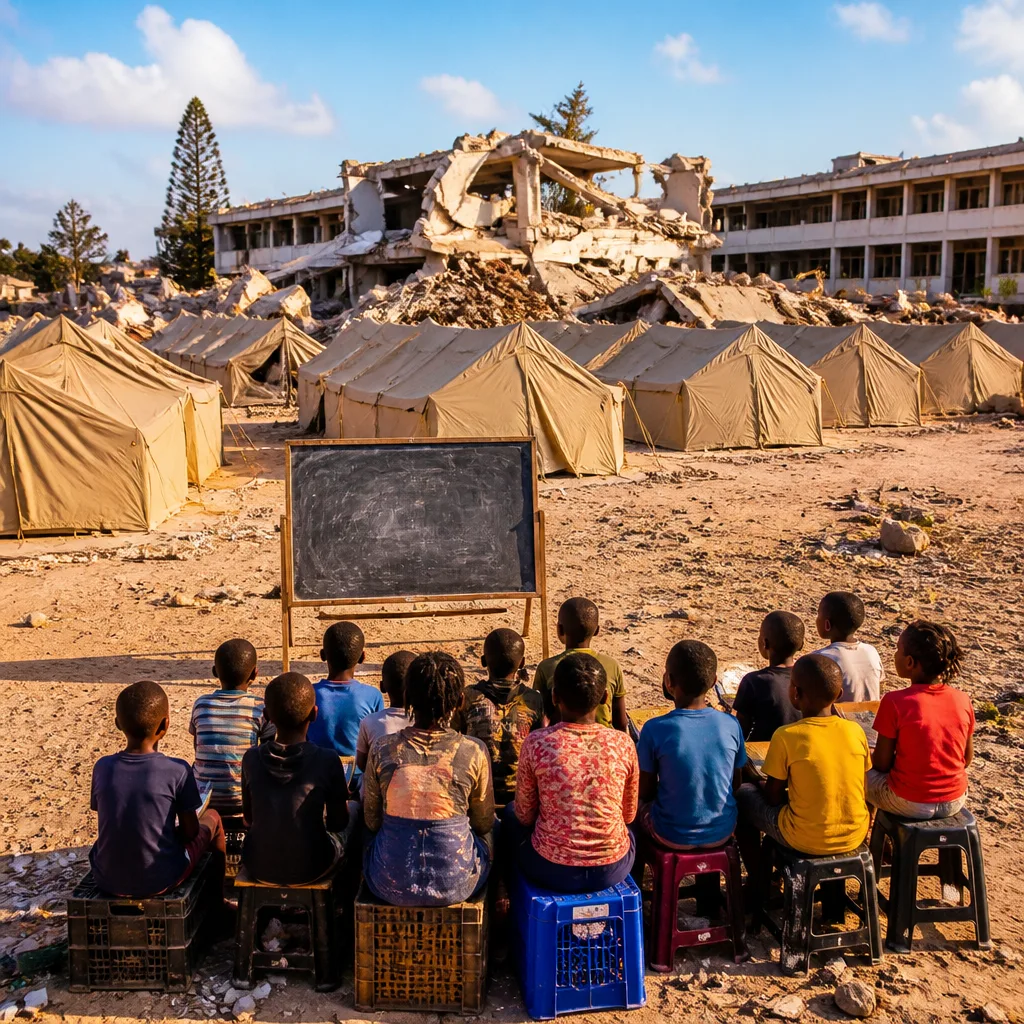
Authorities in the Gaza Strip have established hundreds of temporary tent classrooms to serve learners after an extensive destruction of school infrastructure caused by prolonged conflict, the Palestinian Ministry of Education and Higher Education and news agencies reported on 19 September 2026.
Mass displacement of schooling into tents
According to the ministry, approximately 700 tents have been erected across Gaza to provide space for formal lessons for more than 500,000 students whose regular schools were damaged, destroyed or converted into shelters. The move aims to restore some continuity to learning despite the severe constraints on normal schooling.
“Around 700 tents have been set up across the Gaza Strip to serve more than 500,000 students,” the ministry said, as reported by Anadolu.
Education officials and local authorities are attempting to restart teaching while humanitarian needs and security concerns remain acute. The fragile security situation, blockades and intermittent strikes continue to hamper access to basic services and the safe operation of schools.
Human cost and education infrastructure loss
Gaza’s Health Ministry figures, cited alongside the education report, outline wider human tolls that intersect with the education crisis. The ministry reported that Israeli violations of the 10 October 2025 ceasefire had resulted in 1,386 deaths and 4,784 injuries up to the date of the latest update. Broader figures since October 2023, also cited in the reporting, record nearly 74,000 Palestinians killed and over 174,000 injured, and the destruction of around 90% of Gaza’s civilian infrastructure.
The scale of damage to homes, utilities and public buildings directly affects pupils’ ability to attend school, the availability of trained teachers and the resources necessary for effective teaching and learning. Schools that are operational may be overcrowded, lack basic sanitation, or double as shelters for displaced families, further complicating efforts to provide uninterrupted education.
| Indicator | Figure (reported) |
|---|---|
| Tent classrooms set up | ~700 |
| Students accommodated | >500,000 |
| Reported deaths since 10 Oct 2025 | 1,386 |
| Reported deaths since Oct 2023 | ~74,000 |
Immediate and longer-term challenges
Setting up tents provides a short-term means to resume classroom-style learning, but several urgent challenges remain:
- Safety: tents provide limited protection in an environment where strikes and insecurity persist.
- Resources: temporary sites often lack teaching materials, electricity, heating or cooling, and sanitation facilities needed for a full school day.
- Psychosocial needs: large numbers of children have experienced trauma, displacement and loss, increasing the need for counselling and specialised support within schools.
Restarting lessons in emergency settings also strains an already depleted teaching workforce and complicates assessment, promotion and exam preparations for older learners. The interruption of normal schooling risks long-term learning loss that may be difficult to recover without sustained, well-resourced programmes.
International and local agencies typically support emergency education through teacher stipends, learning material supplies and safe-space programmes, but those efforts depend on predictable access, funding and security. The reports underline how fragile such efforts are when infrastructure and public services have been severely degraded.
For parents and educators, the shift to tents is a stop-gap that allows children to be under supervision and to maintain some routine of learning. Yet it does not substitute for the full set of facilities and protections that a functioning school provides, nor does it resolve the systemic needs that follow protracted conflict.











