
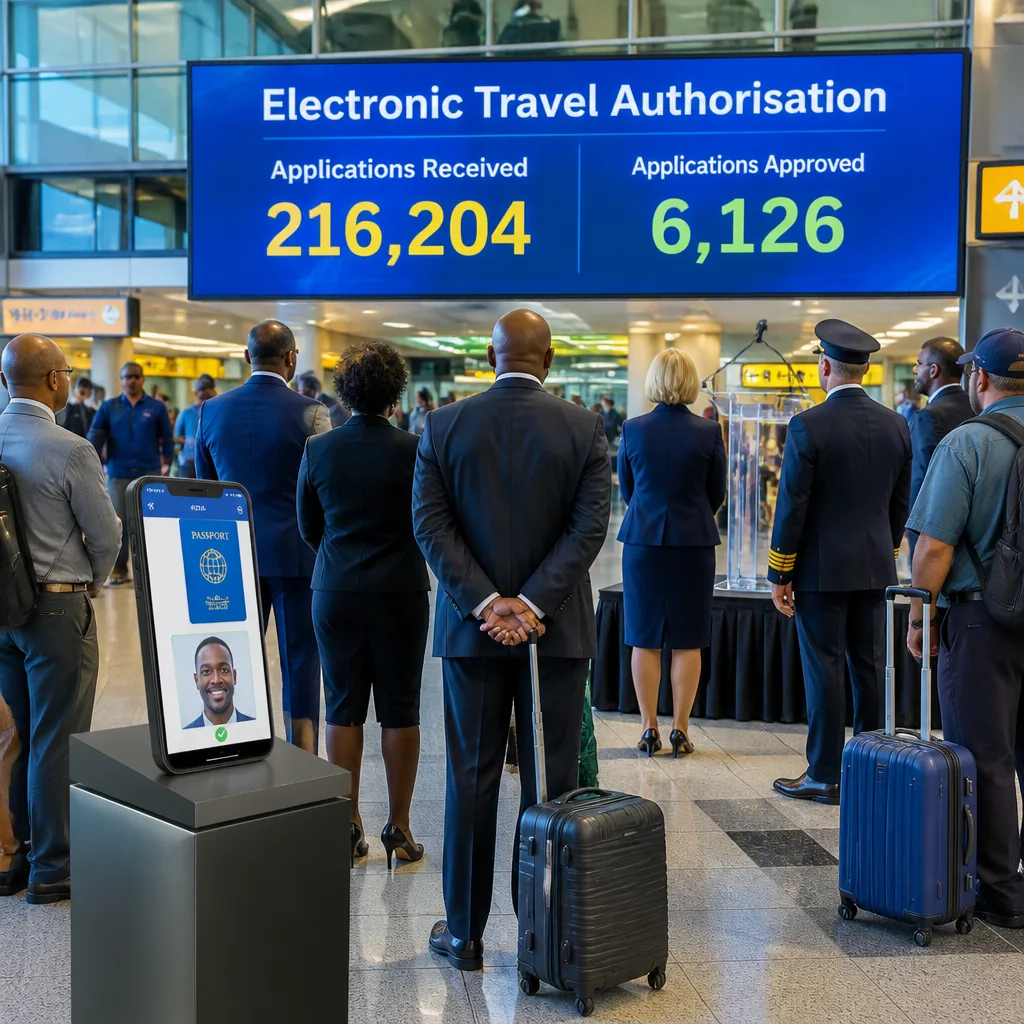
President Cyril Ramaphosa on Wednesday formally launched South Africa’s Electronic Travel Authorisation (ETA) system at OR Tambo International Airport, a digital visa-processing platform the Department of Home Affairs says has already processed 216,204 applications and rejected 6,126 fraudulent submissions during its pilot phase.
Digital reform framed as convenience and fraud prevention
Home Affairs Minister Leon Schreiber described the ETA as part of the department’s broader “Home Affairs @ home” programme, which aims to use technology to deliver civic services without forcing applicants to visit physical offices. The ETA, Schreiber said, is the third pillar of the department’s digital reform after the digitalisation of civic services and the development of a digital identity system.
Schreiber framed the launch as both an economic and security measure. According to the source report, he said the ETA would “unlock economic growth through tourism, investment and legitimate travel, and land a decisive blow against visa fraud and illegal immigration.” The system was piloted during South Africa’s G20 presidency for travellers from China, India, Indonesia and Mexico.
“Just over two years ago, we set out to fundamentally reform Home Affairs through our vision to harness technology in order to deliver Home Affairs @ home… In the digital age, you should not have to go to just a handful of physical locations and fill in paperwork to access Home Affairs services,” Schreiber said at the launch, according to the reporting.
How the ETA works
The ETA platform allows eligible travellers to apply online from anywhere in the world without visiting a South African mission or visa processing centre. The application process, as described in the source, includes:
- creating a profile on the ETA platform;
- verifying a cellphone number and email address using a one-time PIN;
- scanning the passport and uploading a selfie;
- biometric technology to compare the passport photograph with the traveller.
The report did not provide further technical detail on the biometric checks or on turnaround times for approval, nor did it specify which categories of travellers will be eligible under the ETA beyond those included in the pilot.
Numbers at a glance
| Metric | Number |
|---|---|
| Applications processed since pilot | 216,204 |
| Fraudulent applications rejected | 6,126 |
Those figures were provided by Charmaine Ndlela in reporting on the launch. The ETA was unveiled publicly at OR Tambo and will now move from pilot to national roll-out, according to the same account.
What this means politically
The ETA touches several contested policy areas. For the government, the system promises to streamline visa processing and reduce opportunities for fraud — a perennial complaint about South Africa’s immigration controls. For businesses and the tourism sector, a digital authorisation could reduce friction for visitors and investors. For Home Affairs, it is a test case of the department’s ability to deliver complex digital services at scale.
At the same time, digital migration of services raises oversight questions: how biometric and personal data will be stored and protected, what appeal routes exist for refused applicants, and how the system will integrate with existing immigration and border-management processes. The source reporting did not supply answers to these governance questions.
The ETA launch represents a clear shift in how the state intends to manage cross-border movement: fewer in-person visa appointments and a greater reliance on remote verification. That shift may reduce administrative costs for some travellers and missions, but it also places weight on technology firms and Home Affairs systems to get the details right — and on Parliament and oversight bodies to scrutinise data protection, accuracy and fairness.
The numbers and policy framing in this article are drawn from reporting by Charmaine Ndlela.












