
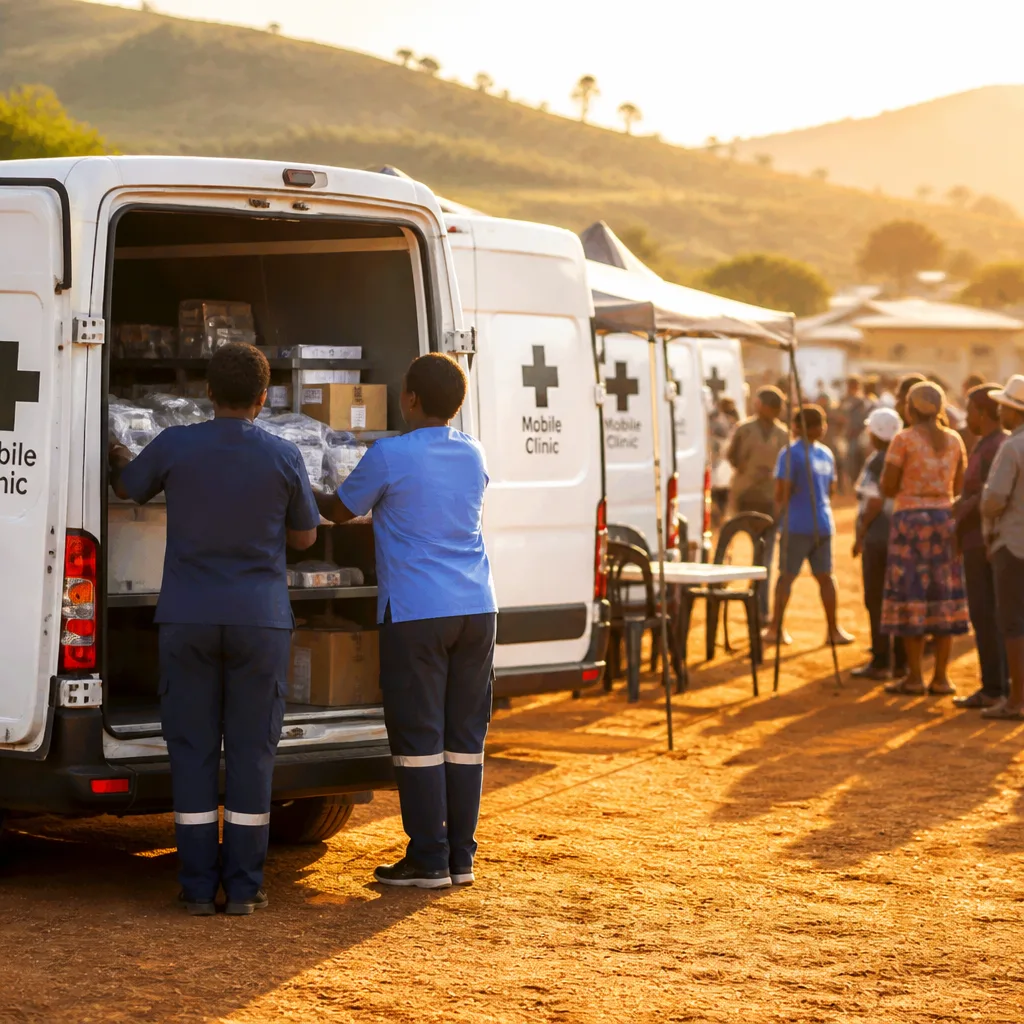
The Gauteng Health Department has bolstered its outreach capacity by adding seven fully equipped mobile clinics, expanding the provincial fleet to 53 units. The vehicles will be deployed across Johannesburg, Tshwane, Ekurhuleni and Sedibeng to serve communities with limited access to fixed healthcare facilities.
Priority services and staffing
A provincial health spokesperson, Steve Mabona, said the mobile clinics will deliver a range of primary healthcare services, with particular emphasis on screening and early detection. According to the department, services to be offered include HIV and tuberculosis (TB) testing, hypertension and diabetes screening, healthcare for women, children and young people, health promotion and referrals for patients requiring further care.
"Services for women, children and young people, hypertension and diabetes screening, health promotion and patient referrals," Mabona said.
The department has also committed to ongoing monitoring to ensure the units are properly maintained, adequately staffed and equipped, and deployed to areas of greatest need. The expansion responds to growing demand driven by population growth and mounting pressure on Gauteng's fixed healthcare facilities.
Why mobile clinics matter
For communities located far from permanent clinics and hospitals, mobile clinics provide an important link to preventive care, screening and early treatment. The availability of HIV and TB testing in mobile units can reduce travel barriers and may encourage earlier diagnosis and linkage to treatment. Likewise, routine screening for hypertension and diabetes helps identify chronic disease early so that patients can be referred for ongoing management.
- Scale: Fleet increased by seven units to a total of 53 mobile clinics.
- Geographic focus: Deployment across Johannesburg, Tshwane, Ekurhuleni and Sedibeng.
- Core services: HIV and TB testing, hypertension and diabetes screening, maternal and child health services, youth-focused services, health promotion and referrals.
The department did not provide a breakdown of staffing levels per unit or details on operational hours and frequency of visits in the published account. It said the clinics will be monitored to ensure they remain operational and are sent where they are most needed.
Context and implications
Gauteng is the country's most populous province and has experienced sustained population growth, which places ongoing strain on hospitals and fixed clinics. Mobile clinics are one mechanism to extend primary healthcare reach, especially in peri-urban areas and townships where residents may face transport, financial or time barriers to accessing care.
Effective deployment of mobile clinics requires coordination with local facilities to manage referrals, continuity of care and supply chains for medicines and diagnostics. Monitoring and maintenance commitments are essential if the fleet is to remain functional and clinically useful over time.
While the expansion increases immediate outreach capacity, the department's statement did not outline funding sources for the new units, projected running costs, or plans for integrating mobile clinic data into broader health information systems—factors that affect long-term sustainability and the ability to track outcomes such as linkage to HIV or TB treatment, or control of hypertension and diabetes.
Residents who use mobile clinics should still be encouraged to follow up at fixed clinics for continuing care. For personal health concerns, consult your local clinic or a healthcare professional rather than self-diagnosing. The provincial rollout aims to strengthen primary healthcare access, but its impact will depend on operational details, referral linkages and sustained resourcing.











