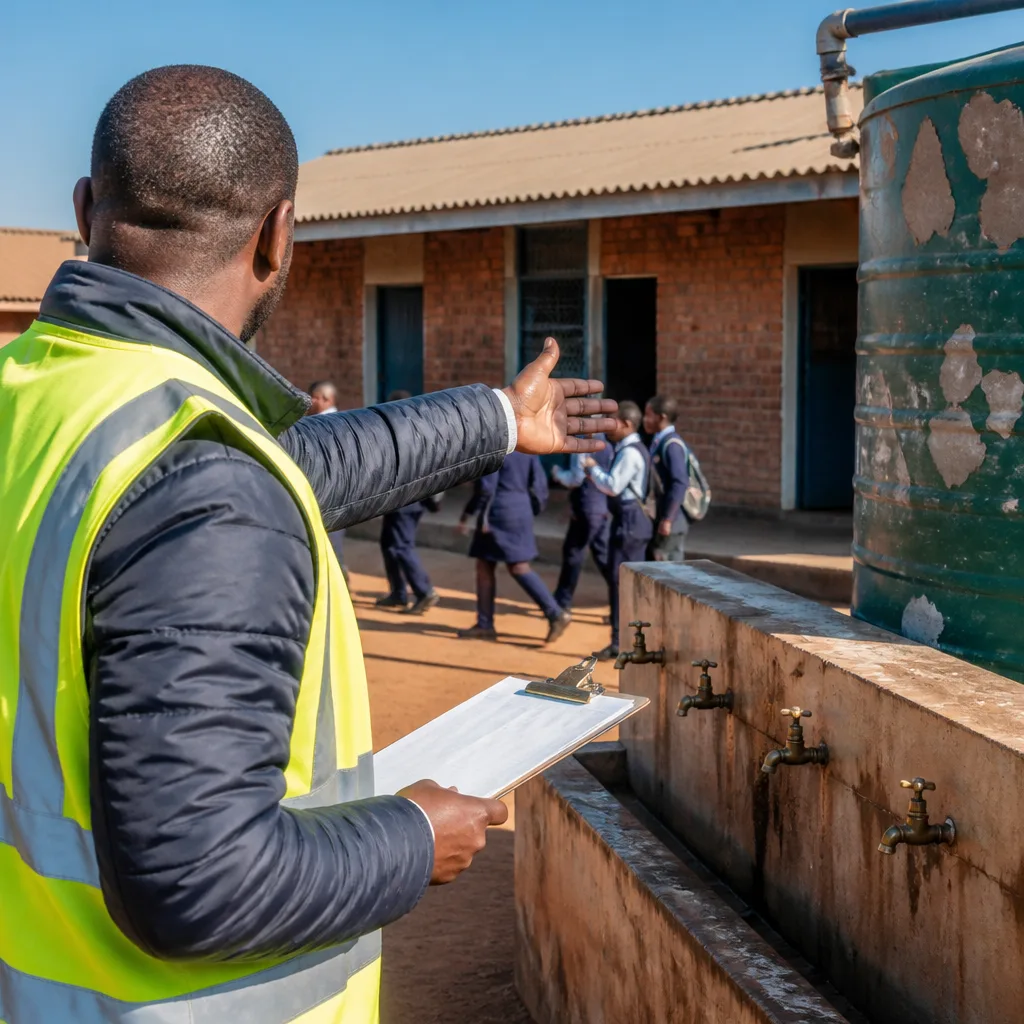
The Gauteng Department of Education has dispatched an inspector to Reiger Park Secondary School in Boksburg to assess concerns about the functionality and condition of the school's ablution facilities and access to drinking water, the provincial Education MEC Lebogang Maile confirmed.
Inspection to determine nature of interventions
The inspection will establish whether the problems can be dealt with through routine maintenance funded by the school or whether they require more extensive infrastructure intervention from the department. According to the department, the outcome will guide the appropriate response.
“Every learner has a right to learn in a safe, dignified, and conducive environment. Functional sanitation and access to water are fundamental requirements in our schools, and concerns relating to these facilities must receive the necessary attention,” said MEC Lebogang Maile.
The department emphasised that it takes the concerns seriously and that inspectors were already on site to assess the state of the facilities and water infrastructure.
Background: recent repairs and ongoing responsibilities
The department noted that it previously carried out a significant maintenance programme at Reiger Park Secondary after the school's infrastructure had been vandalised. That work, completed in May 2025, included repairs to ablution facilities and replacement of sanitary components, sewer pipes and drinking-water fountains.
Other work completed during that maintenance phase included replacement and repair of windows, doors, flooring and ceilings; roof repairs; installation of new security gates; and replacement of the perimeter fence. The department said routine maintenance and minor repairs remain the responsibility of schools and are funded in part through the National Norms and Standards for School Funding.
- May 2025: Major maintenance and repairs completed by the department's Head Office Infrastructure unit.
- Current action: An inspector has been dispatched to assess ablution and water infrastructure.
- Next steps: Outcome of inspection will determine whether further departmental intervention is required.
What this means for learners and schools
The department’s response highlights two persistent challenges for many South African schools: the legacy of vandalism and the need for effective routine maintenance. While a provincial intervention can address damage caused by vandalism or ageing infrastructure, ongoing upkeep — from unclogging drains to repairing taps and cisterns — is usually managed at the school level using a portion of the school’s allocated maintenance funding under national norms.
For parents, teachers and learners, the central questions are practical: are toilets usable and hygienic, is safe drinking water accessible during school hours, and how quickly can faults be fixed when they occur? The inspection at Reiger Park Secondary aims to answer those questions and identify the scale of work needed to restore and sustain facilities.
| Issue | Action taken (May 2025) |
|---|---|
| Ablution facilities | Repairs and replacement of sanitary components |
| Sewer pipes | Replacement |
| Drinking-water fountains | Replacement |
| Windows, doors, flooring, ceilings | Repairs and replacements |
| Security | New gates and perimeter fence |
The department’s statement also reminds schools of their own obligations. Under the National Norms and Standards for School Funding, allocations include an element for maintenance of buildings, grounds and equipment. How effectively that funding is used — and whether schools receive timely additional support where vandalism or structural problems exceed their maintenance capacity — is a recurring issue in the sector.
The inspector’s report will be closely watched by the school community and education stakeholders for clarity on the immediate safety and dignity of learners, as well as any recommendation for further departmental action. For many schools nationally, the balance between provincial capital repairs and school-level maintenance continues to shape learners’ daily experience in the classroom.