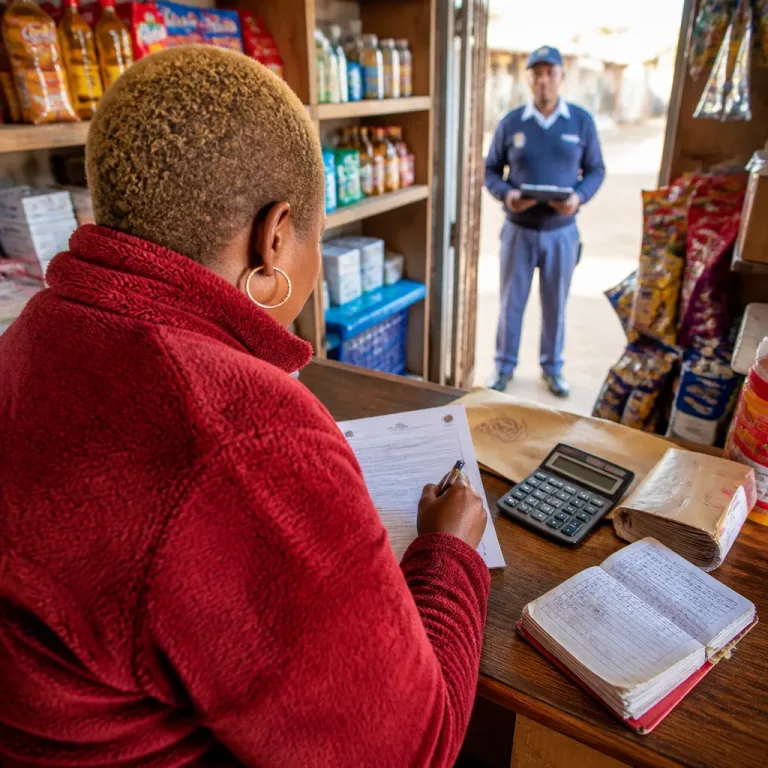
BonFire Eats, a township food venture in Tsakani, was founded after its owner sold her mother’s old furniture to raise seed capital and, despite a subsequent closure, re‑launched in December 2023 with an ambition to create opportunities for others, reported the African Reporter.
Start‑up capital from home goods
The business began in March 2020. With no outside investors or formal financial backing, the founder sold a headboard, dressing table and room divider she had inherited from her mother to pay for basic cooking ingredients and launch the enterprise. That all‑in, household‑asset route to starting a business is common where formal credit is scarce and entrepreneurs rely on personal assets to get going.
Closure, resilience and re‑launch
Like many small enterprises, BonFire Eats faced setbacks. The operation was forced to close after personal challenges. Rather than exit entrepreneurship, the founder used the hiatus to replan and returned to the market with a new vision. The business was re‑launched in December 2023, this time framing its purpose beyond food sales: to inspire others and create local opportunities.
“It was a bold step driven by faith and determination,” the founder said, according to the African Reporter.
What BonFire Eats represents
BonFire Eats is not presented as a large employer or a venture with scale figures attached, but its evolution highlights several themes relevant to South Africa’s small‑business landscape:
- Household assets as seed capital: When formal lending is inaccessible, entrepreneurs convert possessions into start‑up funds.
- Informal sector resilience: Temporary closures do not always mean permanent failure; relaunches can follow periods of restructuring and strategic replanning.
- Social mission: Small operations increasingly combine commercial aims with local job creation and community upliftment.
These themes matter for household budgets and local economies. When a neighbour turns a bedroom headboard into working capital and builds a micro‑enterprise, the ripple effects are concrete: small income streams, demand for local suppliers, and the potential for apprentice‑style skills transfer within the community.
| Milestone | Date |
|---|---|
| Initial launch (capital from sold furniture) | March 2020 |
| Closure due to personal challenges | Not specified |
| Re‑launch with expanded mission | December 2023 |
Context for policy and support
Small, township‑based ventures such as BonFire Eats often fall in gaps between formal small business support and social programmes. They typically do not qualify for conventional bank loans because of limited collateral and irregular cash flows, and they may not be reached by grant schemes designed for registered small enterprises. The founder’s experience underscores how household assets continue to serve as the most accessible form of capital for many micro‑enterprises.
For policymakers and non‑governmental support organisations, the business model points to practical interventions that could strengthen sustainability: micro‑grants to preserve household assets, targeted training on cash‑flow management, and procurement links with larger food buyers to create stable orders that help smooth income shocks.
For consumers and local leaders, BonFire Eats shows a trajectory familiar in many South African townships — a business born of necessity that evolves into a community asset when it survives early shocks. Its relaunch in December 2023 signals not just a return to trade but a renewed focus on opportunity creation and local inspiration, a narrative that resonates with many households balancing tight budgets and entrepreneurial ambitions.
Reported by the African Reporter, the story of BonFire Eats adds to a growing catalogue of township entrepreneurs turning modest means into sustainable livelihoods. It also serves as a reminder that small capital injections — even from within the home — can incubate businesses with social as well as economic returns.