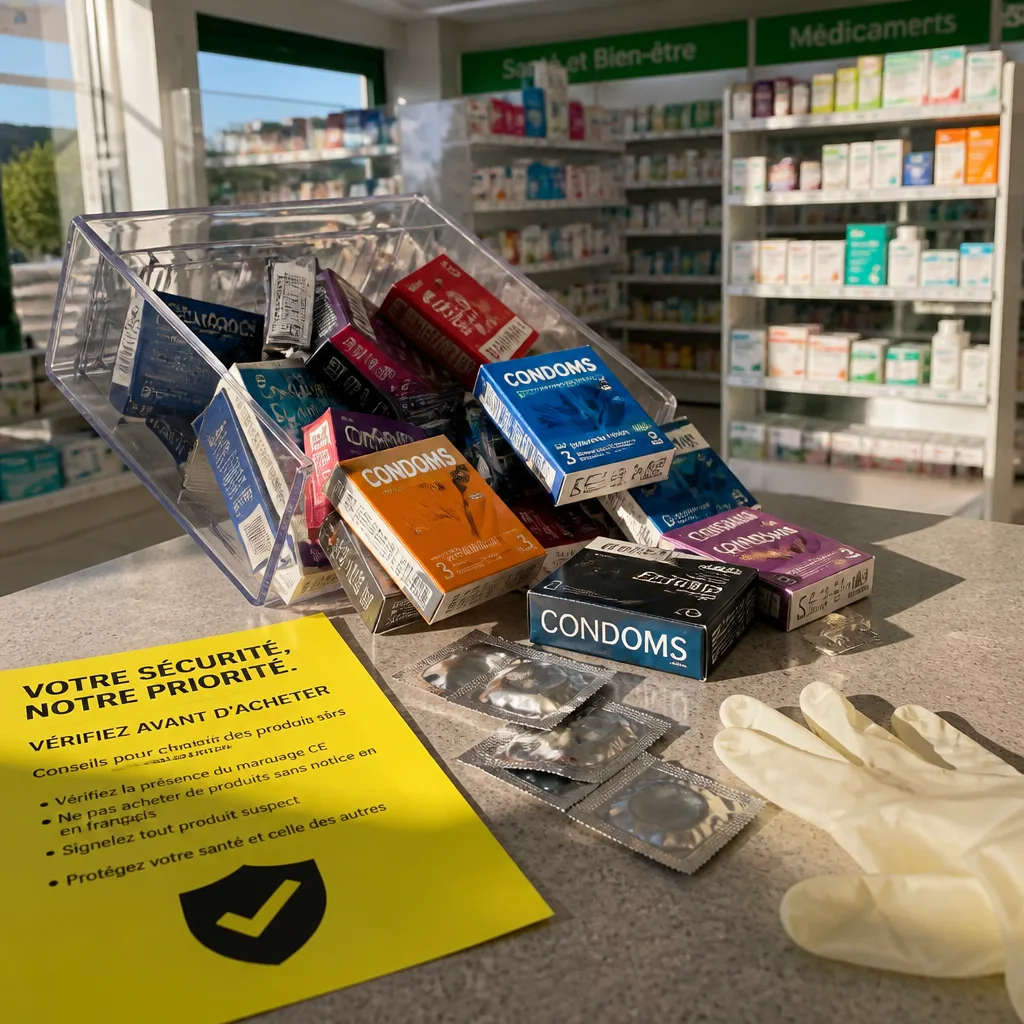
French public health and consumer agencies have flagged a batch of condoms sold in shops and online as potentially unsafe, saying the products lack mandatory safety testing and may increase the risk of unintended pregnancy and sexually transmitted infections (STIs).
Regulators identify unmarked products
The Directorate‑General for Health (DGS) and the Directorate‑General for Competition, Consumer Affairs and Fraud Control (DGCCRF) announced on Friday that their inspections uncovered about 30 product lines without the required CE conformity marking. The agencies said around 1,000 boxes of those products were sold, amounting to more than 40,000 condoms, and that most affected lines were distributed by Asian vendors.
“These condoms may pose serious risks to users’ health and safety,” the French authorities said.
The watchdogs did not publish a list of the specific online platforms where the items were found, but they reported that marketplaces had removed the affected listings after being notified.
Why CE marking matters
In the European Union condoms are regulated as medical devices. To be placed on the market products must meet strict requirements for biocompatibility, leak resistance, microbial contamination, dimensions, shelf life and stability. Compliant condoms undergo conformity assessment before receiving CE marking.
Regulators emphasised that CE‑marked condoms remain one of the most effective methods to prevent both pregnancy and transmission of STIs, including HIV. The World Health Organization estimates a typical‑use failure rate for male condoms of about 13% per year in real‑world conditions, driven largely by incorrect use, expiry, incompatibility with certain lubricants and breakage. By contrast, properly certified condoms usually show a material failure rate of roughly 1–2%.
| Measure | Reported figure |
|---|---|
| Product lines without CE marking | ~30 |
| Boxes sold | ~1,000 |
| Condoms involved | >40,000 |
| WHO typical‑use failure rate | ~13% per year |
| Typical material failure for compliant condoms | 1–2% |
Health advice and implications
Following the alert, French health authorities urged people who may have used the affected products to get screened for STIs and to take a pregnancy test if a period is late. They warned that non‑compliant condoms, which have not undergone CE conformity assessment, may have material weaknesses or micro‑perforations that reduce their protective effect.
For clinicians and public health programmes, such incidents underscore the importance of supply‑chain vigilance and the need for clear information on safe purchasing. Online marketplaces remain a convenience for many consumers, but regulators say vigilance is required to ensure medical devices sold through these channels meet mandatory standards.
- Consumers should check for CE marking and packaging information indicating conformity assessment.
- Anyone worried about recent condom failure should seek STI testing and pregnancy testing at a clinic or with their healthcare provider.
- Health professionals are reminded to advise patients about correct condom use, storage and compatibility with lubricants.
While this alert was issued in France, it is a reminder to consumers globally — including in South Africa — to purchase condoms from reputable suppliers and to inspect packaging for certification marks and expiry dates. Public health services provide free or low‑cost condoms that have been quality‑assured; people unsure about a product’s safety are advised to obtain supplies from clinics or accredited retailers and to consult a healthcare worker rather than self‑diagnose following a potential exposure.
The DGS and DGCCRF did not provide a full list of affected retailers in their public statement but said marketplaces had removed the listings after the regulators’ intervention. Further investigations may follow to trace distribution routes and prevent future sales of non‑compliant medical devices.
Anyone who believes they may have used one of the products in question should contact their local sexual health clinic or primary healthcare provider for testing and counselling.