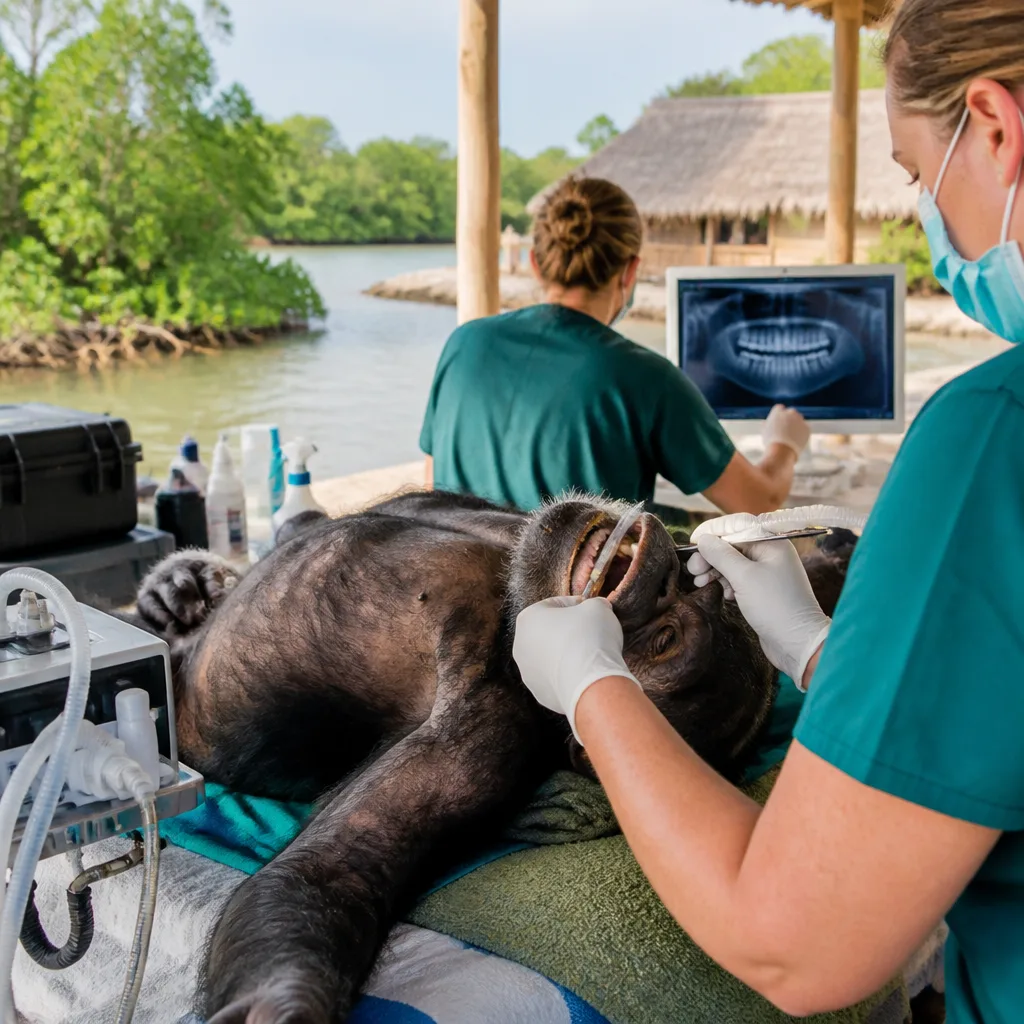
A group of chimpanzees formerly used in hepatitis B vaccine research received comprehensive health checks at the Second Chance Chimpanzee Refuge in central Liberia, organisers said, as part of ongoing long‑term care and monitoring for animals rescued from laboratory programmes.
Medical assessments to inform long‑term care
The examinations, carried out under anaesthetic, included dental cleaning, X‑rays, blood tests and physical assessments of the heart, lungs and nervous system, according to Humane World for Animals, the organisation that manages the sanctuary. The checks were intended to assess the chimpanzees’ long‑term health, detect early signs of disease and help tailor care plans as they age.
Veterinary staff also administered booster vaccinations and performed routine grooming such as fingernail trims and pedicures, the sanctuary said. Plans are in place to replicate these checks for the remaining animals in the refuge.
“The health checks are a vital part of caring for these chimpanzees who have been through so much,” said Belen Perez Hernando, the sanctuary’s veterinarian.
Liliana Pacheco Ricote, director of the sanctuary, told The Associated Press that more than 400 chimpanzees had been used by American researchers in Liberia for hepatitis B vaccine experiments from the 1970s until the early 2000s, many captured as infants. The sanctuary assumed permanent responsibility for 60 of the chimpanzees in 2015, she said.
Conservation context
The West African chimpanzee is classified as a critically endangered species owing to rapidly declining numbers. Liberia has the second‑highest number of West African chimpanzees in the region, after Guinea, the sanctuary said.
The refuge houses the former research animals primarily on a series of mangrove forest–covered islands, providing more naturalistic habitats than laboratory settings. The medical checks form part of an effort to give chimpanzees a chance at an improved quality of life after decades in research programmes.
What the checks involved
- Dental examinations and cleaning
- X‑rays
- Blood tests
- Cardiac, pulmonary and neurological assessments
- Booster vaccinations
- Fingernail trimming and pedicures
The sanctuary said the assessments were conducted while animals were under anaesthetic to allow full head‑to‑toe examinations and to reduce stress and risk during procedures.
| Detail | Information reported |
|---|---|
| Number of chimpanzees used in research (1970s–2000s) | More than 400 |
| Chimpanzees in sanctuary permanent care (since 2015) | 60 |
| Location of sanctuary | Central Liberia; mangrove forest islands |
Implications for animal welfare and health monitoring
The medical programme at the sanctuary highlights the long‑term responsibilities that arise after animals are used in research. Thorough veterinary screening helps identify chronic conditions or complications that may result from invasive experimental procedures, and enables staff to adapt care as the chimpanzees age.
Veterinary director Belen Perez Hernando described the work as essential to healing and ongoing welfare; the sanctuary emphasised it would continue to roll out similar checks for other residents.
People concerned about animal health or conservation should consult accredited veterinary or wildlife authorities rather than attempting to intervene independently. The sanctuary’s work illustrates the specialised medical and husbandry needs of primates recovering from research use, and underlines the broader conservation challenge for a species now listed as critically endangered.