
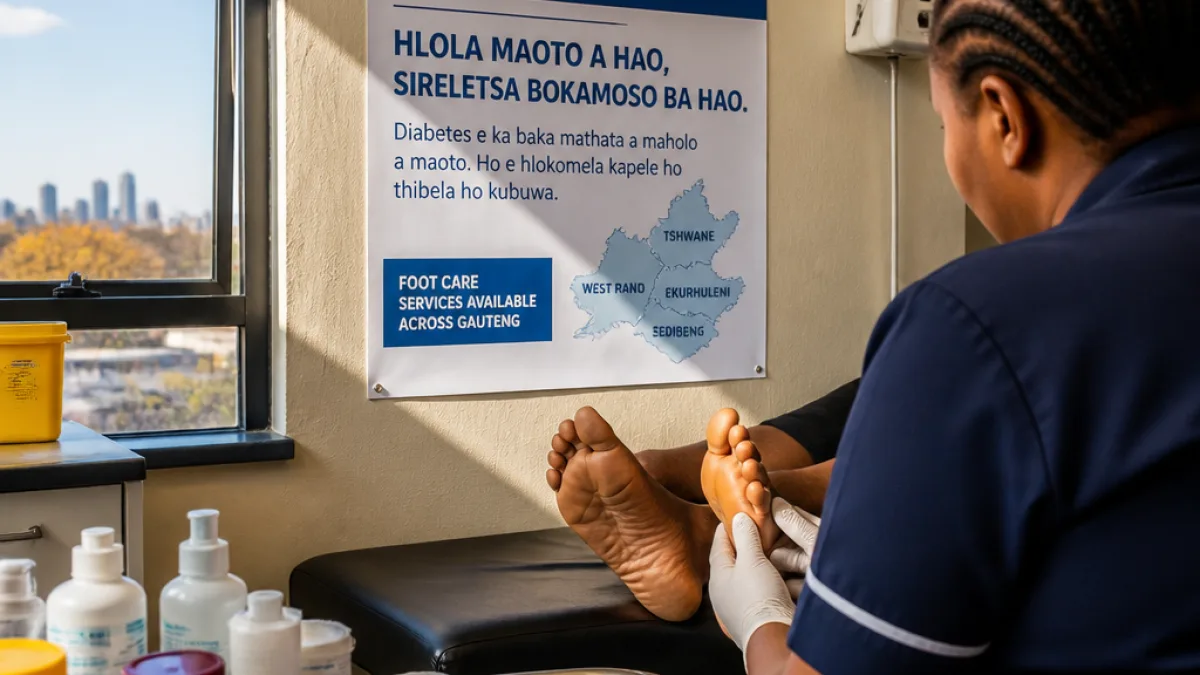
Health officials in Gauteng are urging people with diabetes to have their feet screened regularly after new data showed thousands of fresh diagnoses and low coverage of basic foot checks that can prevent serious complications.
Early checks can prevent amputations
The Gauteng Department of Health told residents that diabetic foot ulcers often go unnoticed because nerve damage can blunt pain, allowing wounds to worsen. Untreated ulcers are a major cause of lower-limb amputation and are linked to high post-amputation mortality.
Between 2018 and 2020 diabetes was listed as the second leading cause of death in South Africa, accounting for more than 6% of deaths, the department said. In the 2025/26 financial year nearly 30 000 new diabetes cases were recorded in the province.
What the department found
Despite the numbers, screening remains inadequate: fewer than two-thirds of patients with diabetes received a foot screening, leaving many unaware of early warning signs that should trigger urgent care.
| Statistic | Figure (as reported) |
|---|---|
| New diabetes cases in Gauteng (2025/26) | ~30 000 |
| Patients who may develop a foot ulcer in their lifetime | 25%–34% |
| Patients who undergo amputations and die within two years | 72.6% |
| Proportion of diabetic patients who received foot screening | Fewer than two-thirds |
Warning signs and when to act
The department listed common warning signs people with diabetes should not ignore. These include numbness or loss of feeling, burning sensations, unusually cold or swollen feet, dry or cracked skin, discoloured toes, blisters and wounds that do not heal.
- Get a foot screening at your nearest public clinic if you have diabetes.
- Check your feet daily for cuts, blisters, swelling or colour changes.
- Seek care promptly if you notice any of the warning signs above.
- Maintain blood-sugar control, and discuss footwear and skin care with clinic staff.
Healthworkers emphasise that early detection matters because complications such as nerve damage, poor circulation and deformities become harder to treat the longer they are left unattended.
Why the problem is growing
The rise in Type 2 diabetes has been connected to shifts in diet, reduced physical activity, increased consumption of sugar and refined carbohydrates, and rapid urbanisation. As more people are diagnosed, more will be at risk of complications unless routine preventive care is scaled up.
Research referenced by the department suggests a significant proportion of people with diabetes will develop at least one foot ulcer during their lives — figures range between 25% and 34%. The department also warned that many amputations are linked to untreated ulcers, infections and poor blood circulation.
Practical steps for clinics and communities
The department’s advisory underlines simple, low-cost measures that can reduce harm and mortality:
- Prioritise foot screening as part of routine diabetes care at primary health clinics.
- Improve patient education on self-examination and early warning signs.
- Ensure referral pathways are clear so infected or non-healing wounds receive timely specialist care.
For many residents the message is straightforward: routine checks can be lifesaving. Clinics across Gauteng provide foot screening services — people living with diabetes are advised to make use of them without delay.
Where to get help: Visit your nearest public healthcare facility for free screening, and ask about foot-care education and appropriate footwear. If you are unsure which clinic to use contact your local municipality health office for guidance.
This advisory arrives as the province grapples with rising chronic disease rates, and health officials say preventing complications is both a clinical and public-health priority.