Five hundred adult Partula snails, bred in North American zoos, have been moved as part of a conservation programme to re-establish wild populations in Tahiti, institutions involved said.
From captive colonies to the wild
The consignment began at the Detroit Zoo in Royal Oak, Michigan. The snails were sent by overnight courier to the St Louis Zoo, where they will be held briefly and fed a special diet to prepare them for release in Tahiti, according to a statement from the Detroit Zoological Society.
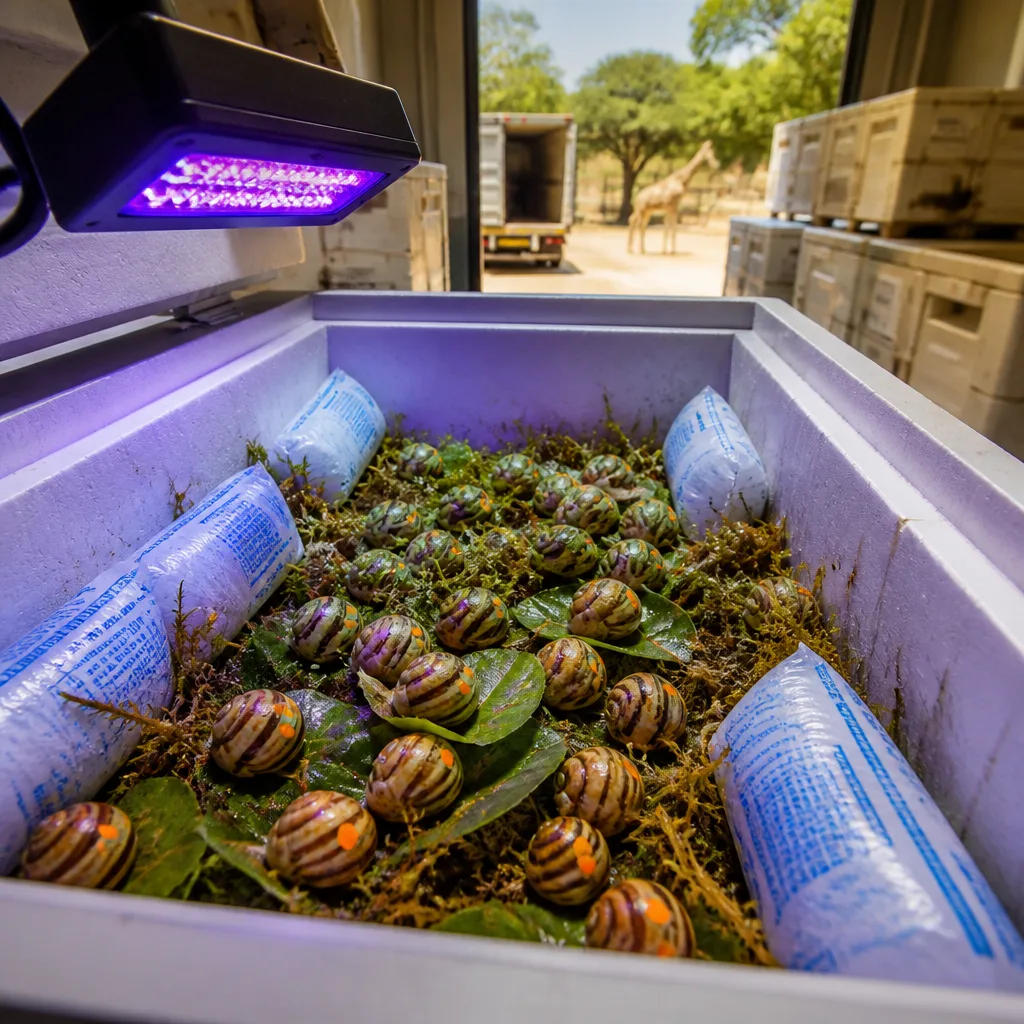
Mark Vassallo, Curator of Amphibians at the Detroit Zoological Society, described the transport method in detail. The animals are “sent ‘priority overnight’ via either FedEx or UPS,” he said, and are packed using insulating materials and specialised phase change packs to maintain a stable temperature during transit.
“The snails are carefully packed using insulating materials and special ‘phase change’ packs to stabilise the temperature inside,” Mark Vassallo said.
Why Partula need help
Partula snails are small, tree-dwelling molluscs native to islands in French Polynesia. Their populations collapsed after humans introduced the predatory rosy wolf snail to control another invasive snail species. That action inadvertently decimated native Partula, driving many taxa to the brink of extinction.
For decades, zoological collections have maintained captive-breeding programmes to preserve genetic diversity and produce animals for eventual reintroduction. The Detroit Zoo has been a key participant in these efforts, breeding thousands of Partula over the years and coordinating releases back to their home islands.
Marking, preparation and release
Each snail in this shipment bears an orange dot of animal-safe paint on its shell. The mark glows under ultraviolet light and identifies the individual as part of the 2026 release cohort; the colour code changes year to year to track release groups. At St Louis the snails will be fed a specially formulated diet to condition them for survival in the wild.
| Step | Location | Purpose |
|---|---|---|
| Breeding | Detroit Zoo (Royal Oak, Michigan) | Produce adult snails for release |
| Transit stop | St Louis Zoo | Prepare and feed snails for wild release |
| Final release | Tahiti (French Polynesia) | Re-establish wild populations |
Those involved stress careful handling and biosecurity. Transport by overnight courier, insulated packaging and temperature-control measures reduce mortality risk during the journey and help ensure that animals arrive in condition for the final release.
Conservation and cultural context
Partula shells carry cultural meaning in Polynesia; each unique shell pattern has been said to represent an island. Returning these snails to the wild therefore has both ecological and cultural resonance. The reintroductions are part of a broader, multi-decade collaboration among zoos, research institutions and local partners to reverse the dramatic losses caused by invasive species.
- Species: Partula (tree-dwelling land snails native to French Polynesia).
- Threat: Predation by an introduced rosy wolf snail.
- Action: Captive-breeding and staged reintroductions; 500 adult snails moved for 2026 releases.
Such reintroduction efforts illustrate the practical work behind ex situ conservation — the breeding and maintenance of species outside their native range — and the long timelines required to rebuild resilient wild populations. This shipment continues an established pattern of transfers and releases rather than representing a single, novel intervention.
Authorities in French Polynesia and partner institutions will oversee the release and subsequent monitoring, steps that are essential to measure survival, reproduction and any ongoing threats in the release sites. Careful post-release monitoring will determine whether the released snails are establishing and reproducing, and will guide future conservation planning.
The Detroit Zoological Society and partners have not disclosed the exact release sites in Tahiti in public material, a common precaution to avoid interference and to protect sensitive habitats during early recovery stages.