
Iran’s Foreign Ministry has announced it will pursue legal and diplomatic avenues internationally to hold accountable those responsible for the February 28 strike on Lamerd in Fars Province, the ministry’s spokesperson said during a visit to the city on 12 September.
Official visit and evidence-gathering
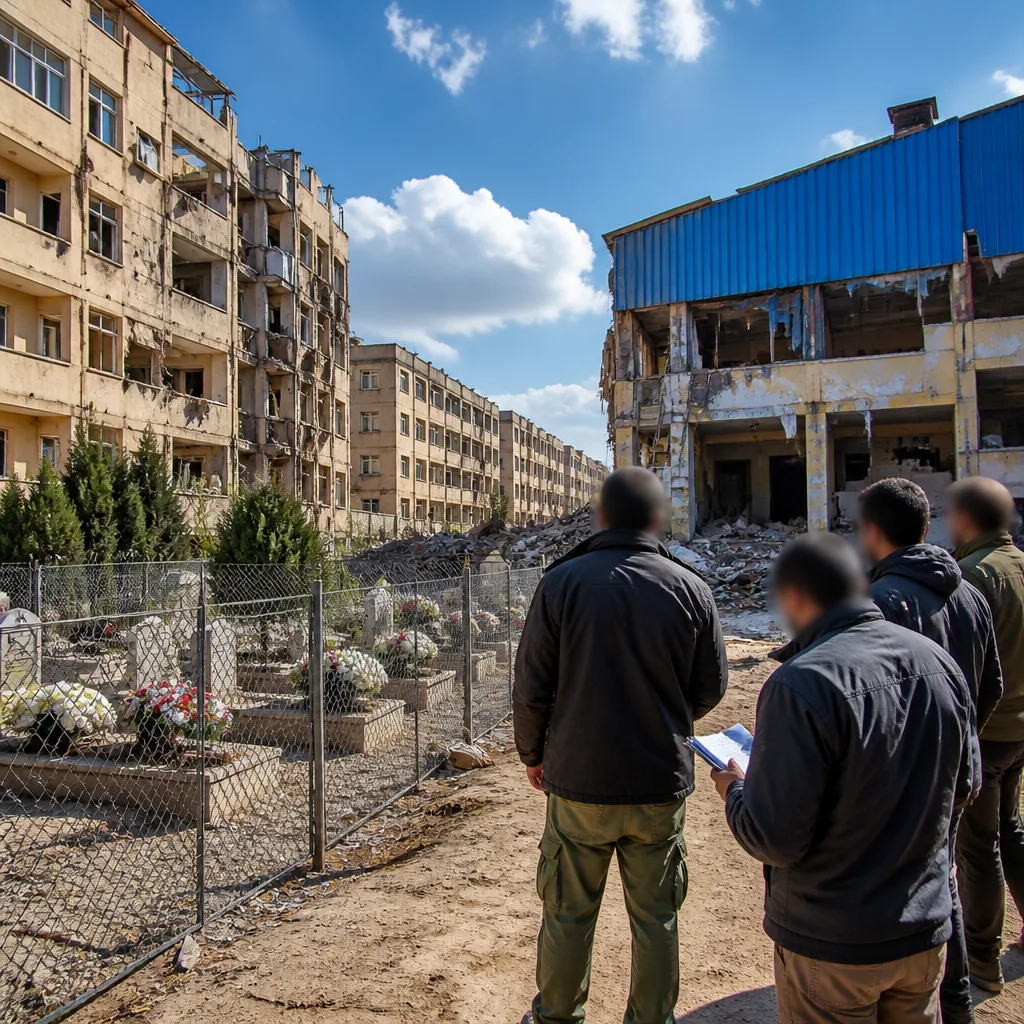
The spokesperson, Esmaeil Baqaei, travelled to Lamerd where he inspected damaged residential areas and the sports hall targeted in the attack, paid respects at the martyrs’ cemetery and met municipal and administrative directors, the report said. Baqaei said the government will document the attacks, collect evidence, record damages and preserve victims’ accounts as part of efforts to present the incident to international audiences and institutions.
- Date of attack: 28 February (reported)
- Location: Lamerd, Fars Province
- Reported fatalities: 21 residents
Speaking at a press conference held in the damaged sports hall and attended by domestic and foreign journalists, Baqaei framed the incident as an attack on civilians and residential areas and said it represented an explicit violation of international law. He urged that the human dimensions of the strike be recorded and explained accurately and comprehensively to both Iranian and global public opinion.
“Every single martyr of Lamerd is dear and precious to the Iranian nation, and their blood will not be in vain.”
Seeking redress through international forums
Baqaei emphasised that the compiled documentation could be used to raise the matter before international bodies and to examine the responsibility of the perpetrators. The spokesperson described the Lamerd incident as “not merely a local incident” but a clear example of the consequences of military strikes on civilian areas and ordinary people.
The visit included an inspection of the sports hall and nearby residential districts to observe and record the damage attributed to the strikes. Baqaei called for the various aspects of the crime to be communicated to international public opinion and for the legal and diplomatic consequences to follow.
| Item | Detail (as reported) |
|---|---|
| Spokesperson | Esmaeil Baqaei |
| Visited | Lamerd sports hall, residential areas, martyrs’ cemetery |
| Reported fatalities | 21 residents |
Iran’s declaration to pursue the matter through international mechanisms signals a move into legal and diplomatic arenas rather than limiting response to purely domestic measures. Such a course typically involves collecting forensic evidence, witness testimony and damage assessments to present to international institutions tasked with adjudicating violations of humanitarian and international law.
The announcement will be watched closely by regional and global actors: pursuing accountability through international forums can be lengthy and politically charged, involving questions of jurisdiction, admissibility and the willingness of other states and institutions to consider submissions.
The spokesperson’s remarks reiterated Tehran’s attribution of responsibility for the attack to what he described as “US and Israeli regime” military aggression, and underscored a commitment to ensure the incident is recounted in full to the world.
The report states that local officials and municipal directors welcomed Baqaei on arrival and accompanied him during his inspection of the damaged sites.
How international bodies will respond to Iran’s intention to pursue legal avenues remains to be seen; the process will depend on the quality of documented evidence and the political calculus of potential international interlocutors.