
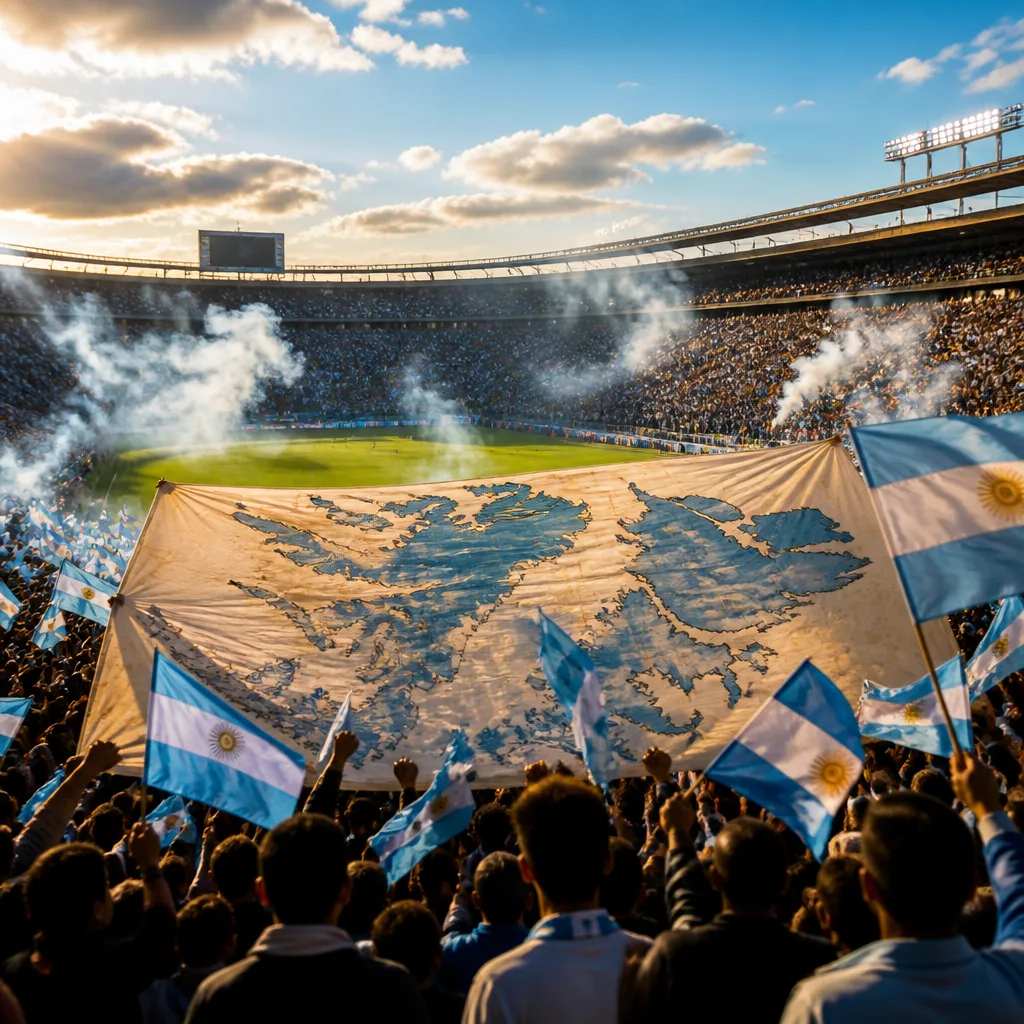
The Falkland Islands, known in Argentina as Las Malvinas, remain a core element of Argentine national identity and political life, more than 190 years after the islands became a British Overseas Territory in 1833. The claim to sovereignty unites wide swathes of public opinion and serves as a ready instrument for political mobilisation, analysts say.
Sport, history and a shared grievance
Football has been one of the most visible stages where the Malvinas claim is expressed. The country’s World Cup triumph in 2022 was celebrated with anthems that explicitly linked Argentina’s national pride to the islands and to icons such as Diego Maradona and Lionel Messi. Four years later, during Argentina’s campaign at the tournament staged across the United States, Mexico and Canada in 2026, new chants again fused sporting aspiration with the reclaiming of the islands.
Political scientist Mariana Altieri, author of the book Malvinas y Gibraltar, conflictos atrincherados, is cited describing how the islands anchor a foundational narrative about Argentina’s thwarted destiny: that a once‑promising nation has been diminished by historical misfortune and foreign encroachment. That narrative, she argues, helps explain why the Malvinas occupy such a persistent place in the public imagination.
From 19th‑century literature to modern politics
The sense of an enduring right to the islands is not new. Writers and political figures across generations have invoked Argentina’s claim since the British established control. The 19th‑century poet José Hernández is highlighted in recent commentary for insisting that the nation’s rights over the islands were immutable. As Hernández put it in 1869:
“Those rights never expire.”
Altieri notes that, over time, the desire to recover the islands can harden into a logic of reprisal, a symbolic redress for broader national grievances. In this framing, reclaiming the Malvinas is less about narrow territorial interest and more about restoring a perceived historical dignity.
Political utility and contemporary manoeuvres
Observers point out that the islands offer politicians a potent and non‑controversial rallying cry when domestic realities become uncomfortable. The commentary references President‑level political figures and the wider political class using the Malvinas question to redirect public attention — a dynamic evident in recent years as leaders leverage nationalist sentiment for domestic advantage.
That broad consensus around the Malvinas claim reduces the space for dissent: the issue is widely accepted across Argentina’s political spectrum as a legitimate national goal. The result is a durable consensus that can be mobilised when governments or parties seek to unite disparate constituencies.
- 1833 — British occupation of the Falklands begins.
- 1869 — José Hernández declares Argentina’s rights over the islands are permanent.
- 1986 — The islands feature in football and cultural memory in the post‑war period.
- 2022–2026 — World Cup songs and political rhetoric continue to fuse sporting heroes with the Malvinas cause.
For South African readers, the Argentine case illustrates how territorial grievances rooted in 19th‑century histories can retain political power into the 21st century. The continuity of sentiment around the Malvinas shows how national identity, sporting culture and political strategy intertwine — a dynamic that has parallels in other parts of the world where historical claims remain politically salient.
As the centring of the Malvinas in popular culture and state rhetoric makes clear, the islands are more than a diplomatic question: they are a living component of Argentine civic life and a tool that political actors can deploy when domestic challenges demand a unifying theme.