
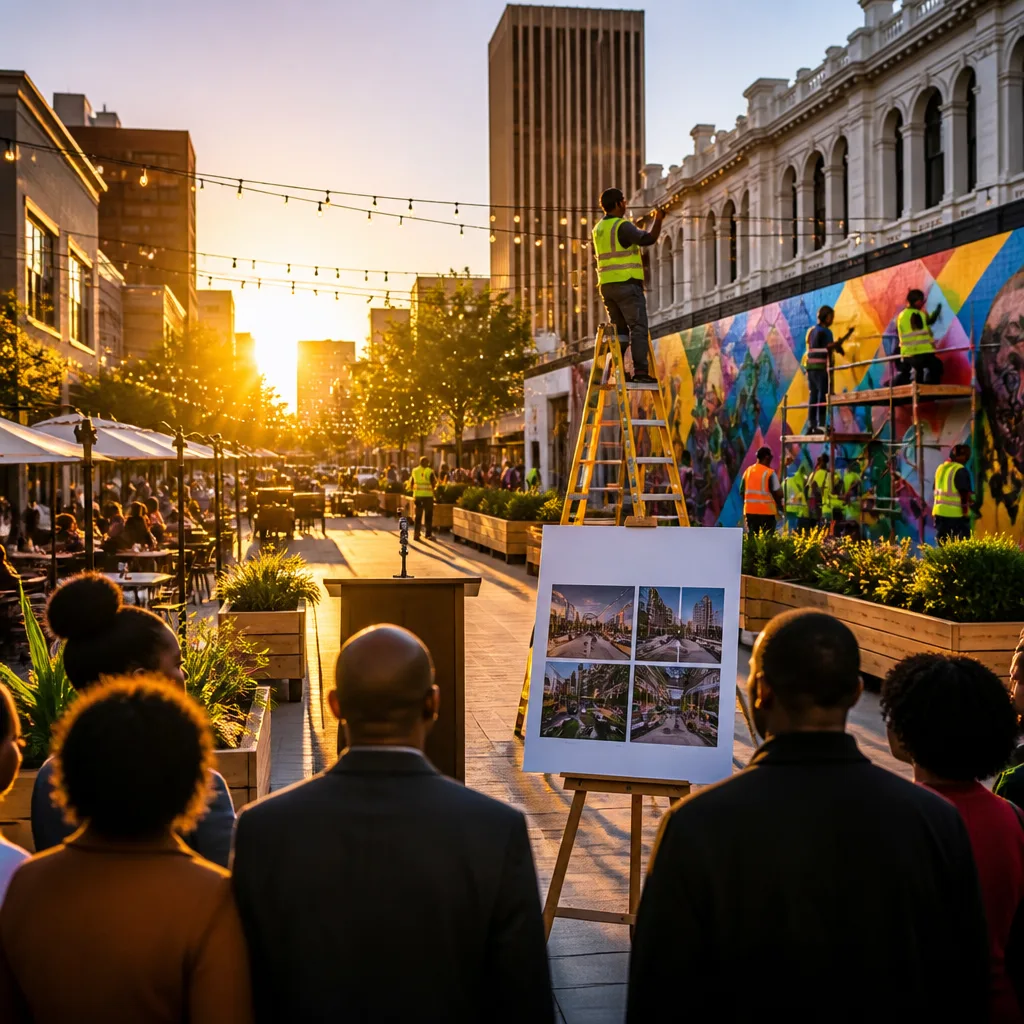
Shreveport business leaders and city officials on Wednesday unveiled a five-year action plan aimed at reviving the city centre through a programme of small, rapid interventions designed to produce visible results and support local traders.
Visible, incremental changes to alter perceptions
The plan emphasises that transformation need not start with large-scale construction or costly infrastructure projects. Instead, officials propose a series of short-term, highly visible upgrades — installations that can be implemented quickly and signal momentum to residents, visitors and investors.
Examples cited by the plan include overhead string lighting, expanded outdoor dining and an increase in public art and activations that make streets more inviting. A community development specialist involved in the plan said such measures have been effective in other cities as low-cost ways to create a sense of place and show progress while longer-term strategies are developed.
“Shreveport has a lot of positive things going on, from the assets that they have, Riverfront, some local businesses that are already located downtown, the organisations that are actively involved,” the specialist said, adding a shift in perception would be the most important outcome.
Business owners warn reputation damage from crime can undo gains
Local traders welcomed the focus on quick wins but warned that negative headlines around crime can sharply reduce footfall and undermine placemaking efforts. The owner of two nightlife venues described the constant effort to attract customers and cautioned that any incident giving residents a reason not to visit can undo progress.
That tension — between doing the visible, inexpensive things that change atmosphere and addressing underlying safety and economic challenges — runs through the plan. Its authors say the aim is not to replace longer-term investment or major redevelopment, but to complement them by boosting activity, improving perceptions and making downtown a more hospitable environment for existing and new businesses.
- Quick interventions: lighting, public art, outdoor dining activations
- Objectives: change public perception, increase evening economy, support local firms
- Risks noted: reputation effects from crime can reduce visitor numbers rapidly
What this means for businesses and the local economy
For small businesses, rapid public realm changes can lower barriers to attracting customers without the need for large capital outlays. Outdoor dining activations, for instance, can increase turnover for cafés and restaurants during warmer months, while lighting and art can extend the hours people feel comfortable visiting retail and leisure precincts. The plan positions such measures as catalysts that, if sustained, could help secure the broader investments needed for longer-term economic recovery.
The strategy also recognises the importance of narrative. Officials involved in the process said that changing how residents and potential visitors talk about downtown is a vital step towards restoring confidence — a reminder that perception often translates quickly into economic impact.
| Measure | Expected short-term effect |
|---|---|
| Overhead string lights | Improved evening ambience; greater pedestrian activity |
| Public art | Visual interest; boost to local cultural identity |
| Outdoor dining activations | Increased revenue for food and beverage businesses |
The five-year plan is still in its early stages, and officials will need to sequence projects carefully to ensure immediate wins do not mask deeper issues that require policy, enforcement or investment responses. Business owners stressed that visible improvements must be paired with measures to address safety and operating conditions if they are to have a lasting economic effect.
As cities across the United States and internationally wrestle with how to rejuvenate declining downtowns, the Shreveport approach highlights a pragmatic path: start with relatively low-cost, high-visibility interventions to restore confidence, then use that momentum to pursue more substantial regeneration.
This update is based on reporting that described the event, the examples proposed and the perspectives of local stakeholders involved in the plan.













