
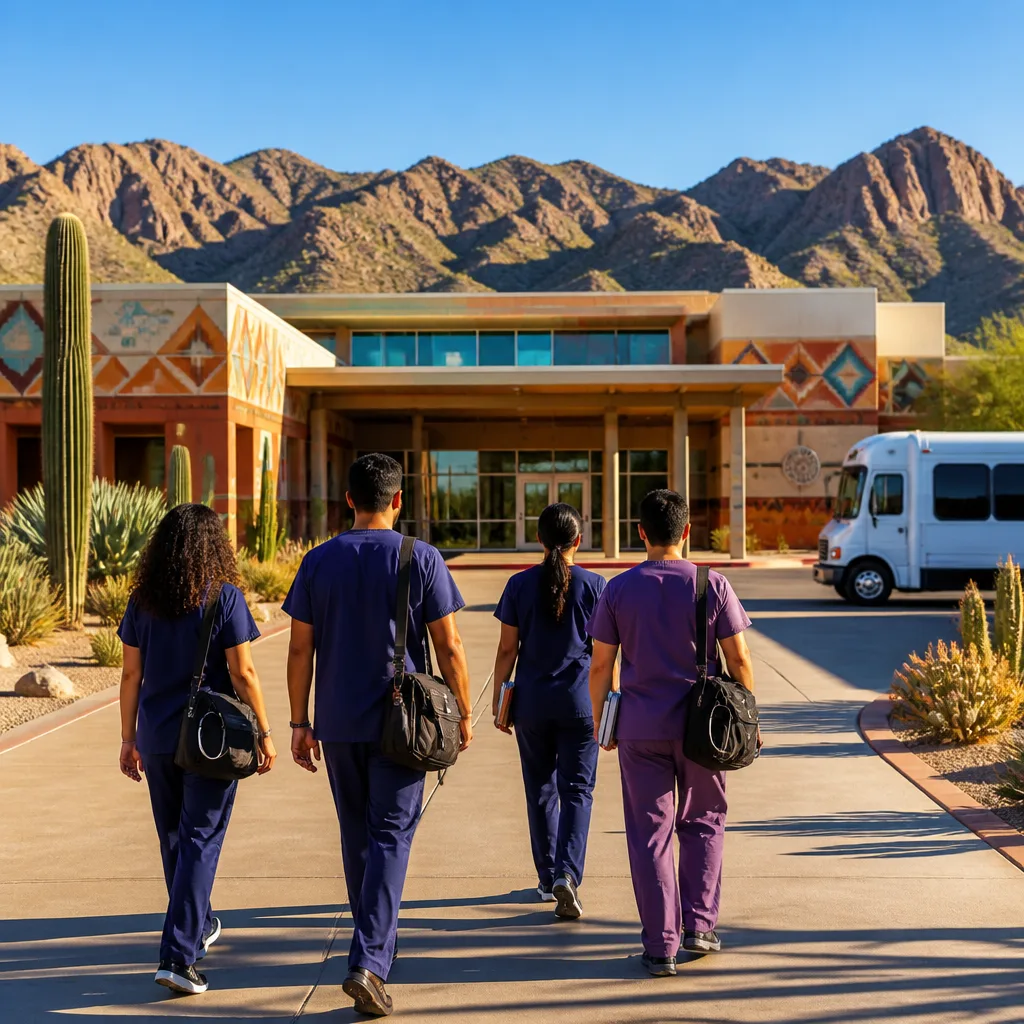
The University of Arizona and Gila River Health Care (GRHC), the healthcare arm of the Gila River Indian Community, have announced a long-term partnership to create the country’s first MD-granting medical school branch situated on the lands of a sovereign Tribal Nation. The branch will be based in Sacaton, Arizona, and is intended to produce physicians focused on primary care for Tribal, rural and medically underserved areas.
Three-year accelerated primary care programme
The new University of Arizona College of Medicine – Phoenix Regional Medical Branch in Sacaton will host a three-year Primary Care Accelerated Program. Ten students will be admitted annually beginning in July 2027. According to the announcement, those students will receive full tuition scholarships that are being funded by Gila River Health Care.
Students will undertake the first 18 months of their foundational medical education in Phoenix, then relocate to Sacaton for the final 18 months of their clinical training within the Tribal healthcare system. Programme organisers say this structure is designed to immerse trainees in the health settings where they are expected to practise, with the aim of increasing the likelihood that graduates will remain in Tribal or rural communities.
"Tribal and rural communities have some of the nation's greatest unmet primary care needs," University of Arizona President Suresh Garimella said. "This partnership to establish the country's first medical school branch within a Tribal Nation will train physicians through an accelerated three-year MD program, support them with full scholarships to free them of debt burden and provide residency opportunities that anchor them to the places and patients they know."
Context: shortages in primary care
The announcement highlighted persistent shortages of physicians in rural and Tribal areas. The state of Arizona is cited as ranking No. 42 nationally for primary care access, a factor organisers say has helped drive the decision to locate a medical school branch within a Tribal healthcare system.
The programme is positioned as a targeted intervention: by training students within a Tribal health network and offering scholarships that remove tuition debt, organisers expect to create clearer pathways into residency and ultimately into local practice. The statement connects accelerated training, financial support and locally based residency opportunities as measures that can encourage retention of medical graduates in underserved communities.
- Location: Sacaton, Arizona (Gila River Indian Community)
- Programme: University of Arizona College of Medicine – Phoenix Regional Medical Branch (Primary Care Accelerated Program)
- Start date: July 2027
- Annual intake: 10 students
- Funding: Full tuition scholarships provided by Gila River Health Care
| Stage | Location | Duration |
|---|---|---|
| Foundational medical education | Phoenix | 18 months |
| Clinical education | Sacaton (Tribal health system) | 18 months |
Implications and limits
The initiative represents an uncommon model in US medical education: a full MD-granting branch physically established within Tribal Nation territory and integrated with a tribally operated healthcare system. Such integration may strengthen cultural competency in clinical training and build workforce pipelines that reflect local needs.
However, the published information does not detail how long graduates are expected to remain in Tribal or rural practice, nor does it specify residency placements or contractual obligations tied to the scholarships. Organisers emphasise the role of residency opportunities in anchoring physicians to communities, but the announcement does not provide numbers for residency slots or guarantee long-term retention.
For South African readers, the model is of interest as one example of targeted workforce strategies that combine accelerated medical education with financial support and locally based clinical training. For individuals seeking medical advice or professional guidance, always consult a registered clinician or local health facility rather than relying on programme descriptions to assess clinical competence or care access.
Report based on the joint announcement by the University of Arizona and Gila River Health Care.











