
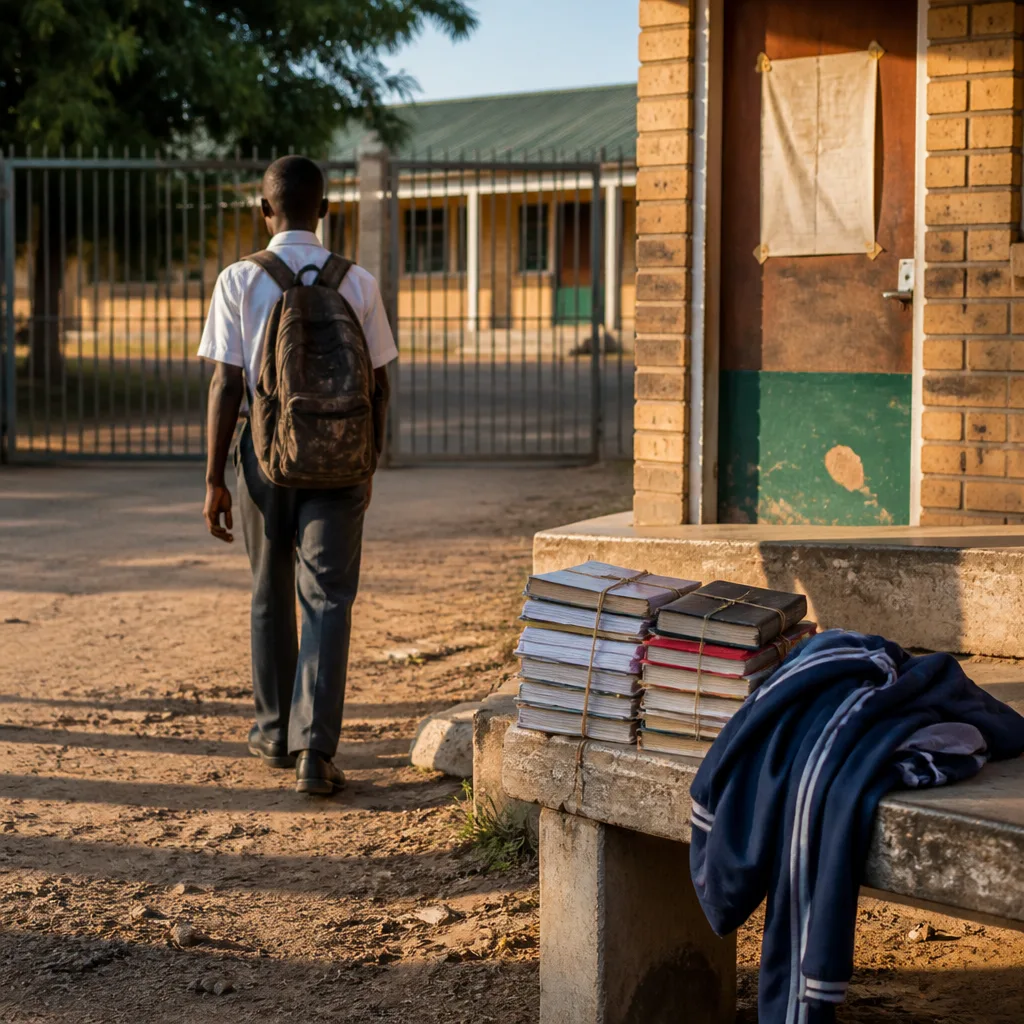
The Department of Basic Education's analysis of the 2024 General Household Survey (GHS) shows that South Africa’s school retention problem is concentrated among older learners, with financial strain and barriers to progression the main stated reasons for leaving school before completing Grade 12.
Dropout risk rises sharply in later grades
According to the report released in August, 23% of 16- to 18-year-olds who were not attending an educational institution in 2024 cited a lack of money for school fees as their main reason for non-attendance. A further 12% said they had not been accepted for enrolment.
The GHS cohort analysis shows a marked increase in grade-specific dropout rates as learners move through secondary school. For the most recent cohort — young people born between 1998 and 2000 and surveyed between 2022 and 2024 — the dropout rate rose from 11.9% after Grade 10 to 20.9% after Grade 11. By contrast, dropout rates were low through the early years of schooling, remaining below 4% from Grades 1 to 6.
“The drop-out problem in South Africa is mainly among older learners,” the report states.
The report also flags that nearly 29.8% of those in the latest cohort who reported completing Grade 11 did not continue with any further education and were therefore assumed to have dropped out.
Immediate triggers versus underlying causes
The Department of Basic Education cautions that reasons learners report for not attending school — such as fees or non-acceptance — should not automatically be treated as the fundamental causes of dropout. The analysis notes that these may be immediate triggers for learners who are already struggling academically. The report underlines that:
“The main predictor of dropping out is poor quality early education.”
In other words, early learning deficits can leave learners vulnerable to later shocks or barriers — such as financial pressure or failed grade progression — which then precipitate withdrawal from the system.
- Financial barriers: 23% of 16–18-year-olds cited lack of money for fees as the main reason for not attending.
- Enrolment issues: 12% reported not being accepted for enrolment.
- Grade progression risk: Dropout rates rise sharply after Grade 10 and peak after Grade 11.
These findings have implications for both short-term interventions and long-term policy. In the short term, measures that reduce immediate financial barriers — for example targeted fee waivers, transport subsidies or support for repeating learners — could reduce withdrawals among older learners who are close to completing matric. In the long term, improving the quality of early childhood and primary schooling could reduce the number of learners entering the senior secondary years already academically fragile.
| Measure | Reported figure |
|---|---|
| 16–18-year-olds citing lack of money for fees | 23% |
| 16–18-year-olds citing non-acceptance | 12% |
| Dropout after Grade 10 | 11.9% |
| Dropout after Grade 11 | 20.9% |
| Dropout rates Grades 1–6 | <4% |
| Completed Grade 11 with no further education | 29.8% |
For parents, teachers and school managers, the report points to practical priorities: identify older learners at risk of leaving for financial or progression reasons and offer targeted support; ensure clear pathways for repeating learners; and strengthen remediation so learners reach senior secondary years able to progress.
At policy level, the findings reinforce the need to connect early childhood development, primary schooling quality and senior-phase retention strategies. Without stronger early learning foundations, many learners remain vulnerable to the combination of academic difficulty and external pressures that the GHS shows are driving dropouts in the later grades.
As the country seeks to improve matric outcomes and broaden post-school opportunities, reducing dropout among older learners must be both a short-term operational focus and a long-term investment in early quality education.











