Recurrent heatwaves across Europe have inflicted tens of billions of euros in lost output while producing only a fraction of that value in insured payouts, exposing a growing protection gap for businesses whose operating losses stem from extreme heat rather than physical damage.
Heat disrupts trade more than property
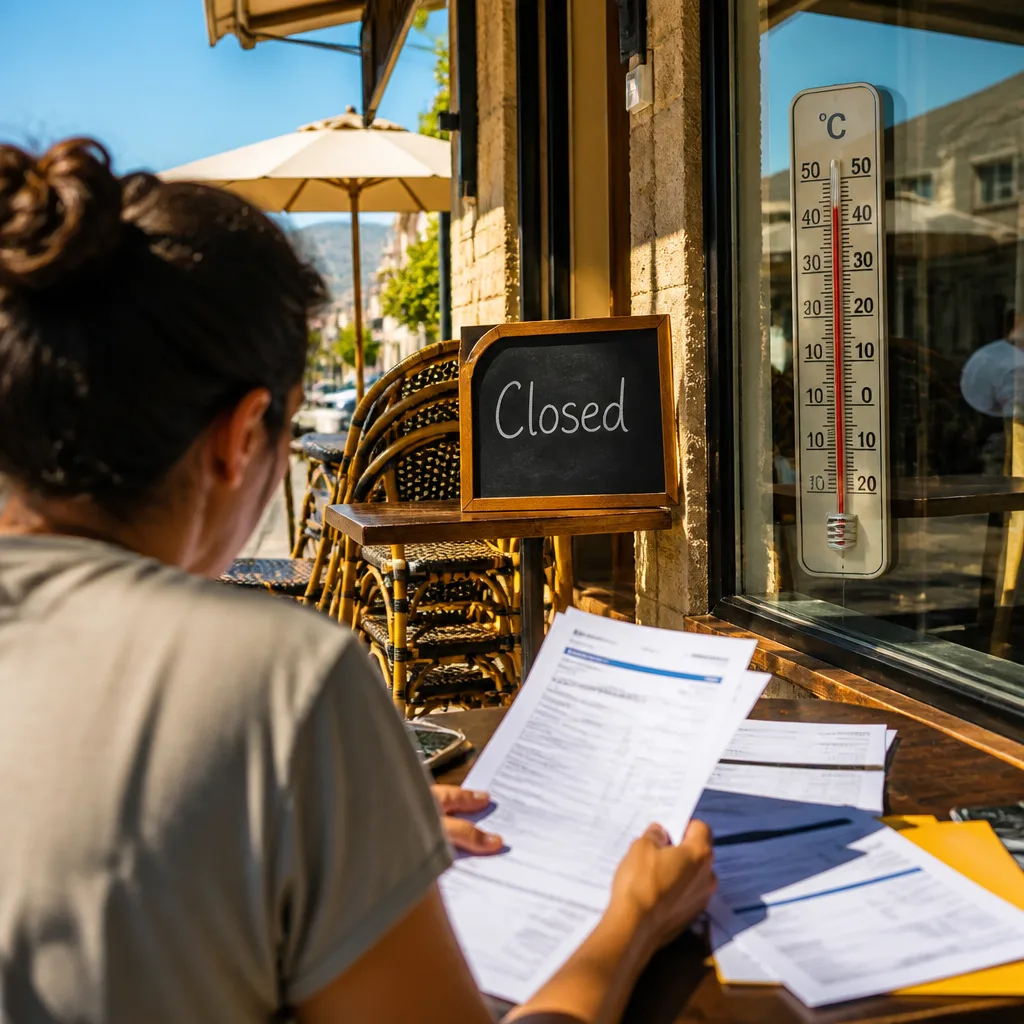
Research and reporting from London and Milan for Reuters shows last summer’s heatwaves cut into consumer-facing revenues, labour productivity and the normal rhythms of daily business. Cafés in Padua, Italy, for example, reported late or cancelled aperitivo trade as customers sought air-conditioned spaces, with more than 80% of the 600 hospitality businesses surveyed saying turnover fell by around 20% during the recent heatwave.
That kind of revenue shock is hard for insurers to meet. As one industry specialist cited in the reporting put it, "Heat in itself is not a traditionally insured risk." Extreme heat rarely causes the type of catastrophic physical damage that triggers standard property insurance; instead it produces indirect operational disruptions — lost footfall, reduced worker productivity, transport delays — that sit outside many business interruption policies.
"A 20% decline wipes out your margin," said Federica Luni, president of the hospitality association APPE Padova, describing the effect on small food and beverage traders during the heatwave.
Scale of economic losses versus insured payouts
Moody’s estimates, cited in the reporting, put last summer’s hit to European economic output from heat at about €43 billion, while insured payouts were only around €500 million. That gulf illustrates how climate-driven losses can be systemic and non-physical — and therefore poorly matched to traditional insurance products.
| Measure | Value (reported) |
|---|---|
| Estimated lost economic output (last summer) | €43 billion |
| Insured payouts | €500 million |
Implications for businesses and insurers
The mismatch matters for several reasons:
- Small and medium enterprises (SMEs) are often the most exposed — they operate thin margins and limited cash buffers, so a sustained drop in trade can push firms into insolvency.
- Insurance products rarely cover non-damage business interruption. A 2023 survey for Europe’s insurance regulator found only 28% of SMEs held business interruption cover as part of property insurance, and just 17% had non-damage business interruption protection, which would cover events such as strikes or other operational shocks.
- Systemic costs of repeated heat events can accumulate across sectors — transport, hospitality, retail and manufacturing — raising the macroeconomic bill while leaving firms under-insured.
Insurers face pricing and capacity challenges. Non-damage losses are harder to model and can correlate strongly across regions and sectors during heatwaves; that correlation reduces the benefit of risk pooling and can make coverage expensive or unviable without public-private solutions.
Lessons for South Africa
While the reporting focuses on Europe, the dynamics are directly relevant to South Africa. Our economy includes large numbers of small hospitality and retail operators, and climate projections suggest more frequent and intense heat extremes across parts of the country. The key takeaways for South African business, insurers and policymakers are clear:
- Review the scope of business interruption cover and consider whether non-damage triggers are needed to address heat-related operational losses.
- Strengthen risk-reduction measures at firm and municipal level — for example, cooling for workers, adjustments to trading hours, and support for transport resilience — to reduce the size of potential losses.
- Explore public-private risk-sharing mechanisms to build capacity for systemic climate risks that may be uninsurable in purely private markets.
For households and small business owners, the immediate consequence is financial: repeated, uninsured revenue drops erode margins and savings. For the insurance industry, the challenge is to adapt products, pricing and capital models to a world where climate-driven operational shocks are more frequent and severe.
As Europe’s experience shows, without adaptation in both risk management and insurance architecture, governments and businesses face growing economic losses that insurance alone will not absorb.
WE NEWS does not provide financial advice. This report summarises findings from international reporting and industry estimates.