Euro‑zone business activity accelerated in August, with S&P Global’s flash Purchasing Managers’ Index (PMI) showing the strongest expansion this year as new orders and manufacturing output picked up and export demand returned.
PMI readings point to a resilient quarter
The S&P Global flash Composite PMI for the 21‑country euro zone rose to 52.1 in August from 52.0 in July, beating Reuters’ poll expectations of 51.7. Readings above 50 signal expansion.
Manufacturing led the improvement: the factory PMI climbed to 52.8, its highest in more than four years, up from 51.9 the month before. Services activity held steady at 51.7, unchanged from July and above the threshold for expansion.
“So far, the impact (of the Iran war) has been far from devastating ... the euro zone economy has been quite resilient so far, and momentum remains surprisingly decent. The third quarter seems set for a decent GDP growth print again, firmly ignoring current events,” said Bert Colijn at ING.
The surveys also flagged a welcome return of export orders, the first increase in export business since February 2022, and a sharp rise in new orders — the fastest in 40 months — which underpinned output growth, described as the strongest in 54 months for factories.
What the numbers mean
At face value, the PMIs suggest the euro‑zone economy remained resilient in the third quarter despite geopolitical shocks linked to the U.S.‑Israeli war on Iran. Analysts noted that final PMI releases have tended to be stronger than flash readings in recent months, implying growth may be even firmer by the end of August.
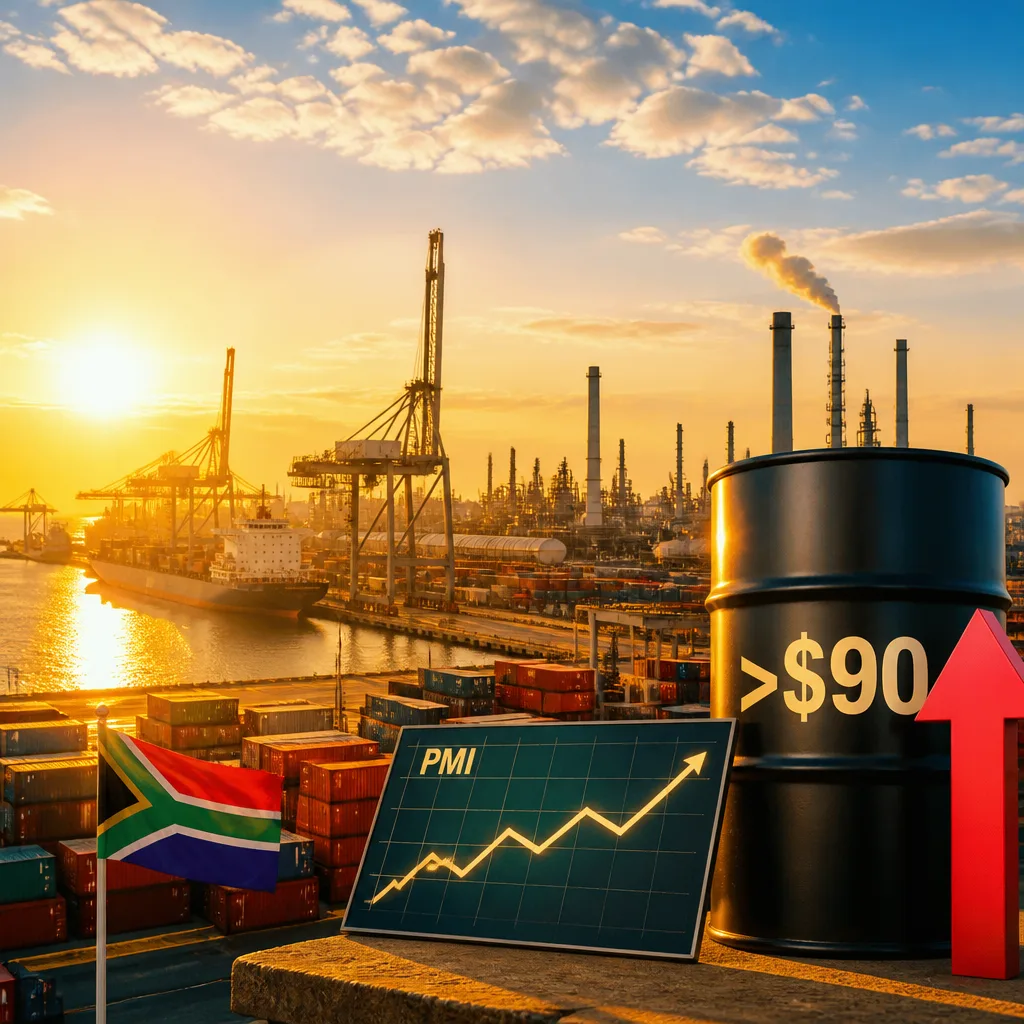
But the same commentary flagged headwinds: oil prices moving back above $90 per barrel and recent upward repricing of interest rates. Those factors are likely to weigh on growth and support higher inflation in coming months, a combination that could dampen momentum if sustained.
- Composite PMI: 52.1 (July: 52.0)
- Factory PMI: 52.8 (July: 51.9)
- Services PMI: 51.7 (unchanged)
- New orders: fastest rise in 40 months
- Export orders: first increase since Feb 2022
| Indicator | August (flash) | July |
|---|---|---|
| Composite PMI | 52.1 | 52.0 |
| Factory PMI | 52.8 | 51.9 |
| Services PMI | 51.7 | 51.7 |
Implications for South Africa
For South African businesses and markets, a firmer euro‑zone outlook carries both opportunities and risks. Higher euro‑area demand and renewed export orders could support South African exporters that sell into European markets and help commodity prices if global industrial activity strengthens. That would be positive for mining and manufacturing exporters and could help foreign‑earnings receipts.
On the other hand, rising oil prices and a global environment of higher interest rates may push domestic fuel and transport costs higher, adding to inflationary pressures that squeeze household budgets and lift input costs for firms. South African monetary and fiscal policymakers will watch these external developments closely because shifts in global rates and commodity prices feed through to local borrowing costs and consumer inflation.
In short, the PMI snapshot points to a euro‑zone economy that has so far weathered recent geopolitical shocks, but the path ahead is sensitive to energy prices and financial‑market repricing. Businesses with exposure to European demand should note the improvement in orders, while households and firms reliant on energy and imported inputs should prepare for the possibility of higher costs going forward.
WE NEWS does not provide financial advice; readers should consult a qualified adviser for decisions about investment or business strategy.