Members of the West Virginia Board of Education were told this week that recent improvements on summative assessments are concentrated among primary grades, while older learners — particularly those in middle school and in 11th grade — are showing flat or declining results.
Early gains, later gaps
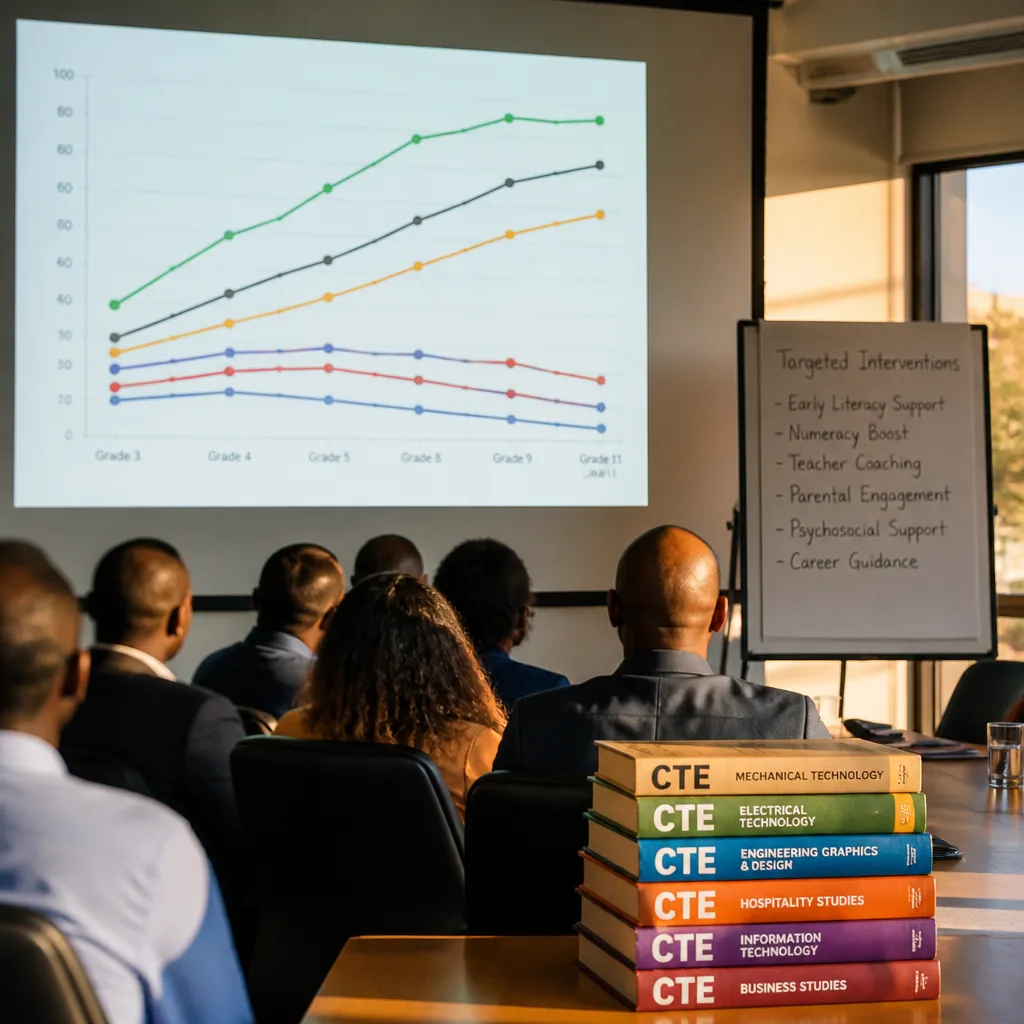
Newly appointed board member James Paul highlighted the uneven pattern when reviewing the year's assessment results, asking: “What is happening to our older students?” According to reporting of the board discussion, Paul said he saw “some gains in grades three, four, five, elementary school in both subjects, but flat or declining a little moderately at the middle school (level) and at the 11th grade (level) where there seem to be real problems.”
State Superintendent of Schools Michele Blatt attributed the elementary gains in part to policy changes driven by lawmakers, notably the Third Grade Success Act passed in 2023, which she said helped improve English language arts and mathematics performance at primary level. Blatt also noted the department's ongoing initiative, Bridging for the Future, designed to follow those early cohorts as they progress into middle school.
“I think if we look at the ELA and the math for our middle schools ... we do have a trajectory. We are slowly seeing an increase there over the years,” Blatt said.
But the board discussion exposed a gap between policy focus and outcomes for older students. When pressed by Paul on what would be done to assist those learners, Blatt pointed to the state's investments in Career and Technical Education (CTE), saying about 70% of CTE-enrolled students demonstrate proficiency on national occupational assessments and workforce credentials. She acknowledged, however, that many of those same students do not perform as well on standardised academic tests such as the SAT.
What the results mean for classrooms
The evidence presented to the board suggests that targeted early interventions can move outcomes at primary level, but do not automatically translate into sustained achievement across later grades. That raises several practical questions for teachers, school leaders and policymakers:
- How to design transitional supports so gains made in Grades 3–5 are maintained and deepened through middle school.
- Whether curricula, assessment practices and teacher development are aligned across grade bands to prevent learning loss as students move to higher grades.
- How to balance vocational pathways that show strong credential attainment with ensuring students meet broader academic standards measured by tests like the SAT.
| Grade band | Reported trend |
|---|---|
| Grades 3–5 | Gains in ELA and maths |
| Middle school | Flat to modest increases; needs focus |
| 11th grade | Flat or moderate decline; notable concerns |
The contrast between vocational success and academic attainment is particularly notable. Blatt said schools continue to emphasise the importance of the 11th-grade assessment for all students, but also pointed out that many CTE students meet and exceed workforce credential standards even as they struggle with conventional academic assessments.
Policy implications and next steps
The discussion before the board underscores the risk of a one-size-fits-all approach to education reform. Measures that accelerate learning at a single point — for example through early-grade literacy legislation — can produce real gains, but without coherent strategies to sustain that progress they may leave older students behind.
Board members and department leaders signalled an intention to concentrate effort on middle schools and the transition to senior grades, with Bridging for the Future framed as part of that response. The precise interventions — whether curricular realignment, targeted professional development for middle school teachers, extended learning time, or different assessment strategies — were not specified in the reporting of the meeting.
For educators and parents, the conversation reminds policymakers that the success of early interventions should be judged by long-term trajectories, not short-term gains. As the state refines its approach, close monitoring of cohorts as they move from primary into secondary schooling will be essential to ensure improvements are durable and inclusive.
The board's exchange closes with a stark reminder from Paul’s original question: improving outcomes for the youngest learners is vital, but systems must also prioritise the learners who are already in middle and senior grades so that no pupil is left behind by reform efforts that focus on a single stage of schooling.