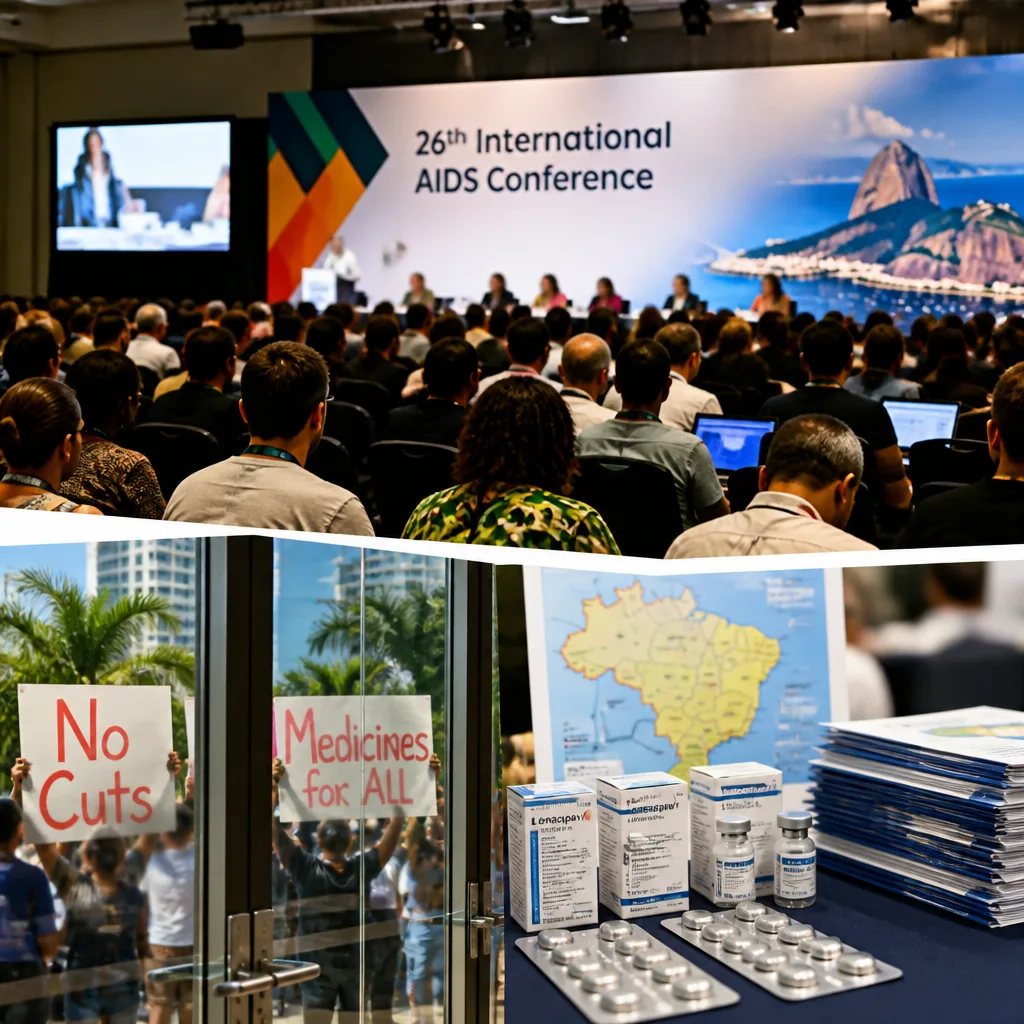
Delegates at the 26th International AIDS Conference in Rio de Janeiro confronted a new, worrying reality for the global HIV response as major donor reductions, contested US policy shifts and concerns over medicine pricing took centre stage, according to reports from the event.
Funding reductions and policy changes
The conference reflected a divergence between scientific progress and political and financial retrenchment. Jeff Graham, acting US Global AIDS Coordinator, used a major address to outline the US administration's new “America First Global Health Strategy,” while activists at the conference protested what they described as the gutting of PEPFAR — the US President's Emergency Plan for AIDS Relief — under the Trump administration in early 2025. PEPFAR has previously been credited with saving millions of lives since 2003.
Delegates also highlighted reductions in European support. France, the UK and Sweden were singled out for cutting contributions, with France reportedly reducing its planned contribution to the Global Fund for 2026–2028 by 58%. The scale of cuts to multilateral and bilateral funding was presented at the conference as a material threat to efforts to end AIDS.
Activism and demands for transparency
Activists described the atmosphere as tense and mobilised rapidly. Protesters interrupted podium presentations carrying placards urging the US to restore funding and “follow the science.” One report said protesters chanted “You lie, we die,” and that some confronted French representatives over their funding reduction. Kenyan advocates were quoted starkly:
"If donors don't fund HIV they can start digging graves."
Beyond state donors, concerns extended to pharmaceutical pricing and commercial transparency. The conference saw demonstrations directed at the pharmaceutical sector, including Gilead, over the cost of life-saving medicines and prevention tools. Activists flagged the price of lenacapavir, a twice-yearly HIV prevention injection, as emblematic of access challenges. Reports from the conference also raised concerns about opaque pricing agreements in host-country Brazil, where lack of transparency around medication deals was criticised.
Impact on global institutions and the path ahead
International agencies have not been immune. UNAIDS reportedly experienced a roughly 25% decline in total financial aid last year, and its executive director, Winnie Byanyima, urged urgency:
"We don't have time to lose. This is a moment of radical change."Observers at the conference framed the situation as a crossroads: scientific tools for prevention and treatment are developing quickly, but shrinking resources and uneven political will threaten implementation at scale.
Speakers and campaigners emphasised several immediate concerns for the global response, including:
- Restoration and protection of bilateral funding streams, notably PEPFAR.
- Increased transparency in medicine pricing and procurement agreements to improve access.
- Support for multilateral institutions such as the Global Fund and UNAIDS to maintain programmes that reach the most vulnerable.
For countries with large HIV epidemics, including South Africa, the implications are concrete: reduced donor support and higher drug prices can strain national budgets, complicate procurement, and slow progress on prevention and treatment targets. Conference reporting suggested that activists and community organisations will continue to pressure governments and industry for funding commitments and pricing transparency while researchers highlight scientific advances.
As global health policy shifts, the balance between scientific capability and political and financial backing will determine whether recent gains against HIV are sustained. Conference accounts closed with a clear warning from civil society: without renewed commitment from states and clearer pharmaceutical pricing practices, the goal of ending AIDS as a public health threat will become harder to reach.