Privately held investment group DNI has committed R2.1bn to telecommunications, technology and fintech businesses as part of a wider strategy to broaden digital access and financial inclusion across South Africa, the group said in a company profile published this week.
Scale, distribution and a social mission
Founded two decades ago as a logistics business, DNI has evolved into a diversified group spanning infrastructure, fixed broadband, devices, fintech and digital services. The group currently generates about R12bn in annual revenue and plans to double the business within the next three to five years, CEO Ryan Noach said.
Noach described DNI as a "socially relevant organisation" whose commercial strategy is aligned with increasing connectivity and access to the formal digital economy. He said expanding connectivity creates opportunities for both financial inclusion and a wider range of digital experiences for households.
"If we can do what our mission is — to broaden connectivity, drive financial inclusion and digital experiences — we see ourselves in five years touching the lives of most South Africans every single day through the range of our services," Noach said.
Where the R2.1bn is going
The recent capital allocation has taken DNI further along the technology value chain by increasing exposure to fixed broadband infrastructure, internet services, device access and cross-border digital products. Key assets and partnerships mentioned include:
- Frogfoot — fibre infrastructure group expected to accelerate rollout in underserved township and lower-income communities;
- Vox — internet service provider and retail internet services;
- Hypa — prepaid fibre business focused on affordability;
- Mission Mobile — addressing smartphone accessibility and cheaper data;
- KnowRoaming — eSIM business with international operations and cross-border reach.
These assets give DNI a presence across the stack from physical fibre infrastructure through to devices and cross-border digital services, positioning the group to convert distribution capability into daily consumer touchpoints.
Fibre rollout and jobs
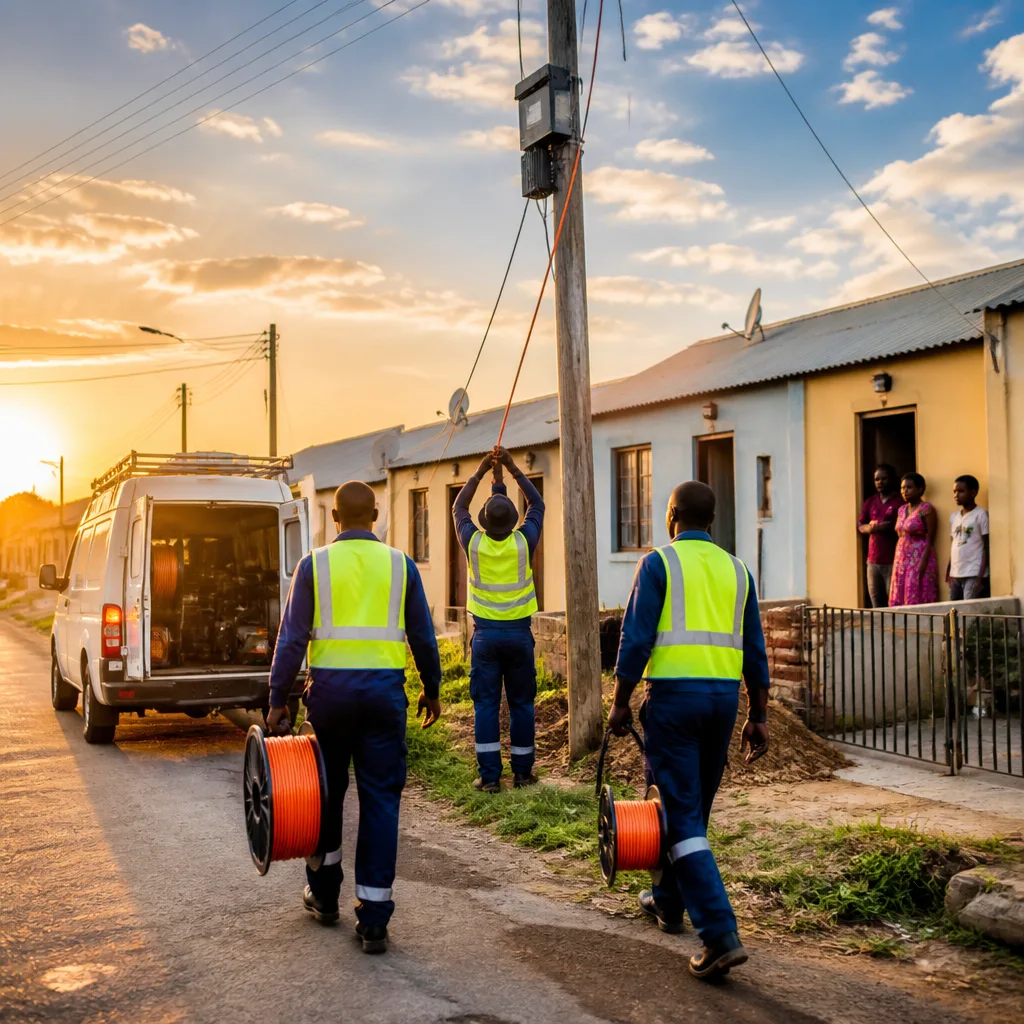
Frogfoot plans to ramp up its annual rollout rate to 360,000 connected homes over the next 12 months, a scale-up that DNI says will create more than 5,000 jobs. The company intends to target underserved township and lower-income communities — a focus that connects commercial expansion with broader policy goals of reducing the digital divide.
| Metric | Figure |
|---|---|
| Annual revenue (current) | R12bn |
| Recent telecoms/digital investment | R2.1bn |
| Target annual fibre connections (next 12 months) | 360,000 homes |
| Jobs expected from rollout | more than 5,000 |
The scale of the rollout is significant in a country where fixed broadband penetration and affordable, reliable connectivity remain critical constraints on economic participation and access to digital services. By focusing investment on lower-income and township areas, DNI is signalling an intent to couple growth with social impact.
Growth ambitions and operational risks
DNI's ambition to double revenue in three to five years is aggressive and will depend on execution across multiple fronts: rapid infrastructure deployment, device affordability, competitive pricing for data and the commercial integration of recently acquired or partnered platforms. The R2.1bn investment advances those aims but will need to be sustained by revenue growth and efficient operations.
For households, a successful execution could lower the cost of access and improve the reliability of digital services, which in turn may unlock greater participation in digital banking, e‑commerce and remote work opportunities. For the labour market, the planned fibre rollout represents near-term construction and installation jobs but will also require longer-term technical and service roles.
DNI's transformation from a logistics distributor into an integrated technology and connectivity group underscores how private capital can be marshalled to address structural gaps in South Africa's digital economy. The coming 12–24 months will be a key test of whether capital commitments translate into tangible connections, cheaper data and measurable progress on financial inclusion.
WE NEWS does not provide financial advice. Reporting is based on DNI's public profile and statements attributed to DNI leadership.