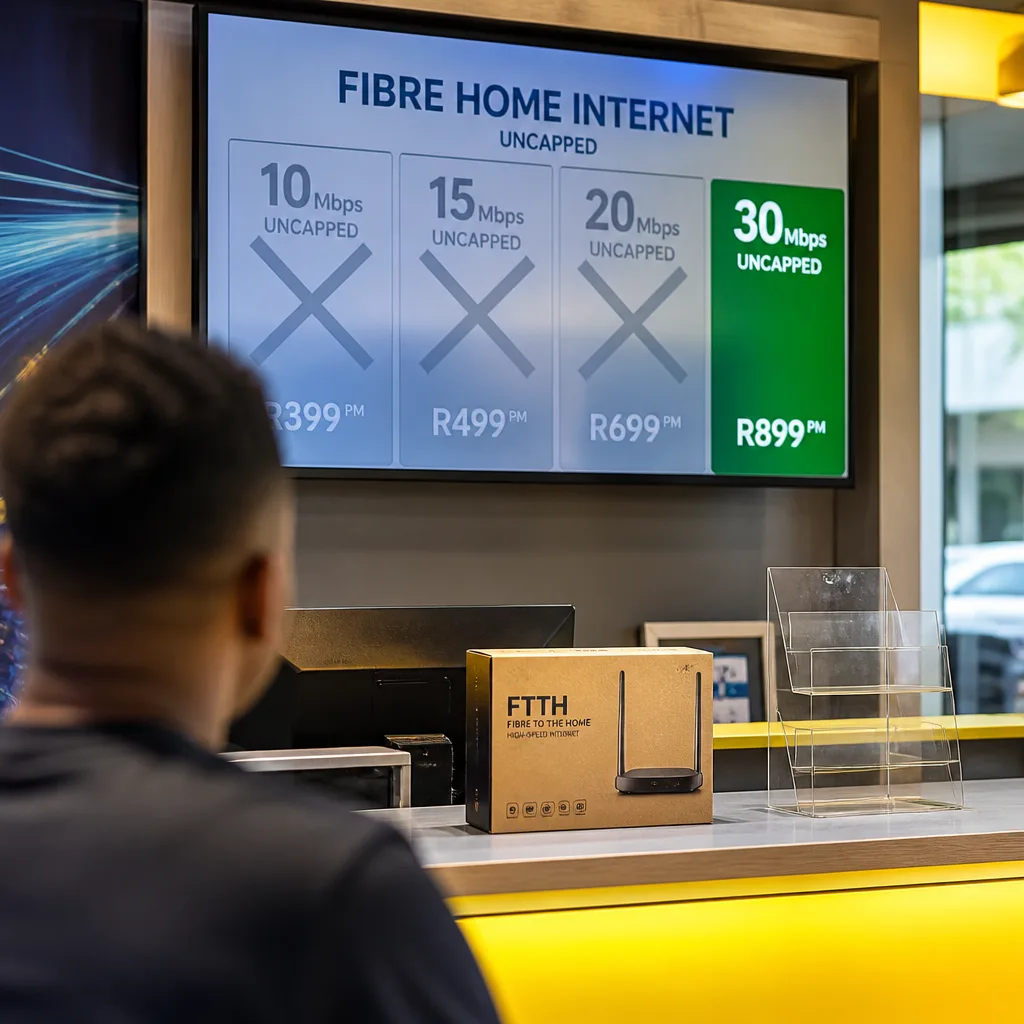
Major fibre networks in South Africa have largely eliminated or sharply reduced access to low-speed fibre packages, according to a review of available FTTH products and statements from industry players.
Operators shift away from sub-25Mbps plans
The market review, conducted using Afrihost as the retail internet service provider, found just 17 FTTH products offering speeds below 25Mbps. Most major fibre network operators no longer promote 10Mbps, 15Mbps or 20Mbps lines as standard retail options.
Zoom Fibre said the move was driven by changing customer demand and a desire to position its 30Mbps product as the baseline of a high-value offering. The company pointed to improvements in streaming and compression technology as part of the rationale for encouraging customers into higher speed tiers.
"Internal usage data highlights that entry-level connectivity remains the network’s most popular choice, driven by consumer preference for manageable costs over surplus bandwidth," Zoom Fibre said.
What remains on offer
Low-speed fibre packages that still exist are mostly offered on prepaid plans or by smaller operators. Examples identified in the market check include:
- Openserve Web Connect Prepaid — 10Mbps (5Mbps upload) for R307 per month; 20Mbps (10Mbps upload) for R367.
- Vuma Reach — a 20Mbps download / 10Mbps upload FTTH package listed at R417 per month.
- Herotel — continues to offer a regular 20Mbps package, but only to new customers; downgrades to that speed are not permitted for existing customers.
Consequences for consumers and the market
The gradual removal of low-speed options can affect several groups:
- Households on tight budgets that manage costs by choosing lower-speed packages may face higher monthly bills to maintain a stable online experience for streaming, schooling or working from home.
- Consumers who primarily use the internet for light browsing, messaging and basic video calls may be pushed into paying for capacity they do not fully utilise.
- Prepaid and smaller network offerings remain as stop-gap options, but availability varies by area and may not be offered through large network operators’ standard plans.
Zoom Fibre framed the change as a response to customer behaviour and technical improvements that allow platforms to perform better at slightly higher speeds. Other major network operators were approached for comment: Vumatel declined to comment, while Frogfoot and Openserve had not responded by the time of publication.
Data snapshot
| Operator / product | Speed (download / upload) | Monthly price |
|---|---|---|
| Openserve Web Connect Prepaid | 10Mbps / 5Mbps | R307 |
| Openserve Web Connect Prepaid | 20Mbps / 10Mbps | R367 |
| Vuma Reach | 20Mbps / 10Mbps | R417 |
| Herotel | 20Mbps | Only for new customers (price not listed) |
Retail ISPs such as Afrihost still list sub-25Mbps packages but those offerings increasingly depend on which fibre network operator supplies the physical line. In many cases, major networks are steering customers toward a 30Mbps baseline that providers consider the entry-level sweet spot for affordability and performance.
This consolidation of low-speed options comes as streaming services continue to optimise compression and as demand for higher-bandwidth applications grows. The trend will be significant for policy discussions about affordable connectivity and closing the digital divide, particularly for low-income households and remote communities that rely on basic broadband plans.
Further developments and operator responses are still emerging.