Cuba’s ambassador to South Africa told Parliament’s International Relations Committee that the United States’ sanctions against Havana have produced acute shortages of fuel, food and medicines and asked South Africa to use its diplomatic standing to mobilise international pressure for the measures to be lifted.
Ambassador frames appeal as call for action, not charity
Fakri Rodriguez Pinelo, Cuba’s ambassador, told MPs that his government was not seeking handouts but practical political support to end what he described as a longstanding blockade. He said the sanctions, reimposed by US President Donald Trump in January, have contributed to widespread shortages and a deterioration in public services on the island.
"We are not here to ask for money. We are not here to ask for handouts. We want to be partners in beneficial programmes."
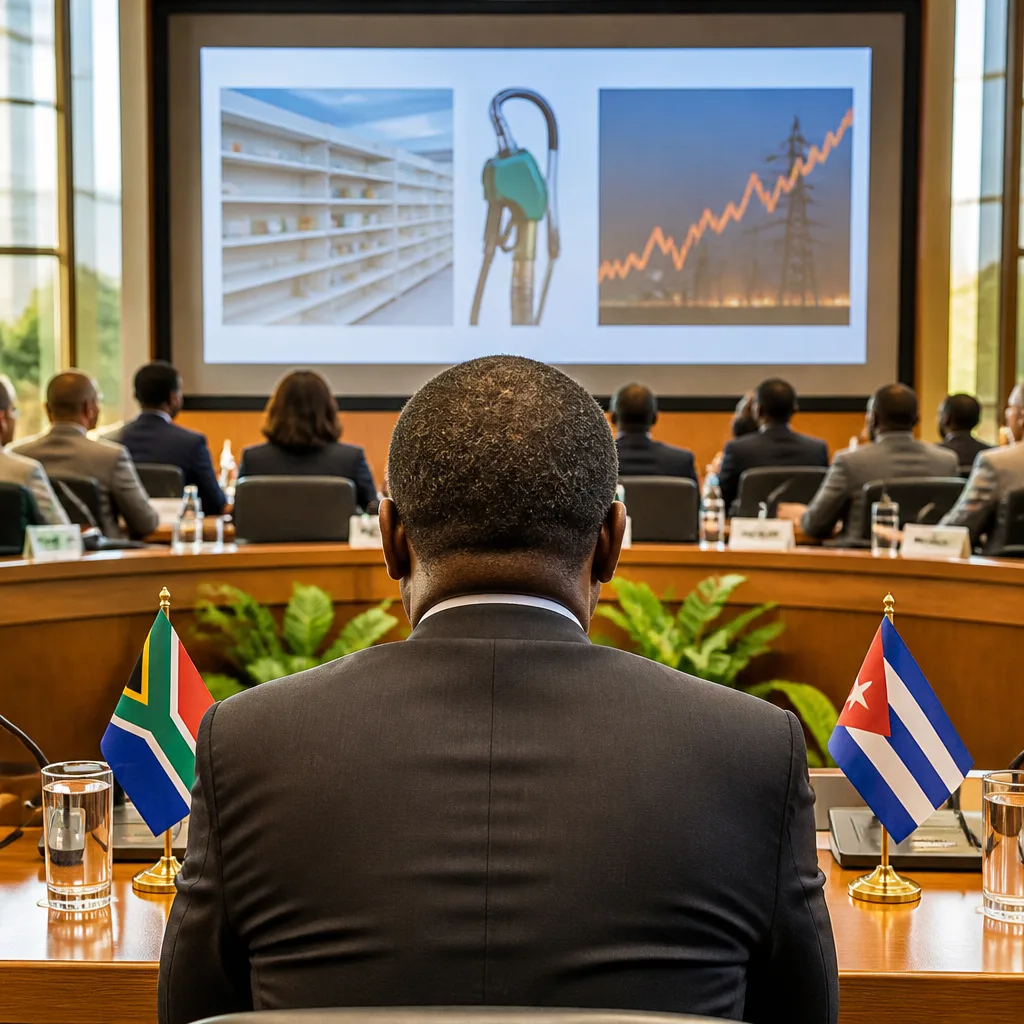
Rodriguez Pinelo said cuts in fuel have resulted in power outages of more than 20 hours, a 60% fall in food production and a 30% decrease in supplies of basic medicines. He added that infant mortality, once among the lowest globally, has more than doubled in the past year — a development he directly linked to limited access to treatment, equipment and medical devices.
South Africa’s Parliament and party positions
The ambassador addressed members of Parliament’s International Relations Committee, a forum overseen by the Department of International Relations and Cooperation (DIRCO). According to reporting, most political parties signalled support for a parliamentary resolution urging the government to raise Cuba’s situation at multilateral platforms such as the United Nations and BRICS.
- Parties reported to support a resolution: ANC, MKP, EFF, Al Jama’ah and others
- Noted exception: the DA did not join the consensus
The United Nations special rapporteurs have described the humanitarian consequences of the sanctions as severe. Rodriguez Pinelo told MPs South Africa had a "unique moral authority" to denounce the measures and to help mobilise international support to end the blockade.
Context and possible implications for South African diplomacy
The Cuban appeal places Parliament and DIRCO at the intersection of a longstanding geopolitical dispute between Washington and Havana. South Africa has historically maintained diplomatic ties with Cuba; past South African governments and civil society have often expressed solidarity with Havana on issues of sovereignty and sanctions.
A parliamentary resolution, if adopted, would likely instruct the South African government to raise Cuba’s case at international forums and could influence the country’s voting and statements at the UN and other multilateral bodies. Such a move would be consistent with South Africa’s recent emphasis on multilateralism, but it may also shape relations with the United States depending on how Pretoria frames its response.
Reported humanitarian indicators cited by ambassador
| Indicator | Reported change |
|---|---|
| Power cuts | More than 20 hours |
| Food production | 60% drop |
| Basic medicine supply | 30% decrease |
| Infant mortality | More than doubled in the past year |
South African engagement could range from diplomatic statements and votes at the United Nations to coordinated action with other governments to press for the easing of restrictions. The ambassador emphasised partnership rather than charity, framing Cuba’s request as one for political and logistical cooperation.
How the government responds will reflect both its foreign policy priorities and domestic political dynamics in Parliament, where a majority of parties reportedly backed the idea of a resolution in support of Cuba. Any formal steps adopted by Parliament would be forwarded to Cabinet and DIRCO for consideration and implementation in international fora.