BTG Pactual Timberland Investment Group (TIG) and Conservation International have expanded native ecosystem restoration across more than 20,000 hectares of Brazil’s Cerrado biome, the organisations reported, marking the largest single restoration effort tracked in the region by the Brazilian Restoration and Reforestation Observatory.
Scale, connectivity and local benefits
The project is intended to re-establish native vegetation across a highly fragmented seasonal savanna landscape where agricultural and cattle production have cleared more than half of the original area. According to the reporting, the current restoration sites are projected to help create more than 80,000 hectares of connected habitat as restored parcels link up across the landscape.
Conservation International serves as the Impact Adviser for the initiative, guiding social and environmental outcomes, and the partners say the effort has already supported local employment. The organisations reported the work has helped create more than 500 jobs associated with restoration activities.
“The speed at which this landscape is responding demonstrates what can be achieved when science-backed restoration is supported with resources allowing it to scale. As the trees return and the water begins to flow again, we’re seeing jaguars, wolves, tapirs and other threatened wildlife returning to the ecosystem, which shows it is a more healthy ecosystem than it was before,”
The quote above was attributed to Mauricio Bianco, Senior Vice President at Conservation International in Brazil, in a press release accompanying the announcement.
Evidence and partnerships on the ground
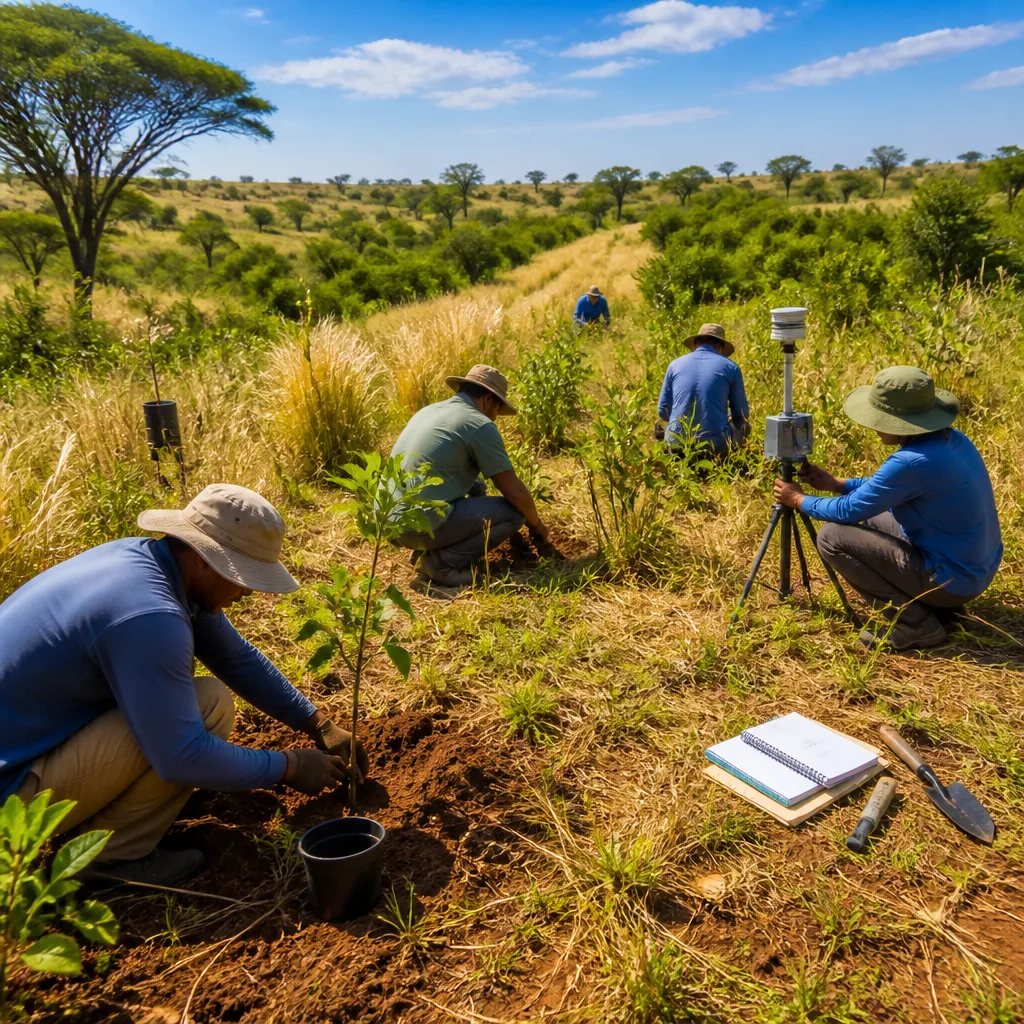
To establish effective restoration methods, BTG Pactual TIG and Conservation International partnered with the Forest Restoration Laboratory at the Federal University of Viçosa. The Brazilian Restoration and Reforestation Observatory — an independent platform that tracks native vegetation recovery — recorded the scale of the work and classified it as the largest single restoration initiative it has tracked in the region.
The approach emphasises field-based science to determine which techniques best encourage native vegetation recovery in the Cerrado’s seasonally dry conditions. The project documentation highlights goals of restoring ecosystem functions, reconnecting fragmented habitats and enabling the return of threatened fauna.
- Area restored: more than 20,000 hectares
- Projected connected habitat: over 80,000 hectares
- Employment created: more than 500 jobs
- Independent monitoring: Brazilian Restoration and Reforestation Observatory
| Metric | Reported figure |
|---|---|
| Restored area | 20,000+ ha |
| Connected habitat projected | 80,000+ ha |
| Jobs supported | 500+ |
Why this matters beyond Brazil
The Cerrado is one of the world’s most biodiverse savanna systems and a major store of biodiversity and ecological services. Large-scale restoration projects in such biomes contribute to species recovery, watershed function and carbon sequestration. For South Africa, which faces its own challenges in restoring degraded grasslands and fynbos landscapes, the initiative underscores several transferable lessons:
- the value of independent monitoring to verify outcomes and scale ambition;
- the importance of university partnerships and field science to refine restoration techniques in seasonally dry systems;
- and the potential for restoration to create local employment while delivering ecological benefits.
International private capital mobilised for landscape restoration is a growing feature of global conservation finance. The BTG Pactual TIG and Conservation International collaboration combines investor resources with conservation expertise and academic rigour, a model proponents say can accelerate biodiversity recovery without sidelining local livelihoods.
The partners have framed the project as evidence that commercially supported restoration can produce meaningful ecological and socio-economic outcomes when scaled with scientific oversight and independent verification. The Brazilian Restoration and Reforestation Observatory’s classification of this work as the largest single effort it has tracked in the region places it among the most ambitious landscape-level restorations in Latin America to date.
As countries and private actors prepare to meet international biodiversity and climate targets, demonstrations of large-scale, science-led restoration — and the governance structures used to monitor them — will be scrutinised for their replicability and long-term effectiveness.