Vaccination teams in the Central African Republic have begun using local knowledge — notably that of Aka community guides, hunters and Fulani chiefs — to reach children previously missed by routine immunisation in remote districts. The initiative, reported in October 2025, targets the southeastern district of Kembé‑Satéma, nearly 600 km from the capital Bangui, where geographic isolation, insecurity and a lack of usable maps undermined efforts by the Expanded Programme on Immunization (EPI).
Local leadership fills gaps in delivery and mapping
The district’s communities include semi‑nomadic Fulani herders and Aka villages embedded in rainforest, both of which present distinct barriers to routine vaccination: the Fulani move frequently in search of water and pasture, while Aka settlements are physically difficult to locate. According to the report, teams confronting these challenges found conventional approaches insufficient and sought the assistance of a civil society alliance led by World Vision and its local partners Béafrica Santé and Wali ti 3ème.
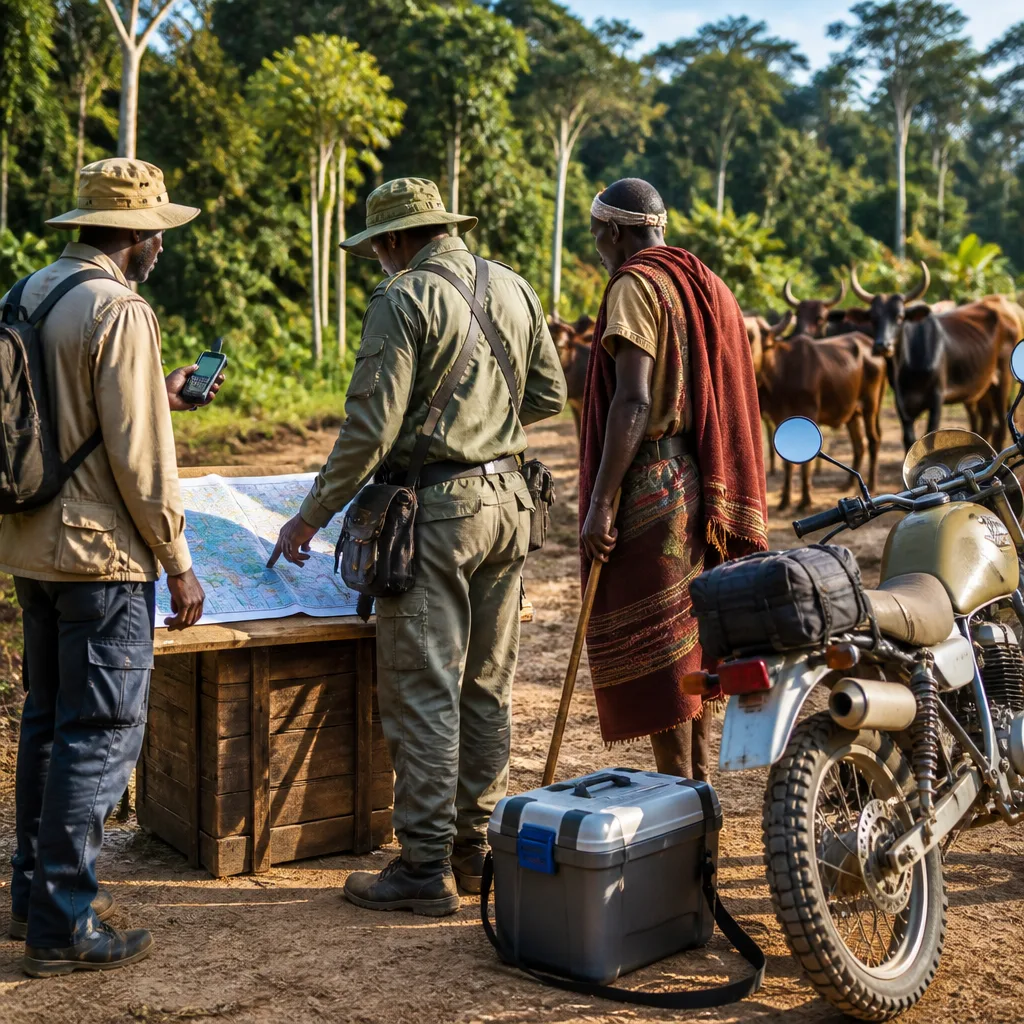
In October 2025, departmental health authorities convened community leaders from neighbouring Mobaye‑Zangba and Kembé‑Satéma. At that meeting, a prominent Fulani figure, Yaya Ibordji, proposed that vaccination teams enlist community gatekeepers — including Fulani chiefs known as "Ardos" — and Aka guides and local hunters to help locate and mobilise families.
"Ardos"
The approach rests on a simple premise: these community actors may lack formal medical training but possess detailed, lived knowledge of paths, camps, social arrangements and seasonal movements that official maps do not capture. The report says such knowledge proved essential for designing realistic routes for vaccination teams and for establishing points of contact among mobile households.
Operational challenges and practical solutions
The report identifies several operational barriers faced by EPI teams in the district:
- Geographic isolation: large distances from health facilities and rough terrain.
- Population mobility: Fulani herders who move frequently for pasture and water.
- Poor mapping: a near‑total absence of usable maps that show camps and forest settlements.
- Security and infrastructure: insecurity, unbridged rivers and scarce resources that complicate access.
To address these, the CSO alliance and health authorities worked through local intermediaries to redraw the practical healthcare map. The community leaders provided locations, routes and contact information for new arrivals, improving teams’ ability to plan sessions and follow up with families.
Implications for immunisation equity
The experience in Kembé‑Satéma underscores the value of integrating community knowledge into public health outreach, particularly in areas where standard administrative data and infrastructure are inadequate. By recognising and formalising the role of trusted local figures — such as Ardos, hunters and forest guides — health programmes can extend their reach to marginalised populations and reduce pockets of missed children who are vulnerable to vaccine‑preventable diseases.
For countries grappling with similar access gaps, the CAR example offers practical lessons: involve civil society, map communities using local informants, and build procedures to maintain contact as populations move. These steps can strengthen micro‑planning for vaccination campaigns and routine services alike.
Health workers and programme managers should, however, ensure that engagement with community intermediaries is ethically managed, that individuals are supported rather than exploited, and that efforts are coordinated with local health authorities to maintain vaccine safety, cold‑chain integrity and accurate records.
Readers should consult their local clinic or a health professional for personal vaccination advice and not rely on informal sources for medical decisions.