
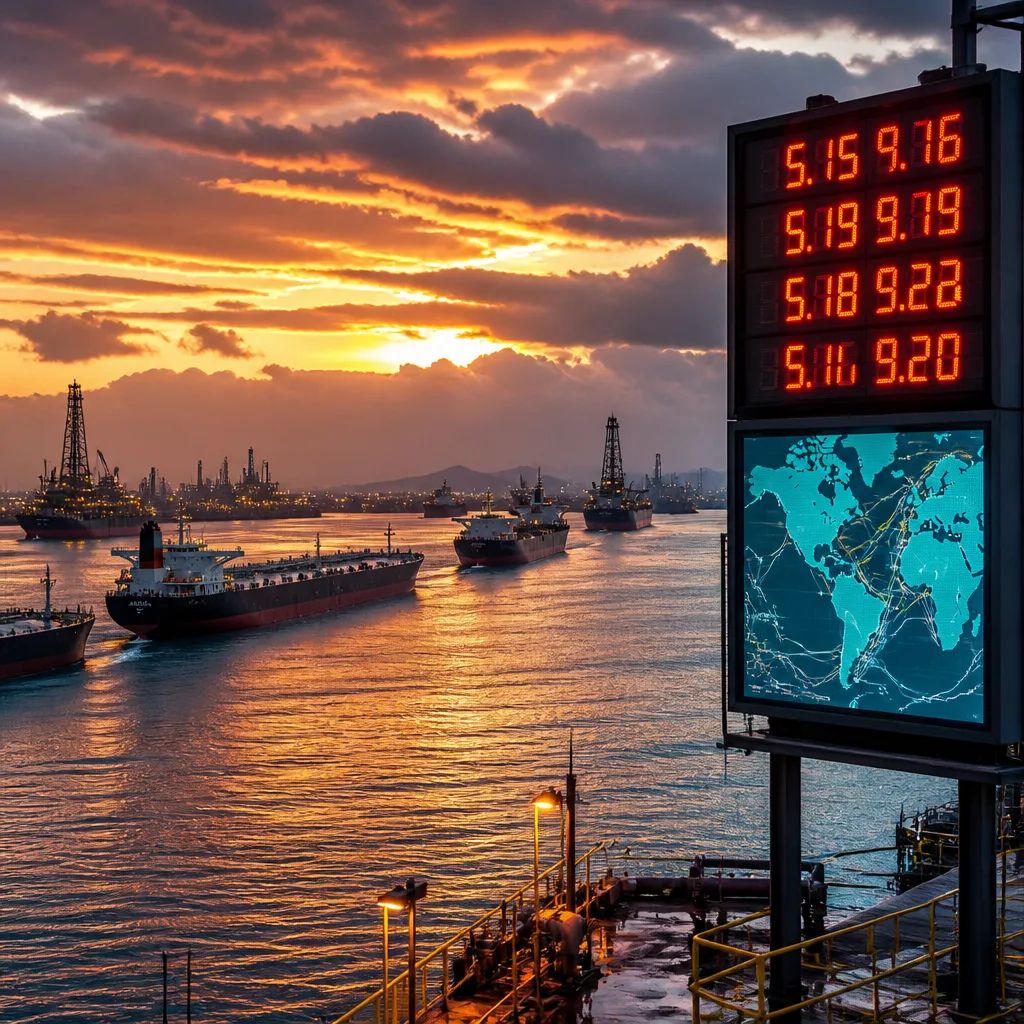
On 4 March 2026 Iranian forces declared the Strait of Hormuz closed after a United States–Israel attack on Iran on 28 February, a move that interrupted a seaborne flow of crude oil which, in 2025, accounted for nearly 15 million barrels per day — about 34% of global crude oil trade. Most of that oil was destined for Asian markets, with China and India together receiving 44% of the exports that pass through the strait, according to the analysis.
Three structural shifts reshaping energy trade
Analysts say the Hormuz closure should be read not as an isolated incident but as a crystallisation of three longer trends that have reshaped energy and clean-technology supply chains over the past decade.
- Securitisation of supply chains — states increasingly treat critical dependencies in oil, gas, electricity and clean-technology inputs as national security liabilities rather than merely economic efficiencies.
- Diversification of trade corridors — geopolitical tension and infrastructure competition have driven investment in alternative routes and suppliers.
- Energy–climate–trade nexus — energy shocks now quickly affect climate commitments and trade flows, while trade tools such as carbon-border measures influence investment and diplomatic posturing.
These structural shifts, the analysis argues, are causally connected: a security shock in energy markets can reprice climate commitments and reshape trade corridors, while trade policy feeds back into geopolitical dynamics.
Immediate consequences and historical parallels
The disruption at Hormuz transmitted supply and price shocks across commodity markets, producing effects that analysts compare to the three-year global economic shock during the COVID-19 pandemic starting in 2020 and the geopolitical disruptions triggered by the Russia–Ukraine conflict in 2022. In each case, concentrated chokepoints or suppliers magnified local events into global economic stress.
For countries that rely on imported energy and integrated global supply chains, such shocks translate rapidly into higher costs for industry and consumers, and into pressure on fiscal positions. The ORF analysis warns that the Global South sits at the sharpest edge of these three trends: securitisation increases the price of access to critical goods and routes, diversification can favour wealthier states able to finance alternatives, and trade measures tied to climate policy can impose adjustment costs on economies still industrialising.
Who benefits and who pays?
The shifts described redistribute leverage. States or blocs that control alternative corridors, critical raw materials or the finance to build them gain bargaining power. Conversely, import-dependent economies — often in the Global South — face higher costs and reduced policy space. The combined effect is to make energy and clean-technology supply chains less elastic and more political.
Policy responses moving forward will matter for South Africa and other middle-income economies. The analysis implicitly raises questions for national strategy: how to hedge exposure to chokepoints, whether to accelerate diversification of energy sources and how to navigate trade instruments that may emerge from richer markets’ climate policies. Those are policy choices about who bears the cost of strategic adjustment and how quickly.
| Metric | 2025 figure |
|---|---|
| Crude oil through Strait of Hormuz | 15 million bpd |
| Share of global crude trade | 34% |
| Share to China and India | 44% |
The Hormuz episode is a reminder that energy security is now inseparable from geopolitics and trade governance. For countries beyond the immediate region, including South Africa, it further complicates an already difficult transition: reducing emissions and building resilient supply chains while managing the near-term risks of a fracturing global energy order.












