Climate change is no longer an abstract topic in Bangladesh: it is a present, pervasive force altering whether children get to school, whether classrooms remain usable and how long learning continues uninterrupted. UNICEF reported that climate-related events in 2024 disrupted the education of approximately 35 million children, with some learners losing as much as eight weeks of instruction.
From daily journeys to interrupted terms
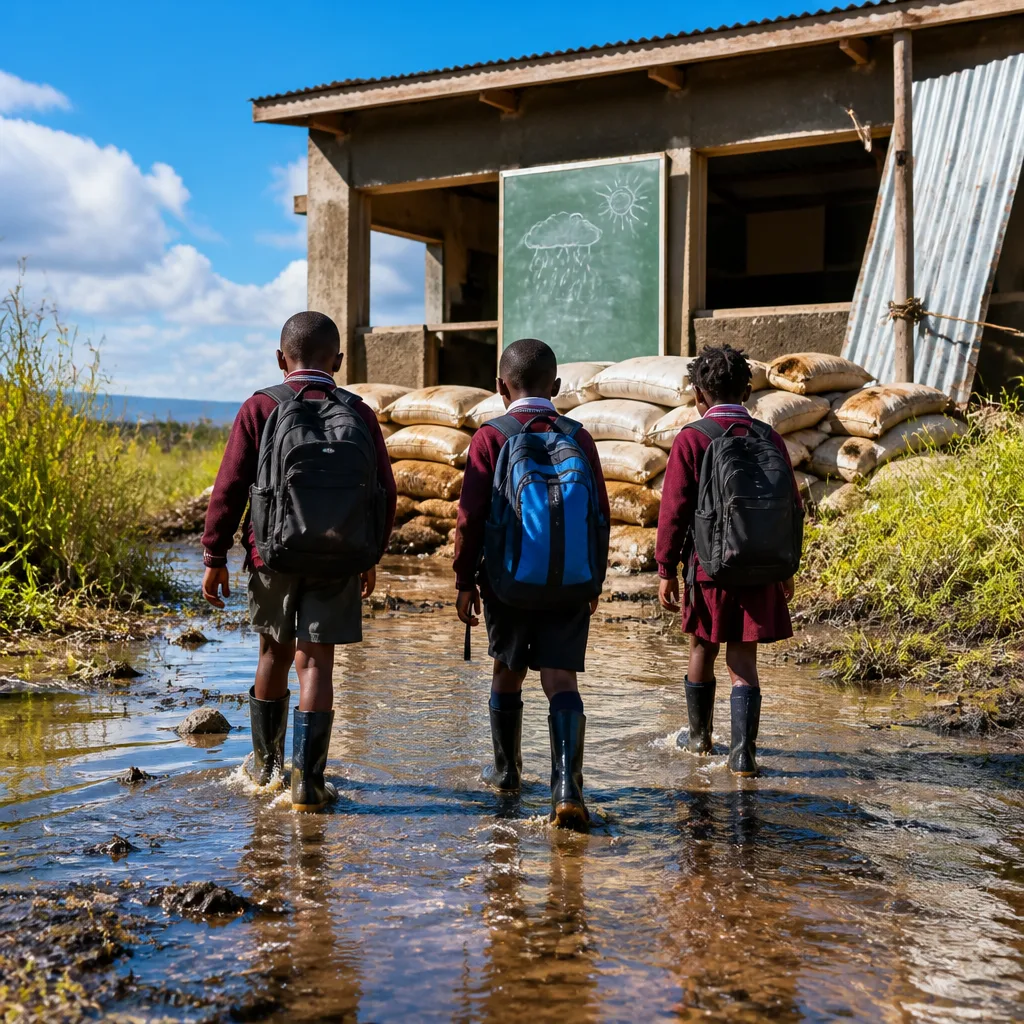
Across the country — from the hills of Bandarban to the riverbanks of Kurigram, from coastal Satkhira to urban Dhaka — students and schools are negotiating the direct consequences of extreme weather. In rural areas children may begin their school day navigating waterlogged tracks or unstable slopes after heavy rainfall. Entire communities can become isolated during floods. In cities, waterlogging, rising classroom temperatures, worsening air quality and the threat of infrastructure failure create a different but equally disruptive set of risks.
Despite these recurring realities, classroom learning often remains detached from what learners experience. Climate change is taught as concepts in textbooks even as learners live its effects: missing school when roads are impassable, losing teaching time to cyclone recovery, and coping with unsafe conditions during severe heat or lightning storms.
Implications for curriculum, infrastructure and continuity
The contrast between lived experience and curriculum points to several urgent priorities for education planners and policymakers. They include:
- Integrating locally relevant climate and disaster education into the curriculum so learners can connect theory with practice;
- Investing in school infrastructure and safe routes to school that withstand extreme weather;
- Strengthening contingency plans and remote learning options to maintain continuity when physical attendance is impossible.
Where classroom content remains narrowly focused on definitions and scientific concepts, learners miss opportunities to develop practical knowledge and adaptive behaviours that could keep them safe and reduce learning losses. Conversely, embedding climate resilience and local hazard awareness in school programmes can empower learners and communities to anticipate and respond to disruptions.
Quantifying the education cost
The scale of disruption is notable. According to UNICEF, climate-related events including heatwaves, Cyclone Remal and flooding interrupted schooling for roughly 35 million children in 2024. The agency also reported that some students experienced learning losses of up to eight weeks during those events. These interruptions compound existing inequalities: children in remote or low-income communities typically have fewer alternatives for continuing learning when schools are closed or inaccessible.
| Measure | Reported figure (2024) |
|---|---|
| Children with disrupted education | 35 million |
| Maximum reported learning weeks lost | Up to eight weeks |
These numbers underline the need for education systems to plan for recurrent disruption rather than treating extreme events as one-off emergencies. That means aligning teacher training, assessment calendars and resource allocation with the likelihood of climate impacts.
Towards place-based solutions
Practical responses must be rooted in local realities. In some flood-prone districts, for example, measures may include elevating school buildings or providing safe boats and bridges to maintain access. In heat-affected urban schools, improving ventilation, shading and water supplies can make classrooms safer and more functional. Equally important is designing learning that can shift between in-person and remote modes without leaving the most vulnerable behind.
For education leaders and planners — whether in Bangladesh, South Africa or elsewhere — the message is consistent: climate resilience has to be a central education priority. Protecting learning requires investments in infrastructure, curriculum adaptation and systems that enable rapid, equitable responses when weather and climate disrupt schooling.