
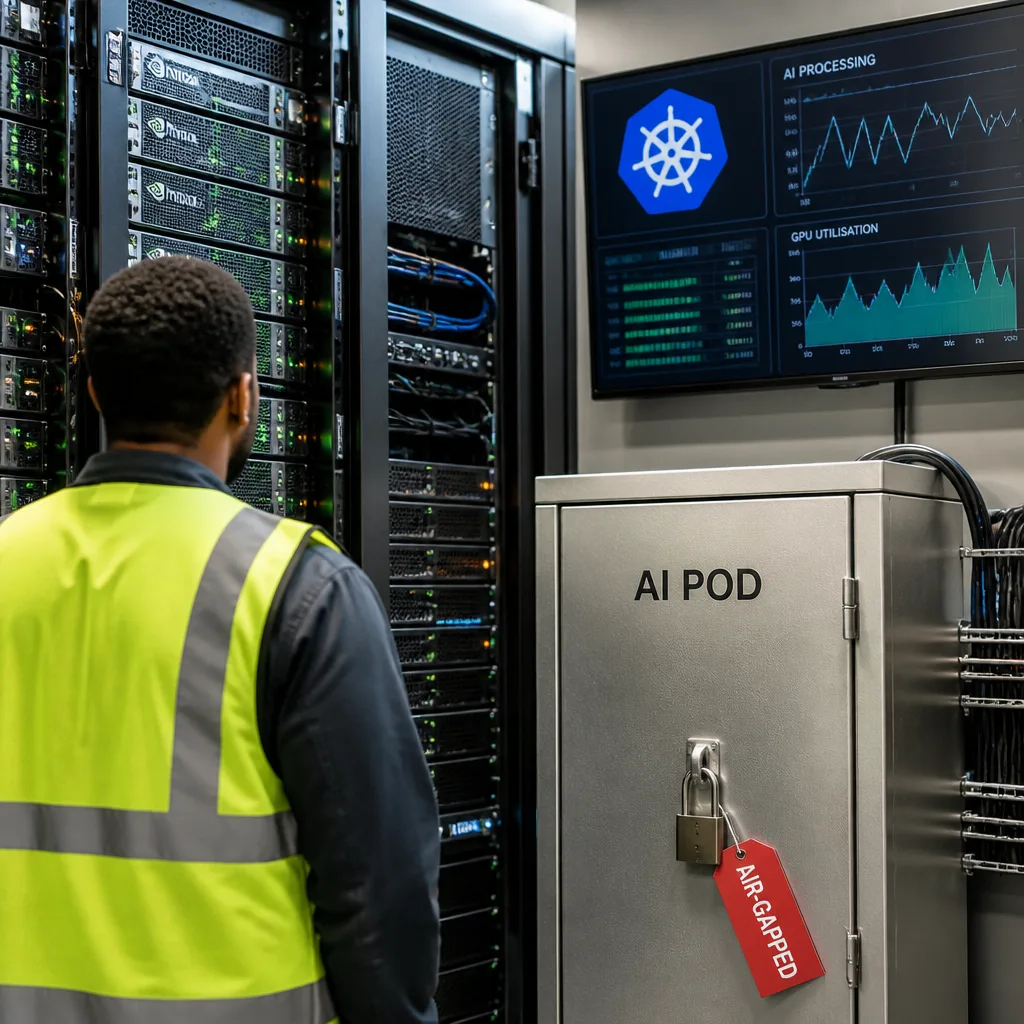
Cisco and NVIDIA are expanding a partnership to make Splunk AI available to organisations that must keep data on their own infrastructure, the companies said on 15 September 2026. The announcement centres on a pre‑validated reference architecture — the Cisco AI POD for Splunk — which combines Cisco infrastructure, NVIDIA accelerated computing and a Kubernetes‑based runtime optimised for Splunk AI workloads.
What the package includes
The offering is intended for enterprises that cannot move sensitive machine data to public cloud environments. Key elements highlighted by Cisco and NVIDIA are:
- Cisco AI POD for Splunk: a configuration of hardware and software validated for Splunk AI workloads and available now.
- Cisco Secure AI Factory with NVIDIA: the reference architecture that brings together the full AI stack, built from Cisco AI PODs.
- Software layer: a Kubernetes‑based AI runtime and Splunk AI components, including Splunk AI Assistant (available now) and an Agent Launchpad slated for later this year.
- Partner ecosystem: systems integrators and service partners — such as bitsIO, Wipro and World Wide Technology — prepared to help customers deploy on their own infrastructure.
Why this matters
Cisco framed the work as an answer to enterprise concerns about trust, cost and security when adopting AI. Jeetu Patel, Cisco’s President and Chief Product Officer, was quoted saying that customers worry whether AI can be trusted, whether it is affordable and whether it can be secured. By offering a path to run Splunk AI on infrastructure organisations already trust, Cisco says customers can “move faster to put AI to work in their business with confidence and control.”
"One of the biggest roadblocks to enterprise AI today is that it’s too hard to deploy," Jeetu Patel said.
For organisations that operate in regulated sectors or that manage highly sensitive machine data — for example critical infrastructure, financial services or government bodies — the ability to run agentic AI workloads in air‑gapped or private cloud environments addresses data sovereignty and compliance questions without forcing cloud migration.
Components and intended use
The announcement describes a stack that blends compute, orchestration and AI runtime optimisations. A concise view of the components follows.
| Component | Role |
|---|---|
| Cisco AI POD for Splunk | Pre‑validated hardware and software package for on‑premises Splunk AI |
| NVIDIA accelerated computing | Provides the GPU acceleration required for AI model runtime |
| Kubernetes‑based runtime | Orchestrates AI services and agentic workloads |
| Splunk AI Assistant & Agent Launchpad | Tools for agentic investigations and custom agent building |
Implications for enterprises and IT teams
Organisations weighing AI adoption often face three interlinked barriers: technical complexity, cost control and governance. Cisco’s approach is to reduce the deployment burden by delivering a reference architecture and a partner network to implement it. The inclusion of an on‑premises option is explicitly aimed at customers who cannot transfer sensitive machine data to public clouds.
Operationally, the Kubernetes foundation signals an expectation that IT teams will integrate AI workloads into existing container and orchestration practices. The availability of pre‑validated configurations can shorten pilot cycles, but teams will still need to plan for lifecycle management, model governance, security monitoring and the storage demands of large machine‑generated datasets.
What remains to be seen
The companies have made the Cisco AI POD for Splunk available now and named a set of partners ready to assist customers. The announcement does not publish pricing or licensing details; those will be important for organisations assessing total cost of ownership. Similarly, operational experience with agentic AI — autonomous or semi‑autonomous AI agents that perform investigatory or response tasks — will determine how quickly risk, governance and reliability practices mature in production deployments.
For South African organisations that must meet strict data protection rules or that host critical services, an on‑premises route to AI workloads represents an attractive option. The practical benefits will depend on local partner support, integration costs and the ability of IT teams to manage GPU‑accelerated, containerised AI at scale.
While the announcement is primarily product and partnership focused, it highlights the broader industry trend of offering flexible deployment models — cloud, private cloud and air‑gapped — so that organisations can choose where AI runs rather than being forced into a single operational model.









