
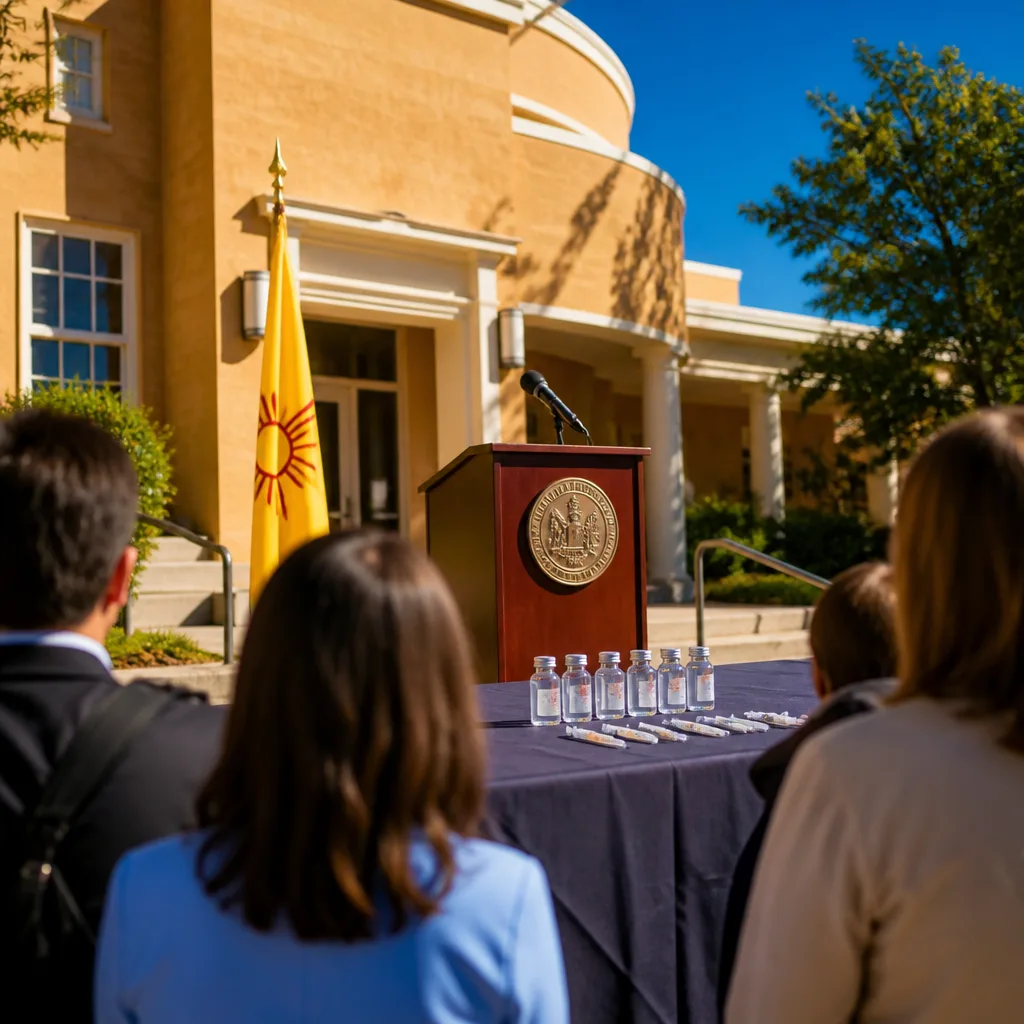
New Mexico health officials announced they will retain the state’s existing childhood immunization guidelines despite an executive order from President Donald Trump that reduces the number of recommended routine shots and calls for separating the measles, mumps and rubella vaccine into three single-disease injections.
State response contrasts with federal changes
Dr. Miranda Durham, chief medical officer for the New Mexico Department of Health, said the state’s policy will not change: the department will continue to offer the full suite of childhood vaccines and maintain current school immunization requirements and exemption processes for the 2026-27 academic year. Under state guidance, both Medicaid and private insurers will still be required to cover the childhood immunizations recommended by the New Mexico Department of Health.
"In New Mexico, nothing is changing. … Our plan here is stay the course and continue to offer the full array of childhood vaccines,"
New Mexico is among several states that have publicly disagreed with federal vaccine guidance this year. Earlier in 2026, the federal childhood immunization schedule was revised to remove universal recommendations for several vaccines, including those for influenza, COVID-19, hepatitis A and B, rotavirus, certain forms of meningitis and respiratory syncytial virus (RSV).
Public health officials warn of consequences
Public health leaders criticized the executive order, saying it risks increasing vaccine hesitancy. Dr. Andrew Racine, president of the American Academy of Pediatrics, called the move “not only disheartening but dangerous,” according to reporting on reactions from health organizations. The administration has defended its changes as grounded in what it described as "gold standard" science and referenced concerns about a connection between vaccines and autism — a claim that multiple scientific studies have repeatedly discredited.
New Mexico officials noted that there has been no new scientific evidence to support the federal revision, and the state will continue to recommend vaccination against the diseases removed from the federal schedule. The state had previously challenged the federal overhaul announced in January 2026 and has maintained broader vaccine recommendations than those set at the federal level.
Implications for families, schools and insurers
The divergence between federal and state guidance raises questions about coverage, school entry requirements and public messaging. New Mexico’s position ensures that for the upcoming school year:
- School vaccination requirements remain unchanged for 2026-27.
- Insurance coverage — including Medicaid and private plans — must continue to cover vaccines the state recommends.
- Exemption processes for medical and religious reasons will remain as currently established.
Officials did not specify any administrative changes to implementation or enforcement mechanisms beyond reiterating that state policy will continue.
| Federal change | New Mexico stance |
|---|---|
| Removed universal recommendations for several childhood vaccines | Will continue to recommend and provide those vaccines |
| MMR split into three single-disease shots | State will keep current MMR guidance as part of existing schedule |
The dispute highlights a broader debate over the role of federal guidance versus state public health authority. New Mexico’s leaders argued that state-level decisions will be guided by the existing body of scientific evidence and local public health priorities. Observers say the situation could lead to differing vaccine uptake and policies across states depending on how other jurisdictions respond.
Health advocates and pediatric organizations have warned that changing widely accepted schedules without new scientific justification could undermine public confidence in vaccination programs, potentially affecting disease prevention and control efforts nationwide.
















