
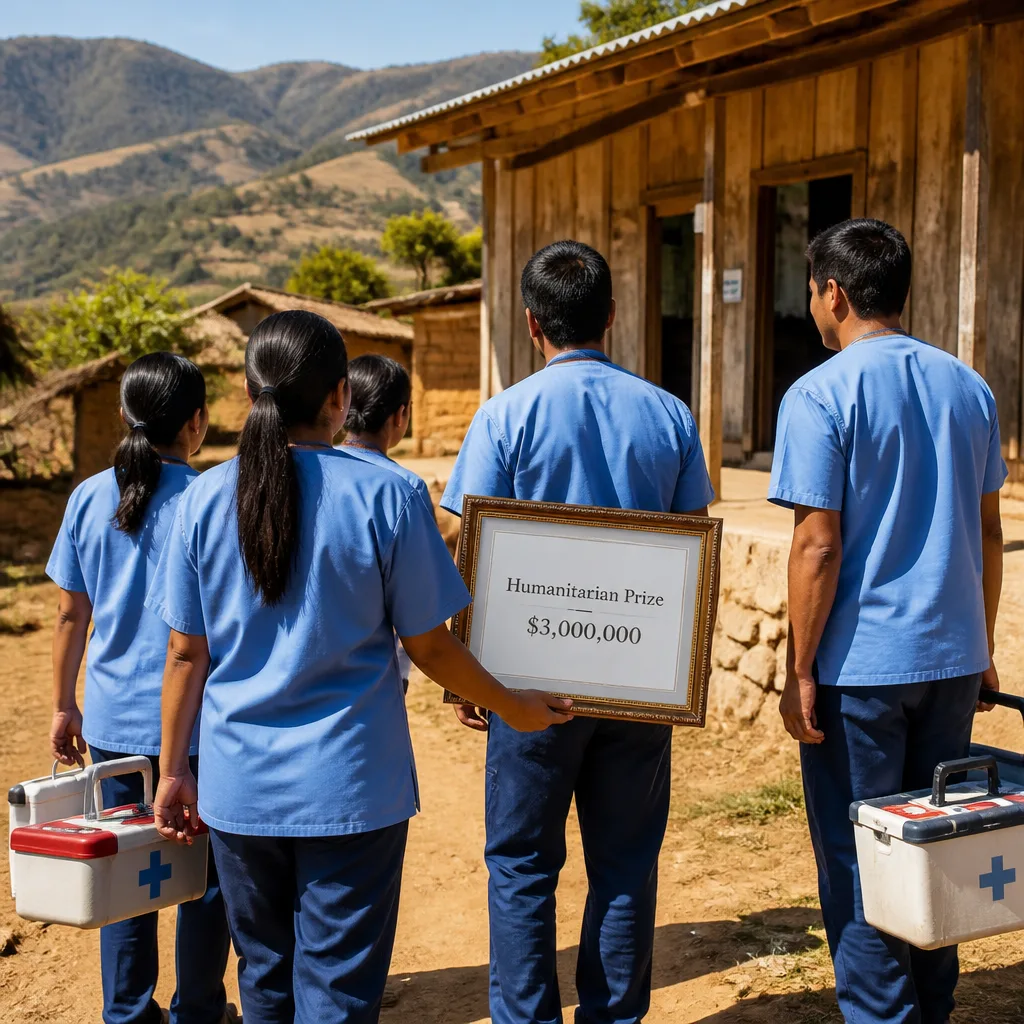
The nonprofit Last Mile Health, founded by Dr. Raj Panjabi after a 2007 return to his native Liberia, will receive the Conrad H. Hilton Humanitarian Prize accompanied by a $3 million award, a recognition of its work to extend basic medical services to remote communities through locally based health workers.
From a personal gift to an international model
Panjabi began the effort with a modest and personal fundraising effort: the $6,000 he brought from wedding guests helped launch the organization and pay its first cadre of community health workers. The approach focused on training community members with minimal formal education to deliver primary care interventions in areas where clinics, medical supplies and professional staff were scarce or inaccessible.
Last Mile Health’s community health workers typically receive an intensive training period — about eight weeks — during which they learn to diagnose and treat common, preventable childhood illnesses such as malaria, pneumonia and diarrhea. They also work with pregnant women to develop birth plans and identify complications that require referral to clinics. Workers are trained to detect early signs of outbreaks and other emerging threats.
Recognition for scaling community-based care
The Hilton prize citation described the organization’s impact as an example of extraordinary contributions toward reducing human suffering. The award underscores how a program that began with a small, local footprint has attracted government, philanthropic and nonprofit funding to expand its reach.
“make extraordinary contributions toward alleviating human suffering.”
That language, taken from the Hilton honor announcement, signals broader validation for community health worker models as a pathway to extend essential services into hard-to-reach populations.
- Seed funding: $6,000 raised by Panjabi’s wedding guests to start the program.
- Training: Eight-week course for community health workers covering diagnosis, treatment and maternal care planning.
- Award: Conrad H. Hilton Humanitarian Prize with a $3 million grant.
Implications for global and domestic health delivery
Last Mile Health’s recognition highlights two trends in contemporary public health: the reliance on community-based cadres to deliver primary care where formal health systems are thin, and the capacity of small, locally rooted initiatives to attract larger-scale investment and policy attention. While the organization began in Liberia, the model has drawn interest from governments and philanthropic partners, which have supported its expansion.
For U.S. health policymakers and funders, the award may reinforce interest in community health worker programs as cost-effective tools for increasing coverage and surveillance in underserved areas, both internationally and domestically. The program’s trajectory — from grassroots fundraising to multimillion-dollar recognition — illustrates how local solutions can be amplified with targeted support.
Last Mile Health’s work also draws attention to workforce strategies in settings with limited medical personnel. By investing in training and supervision for community health workers, the organization aims to improve early diagnosis and treatment of common conditions and to strengthen links between communities and formal health facilities.
| Year founded | Initial funds | Training length | Prize awarded |
|---|---|---|---|
| 2007 | $6,000 | 8 weeks | $3 million |
As Last Mile Health prepares to receive the Hilton prize, its experience offers a case study in how modest beginnings and community engagement can evolve into scalable programs with measurable humanitarian outcomes. The prize provides financial resources and public recognition that could enable further expansion of community-based services and continued partnerships with governments and funders.
















