
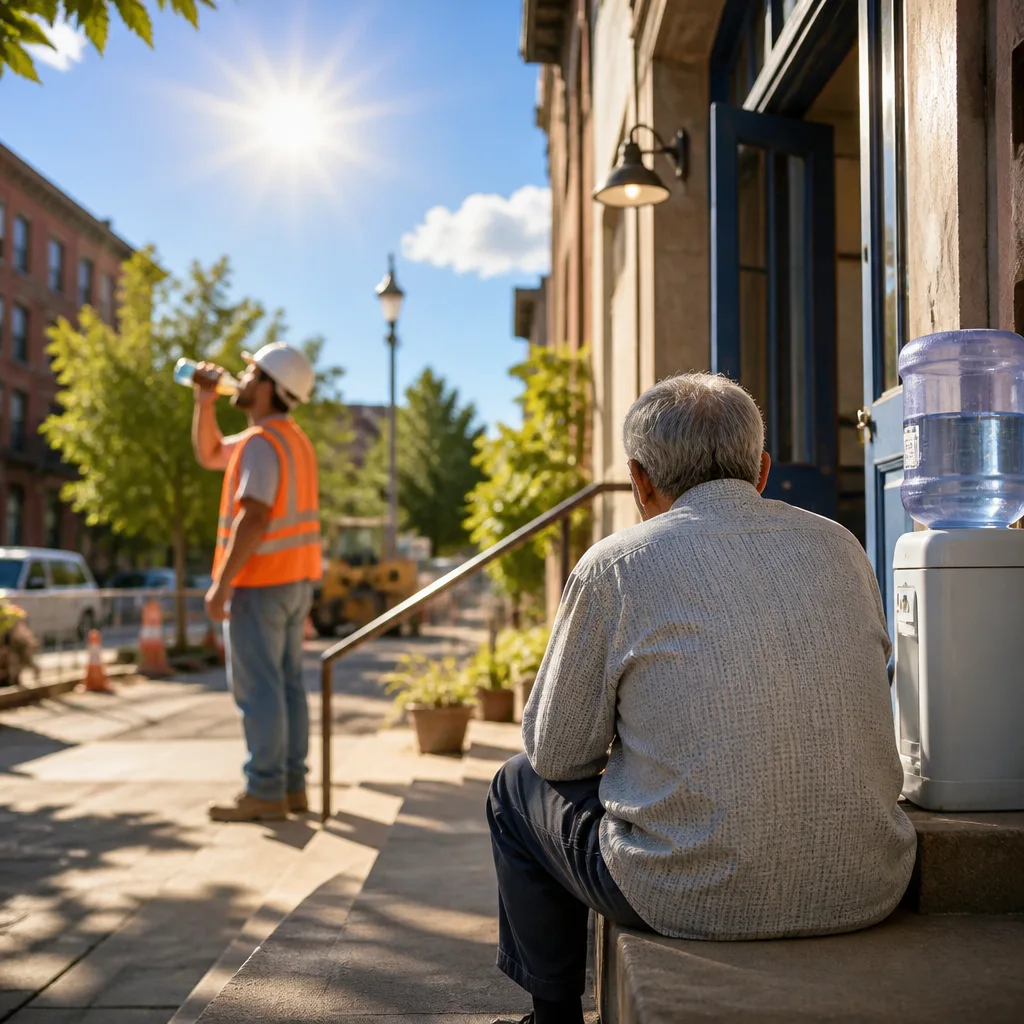
Heat is a mounting public-health danger for certain groups in the United States, and clinicians say preparation and targeted interventions are essential as climate-driven temperature extremes increase.
Scope and populations at risk
In a briefing for journalists, three Duke University experts explained which Americans face the highest risk and why: infants, people older than 65, outdoor workers, residents of low-income households and individuals with chronic medical conditions. They noted the global burden of heat-related mortality and the toll already observed in the United States.
| Metric | Estimate |
|---|---|
| Annual global heat-related deaths (WHO) | 489,000 |
| Estimated U.S. heat deaths per year | 1,200–1,700 |
Physiological and social drivers
Cathleen Colon-Emeric, a geriatric medicine specialist at Duke Health, described how aging alters the body’s capacity to shed heat. She said these changes, combined with the higher medication burden many older adults carry, make both recognition and response to heat illnesses more difficult.
“We don’t sweat as much as we get older, and the blood vessels in our skin that are responsible for dilating and exposing more blood to our skin to cool off when it gets hot don’t work quite as well,” she said.
Colon-Emeric also emphasized nonphysiological barriers that increase risk: limited mobility, transportation difficulties and cognitive changes that can prevent older adults from getting to cooler environments or recognizing danger early.
Occupational and environmental risks
Nishad Jayasundara, an environmental health researcher at Duke, highlighted workers who perform strenuous tasks outdoors—such as construction crews—as especially vulnerable. He noted environmental exposure, the intensity of work, and limited access to cooling on site increase the likelihood of heat-related injuries and illness.
Valerie Sabol, a clinical professor at the Duke University School of Nursing and director of Planetary Health, discussed how socioeconomic factors amplify risk. Low-income households without reliable cooling and people with chronic diseases that affect fluid balance or thermoregulation face higher odds of severe outcomes.
Practical prevention and mitigation
The panel offered several actionable recommendations for clinicians, public health agencies and individuals to reduce heat-related harm:
- Identify and monitor at-risk patients, particularly older adults and people with chronic illnesses.
- Encourage access to cool environments during heat waves, including community cooling centers where available.
- Educate outdoor workers and employers about hydration, rest breaks, shade, and gradual acclimatization to high temperatures.
- Coordinate with local services to address transportation and mobility barriers for vulnerable people.
The experts underscored that many heat-related deaths are preventable with timely recognition and simple interventions, but that systemic solutions — including workplace protections and social supports for low-income communities — are needed to reduce population-level risk.
Implications for public health planning
As extreme heat events become more frequent and intense with climate change, public-health officials will face rising demands to identify vulnerable populations and deploy targeted responses. The Duke briefing illustrates the clinical and social dimensions of heat risk and provides a framework for prevention efforts that health systems and communities can adapt.
The message was clear: understanding the physiological changes of aging and the occupational and socioeconomic conditions that increase exposure can guide practical steps to avert unnecessary illness and death.
















