Mumbai, Aug 14: A sharp political standoff has developed in Maharashtra over reports that infrastructure failings in Chakan, a prominent industrial belt, have prompted a number of factories to consider shifting operations and that thousands of private entities have ceased to exist in the state over recent years.
Opposition raises alarm on Chakan; government disputes figures
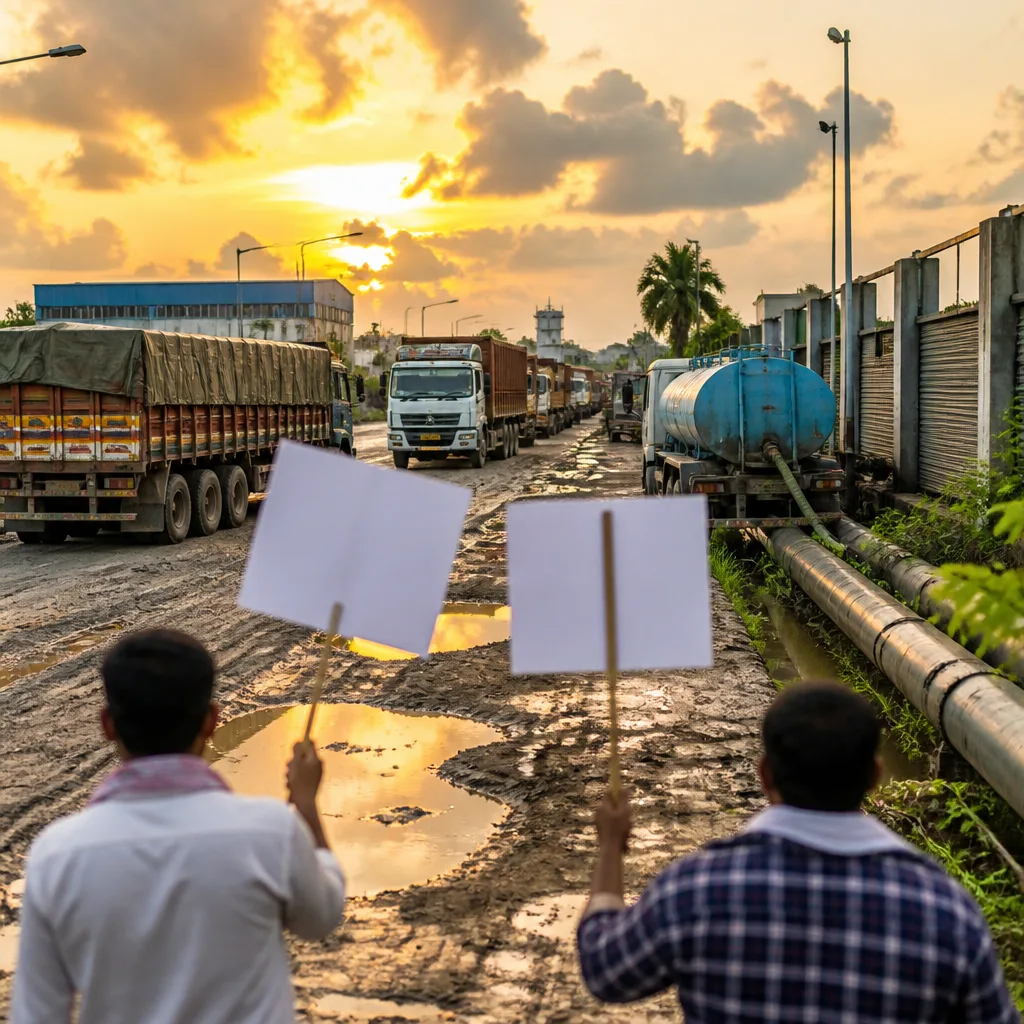
The matter gained momentum after senior Opposition leaders highlighted what they described as persistent traffic congestion, pothole-damaged roads and water shortages in Chakan, arguing these problems were affecting the business environment and jobs. The Opposition cited parliamentary-level data to suggest a large number of companies in the state had closed down in the last five years.
The state administration countered the allegations, disputing the characterisation of the data and asserting that many of the entries flagged as closed were non-operational or had been struck off as part of routine regulatory exercises. The government also said Maharashtra continues to retain a robust industrial base.
“Around 76 per cent of the reported closures involved defunct entities that had never been operational and were struck off during routine regulatory exercises,”
The above statement, recorded in reporting on the dispute, reflected the position advanced by the state leadership in rebuttal to claims of an industrial exodus.
Political context and claims
Opposition leaders presented specific examples from Chakan, saying certain manufacturing units that together employ more than 2,000 workers were contemplating relocation because of worsening civic conditions. They argued the reported company closures in parliamentary records — running into the tens of thousands over a five-year window — were indicative of a wider problem that required urgent action to protect jobs and investments.
The state government responded by pointing to the continued strength of Maharashtra’s corporate and industrial presence, noting that roughly four lakh enterprises remain active in the state and that new corporate registrations are high. It said a multi-tiered task force consisting of several agencies has been formed to evaluate and address infrastructure gaps in Chakan, with plans for both short-term mitigation and longer-term improvements.
What the task force will address
- Immediate traffic and road repairs to ease congestion in industrial corridors.
- Measures to secure stable water supply to manufacturing units.
- Longer-term planning for connectivity and civic amenities to attract and retain industry.
The government described the task force as a high-level response aiming to coordinate interventions across departments, while the Opposition said it would continue to press for faster on-ground action and accountability for jobs lost or at risk.
Data and dispute over interpretation
The figures cited in parliamentary papers became a central point of contention. Opposition politicians treated the raw numbers as evidence of a decline in the state’s business climate. The administration cautioned that without context—particularly the distinction between firms that had been operational and those that were merely registered on paper—the numbers could be misleading.
| Claim | Reported figure | Government response |
|---|---|---|
| Private entities ceased operations (five-year period) | ~36,000 | Majority were defunct or struck off; not necessarily operational closures |
| Functional enterprises in Maharashtra | ~4 lakh | State retains largest industrial and corporate base in the country |
Both sides have framed the debate around jobs and investment: the Opposition portrays the issue as a failure to maintain industrial infrastructure that threatens employment and investor confidence; the government contends the state’s economic fundamentals remain strong and that administrative measures are in train to remedy local bottlenecks.
The dispute is likely to persist as parties seek political advantage ahead of future electoral battles, and as industry bodies and firms decide whether to press for rapid interventions or await longer-term infrastructure projects. Observers say the outcome of the task force’s recommendations, and the pace at which they are implemented, will be important for perceptions of Maharashtra’s business climate.
At present, both the Opposition’s allegations of industrial migration and the administration’s rebuttal rest on official records and statements; independent verification of the number of firms actively relocating or shutting operations has not been provided in the reporting of the confrontation.