Vijayawada: Andhra Pradesh Chief Minister N. Chandrababu Naidu on Thursday outlined a plan to transform Amaravati into a deep‑tech capital driven by artificial intelligence (AI) and quantum computing, saying the capital region will prioritise technology infrastructure, data centres and premier educational campuses.
Focus shifts from conventional IT to deep tech
Speaking after inaugurating the E‑3 seed access road and steel bridges in the region, the Chief Minister said the capital’s development has "entered a new phase" and described a strategic shift in focus from conventional information technology to AI and quantum technologies. He said several data centres and leading educational institutions are being established in the capital region.
"Quantum Valley has already come to Amaravati," said Chief Minister N. Chandrababu Naidu.
Naidu named institutions that have set up or are developing campuses in the region, including SRM, VIT, Amrita and XLRI, and said BITS Pilani is developing a major campus. He expressed confidence that the Prime Minister would return in 2028 to inaugurate the finished capital.
Infrastructure planned to support tech growth
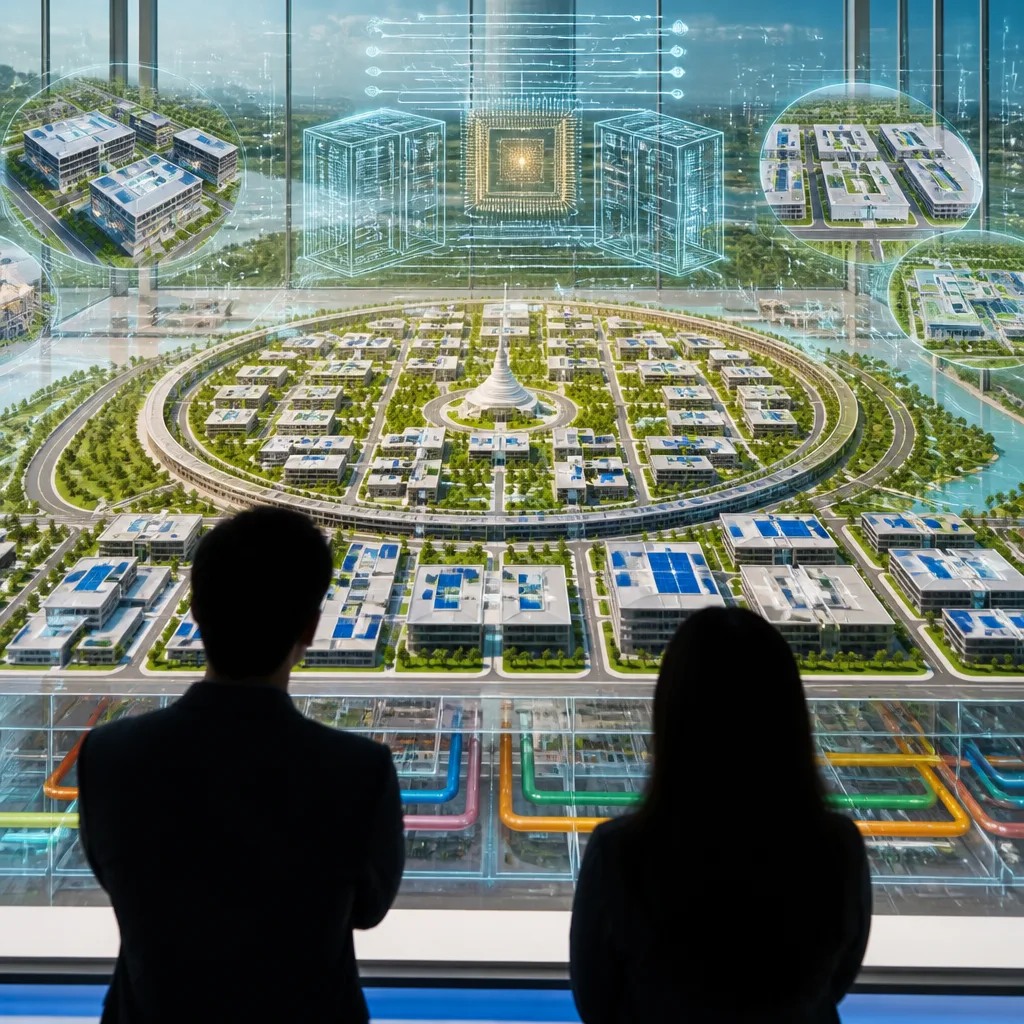
The Chief Minister outlined several physical and utility‑level measures intended to make the city technology‑ready and environmentally sustainable. These include underground utility ducts for water supply, drainage, floodwater management, water treatment, electricity and communications, so that power cables will not be visible along roads.
Naidu also flagged transport and energy measures: a district cooling system expected to reduce energy wastage by around 20%, and the development of piped natural gas (PNG) distribution. The E‑3 seed access road has been described by the state as the "Rajamargam" — a grand avenue providing initial physical connectivity to the capital.
- Road network: Plans for a 96‑km inner ring road and a 190‑km outer ring road around the capital region have been approved by the Centre, the Chief Minister said.
- Urban services: Underground ducts for crucial utilities to enable cleaner streets and resilient services.
- Energy efficiency: District cooling to cut energy waste by about 20% and efforts to expand PNG supply.
Education and data centre clusters
By anchoring campuses of established institutions and encouraging data centre projects, the state aims to create an ecosystem for research, skilling and industry collaboration in advanced technologies. The presence of multiple educational institutions could supply trained personnel for AI, machine learning and quantum research, while data centres would provide the computing backbone for such activities.
| Planned element | Details |
|---|---|
| Inner ring road | 96 km (approved by Centre) |
| Outer ring road | 190 km (approved by Centre) |
| Institutions named | SRM, VIT, Amrita, XLRI; BITS Pilani developing campus |
The Chief Minister framed these moves as part of making Amaravati a pollution‑free, technology‑driven and globally competitive city, and said the capital has the potential to become India’s top city and rank among the world’s top five.
Implications and questions for implementation
The shift toward deep‑tech ambitions raises several practical questions for policymakers and industry: how land allocation, regulatory approvals and environmental clearances will be handled; where power and cooling for data centres will be sourced sustainably; and how the state will attract long‑term research investment in nascent fields such as quantum computing.
Building large‑scale educational campuses and data centres can create local employment and skills pipelines, but require coordinated planning on transport, utilities, housing and climate resilience. The state’s emphasis on underground utility ducts and district cooling addresses some infrastructural needs, but implementation timelines and financing models were not detailed in the announcement.
The Chief Minister described the E‑3 road project as the beginning of the capital’s physical transformation and said future phases will connect the road to the national highway at Tadepalli. He also inspected housing complexes for MLAs and MLCs as part of his visit.
If realised at scale, the proposed mix of advanced research, university campuses and data centre infrastructure could position Amaravati as a significant node in India’s growing push into AI and other deep technologies. The next steps will depend on concrete investment commitments, detailed master plans and inter‑governmental coordination to translate vision into built reality.